
Xmas Lights Done Right: Sparta Professional Installation

Every December, the same thing happens in Sparta. A homeowner decides the house needs a glow, climbs a ladder on a cold Saturday, and spends the afternoon untangling a strand that was dead on arrival. Xmas lights look effortless on a finished house, but the work behind a clean, even roofline is slow, awkward, and easy to get wrong. This guide explains where professional Christmas light installation earns its price, what the process looks like on a typical Sparta home, and why the calendar matters now that winter is close.
Table of Contents
- Quick Takeaways
- Why Hanging Lights Yourself Costs More Than You Think
- Safety on Sparta Rooftops and Two-Story Eaves
- How the Installation Process Works, Step by Step
- Seasonal Strands Versus Permanent Lighting
- What Professional Installation Costs in Sparta
- Preparing Your Home Before the Installers Arrive
- Booking Before the Calendar Fills
- Frequently Asked Questions
- References
Quick Takeaways
| Key Insight | Explanation |
|---|---|
| The rooftop climb is the biggest risk | Falls make up about half of holiday decorating injuries, so the two-story eave is where a homeowner is most exposed. |
| Book before the first hard frost | Crews fill their schedules quickly once the season opens, and the earliest bookings get the best dates. |
| Plan the layout on paper first | A written plan of eaves, gutters, trees, and outlets cuts the number of ladder moves and wasted strand. |
| Use insulated clips, not staples or nails | Proper clips protect gutters and shingles and make takedown clean instead of a pile of torn wire. |
| Clean gutters and the roof edge before hanging | Debris hides the lip where clips grip and holds water against fasteners, so cleaning should come first. |
| Get the scope in writing | Confirm the number of runs, the power source, the takedown date, and where the strands will be stored. |
Why Hanging Lights Yourself Costs More Than You Think
The cost of a do-it-yourself light display rarely shows up on a receipt. A few boxes of LEDs, a bag of clips, and a timer look cheap, but the real expense is the weekend you lose, the borrowed extension ladder, and the second trip to the store when you discover a run is ten feet short. Most of that waste comes from planning on the fly.
Where the hidden hours go
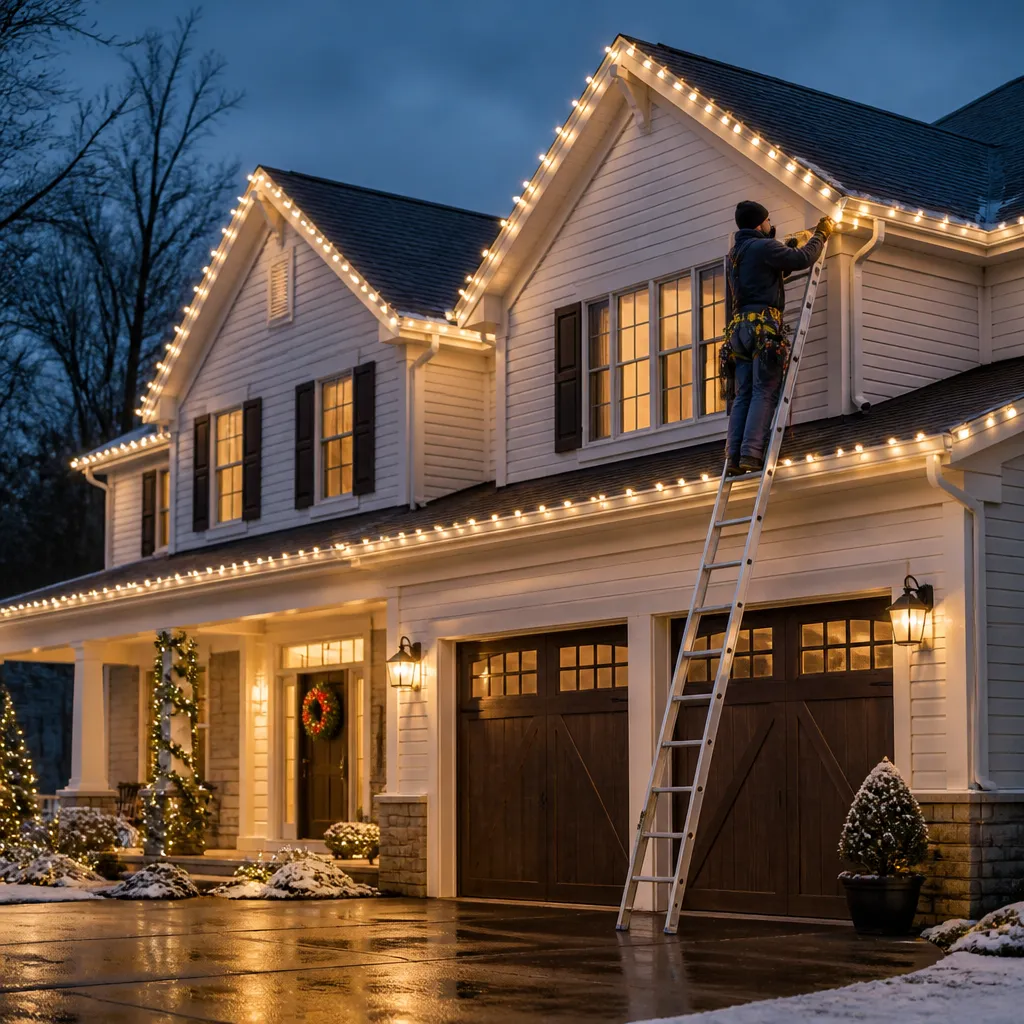
On a two-story home in Sparta or Andover, a first-timer often spends more time moving the ladder than lighting. Each move means unclipping, walking, reclipping, and then stepping back to check that the line is straight. A crew working from a plan does the same eaves in a fraction of the time because the climbs are grouped by section.
Why a good display depends on symmetry
Most homes have a few dominant lines: the garage eave, the front gable, the porch edge. If one side runs half a foot off, the whole display looks amateur from the street. Experienced installers mark spacing before anything goes up, and that is the difference passersby actually notice.
Pro tip: Photograph your house from the curb in daylight before you buy a single strand. Lines that look straight from the driveway often sag when you see them from across the road, and that photo shows you exactly where the plan needs to change.
Safety on Sparta Rooftops and Two-Story Eaves
Falls drive most of the danger in holiday decorating. The U.S. Consumer Product Safety Commission records an average of 200 decorating-related injuries a day during the Christmas season, and about half of them are falls. In 2019, six deaths were recorded, and in 2018 roughly 17,500 people needed emergency room treatment for holiday decorating accidents.
What the injury numbers tell us
Those figures are not about careless people. They describe ordinary homeowners on ladders that were not set on firm ground, working steep pitches, often alone and rushing before dark. A two-story eave is where a single slip turns into a broken wrist or worse, and it is the task most worth handing off.
Why cold weather changes the job
In a Sparta winter, a shingle that looks dry at noon can be glazed with frost by four in the afternoon. Wet or icy surfaces take away the traction you were counting on. A crew that installs in cold conditions should adjust its schedule and its fall protection for that reality rather than pushing through.
Electrical safety deserves the same planning. The homeowner safety guidance from Mercury Insurance starts with mapping the layout before climbing, then using insulated hooks or clips rather than improvised fasteners. Both steps reduce the chance of damaging wire insulation or pulling a run loose during the first windstorm.
How the Installation Process Works, Step by Step
A good install starts before anyone touches a ladder. The crew walks the property, notes the rooflines, gutters, trees, and outlets, and drafts a layout showing where each run starts and ends. That plan is the single biggest reason a professional display looks deliberate instead of thrown up in an afternoon.
Design and layout planning
Expect questions about color, whether you want a single warm tone or a multicolor look, and where the power comes from. An outlet on the eave is easy to use. An outlet on the far side of the garage means extension runs, and those need to be rated for the total load so they do not overheat over a long season.
Clip mounting and wiring
Clips go on the gutter lip, the fascia, or along the shingle line, depending on the roof. They are spaced evenly so the strand sits straight and does not sag between points. Each run should be tested before the crew leaves, because a dead section discovered on the first cold night means a return trip nobody wants to pay for.
Takedown and storage
Takedown is where many displays fall apart. Lights left up into February get sun-faded, brittle, and tangled from the weather. A professional crew removes the strands on an agreed date, coils them onto reels, and labels each run so next season’s install takes less time and fewer mistakes.
Seasonal Strands Versus Permanent Lighting
Most Sparta homeowners start with seasonal strands and never revisit the question. That works if you enjoy the climb and have the time. A permanent system changes the math because the hardware stays on the house and the display changes with a controller instead of a ladder.
| Approach | What It Involves | Best Fit |
|---|---|---|
| DIY seasonal strands | You buy the lights, climb to hang them, and take them down yourself, usually with store-bought clips and a timer. | Low roofs, small front porches, and homeowners who enjoy the work and have time to spare |
| Professional seasonal installation | A crew plans the layout, mounts the runs, tests the circuits, and returns for takedown and storage on a set date. | Two-story homes, complex rooflines, and families who want the lights up on time without the risk |
| Permanent roofline lighting | Fixtures are mounted once along the eave and gutter line, then controlled for each holiday season from a controller. | Homeowners who plan to stay put and want a repeatable display without a yearly climb |
Where seasonal installs still make sense
A small front porch or a few shrubs wrapped in warm white strands is a reasonable DIY project if the roof is low and the ground is firm. Seasonal strands are also a practical way to test which colors and patterns you like before you commit to anything permanent.
When permanent roofline lighting pays off
If you return to the same eave and gutter line every year, permanent lighting removes the seasonal climb entirely. The trade-off is a higher upfront cost, so it makes the most sense for a home you plan to keep for several seasons. Run the math against what you would otherwise spend on yearly installs and takedowns.
What Professional Installation Costs in Sparta
Price is the first question every homeowner asks, and the honest answer depends on the roofline, the number of runs, and whether takedown is included. HomeAdvisor’s cost guide reports professional Christmas light installation typically ranging from $220 to $684, with a typical project averaging $444 for setup and takedown.
Reported price ranges
Those figures are a national benchmark, not a Sparta quote. A single-story home with a few runs will land near the bottom of the range, while a two-story house with a long gable, a garage eave, and several trees will land higher. Use the range as a sanity check when a quote comes back, not as a promise.
What drives the final quote
Four things move the number most: height, number of runs, access to power, and whether takedown and storage are included. Ask for each separately. A single bundled line is hard to compare against other quotes and hard to audit once the install is done.
Pro tip: Ask whether the quote includes takedown and storage. A low install price with no removal plan often turns into a second bill in February or a tangled mess in the garage.
Preparing Your Home Before the Installers Arrive
Preparation is what turns a good install into a great one. A crew can only hang lights well on surfaces that are clean, sound, and clear of debris. Handle the exterior items first, then schedule the lighting visit so the crew works on a ready house.
Gutter cleaning comes first
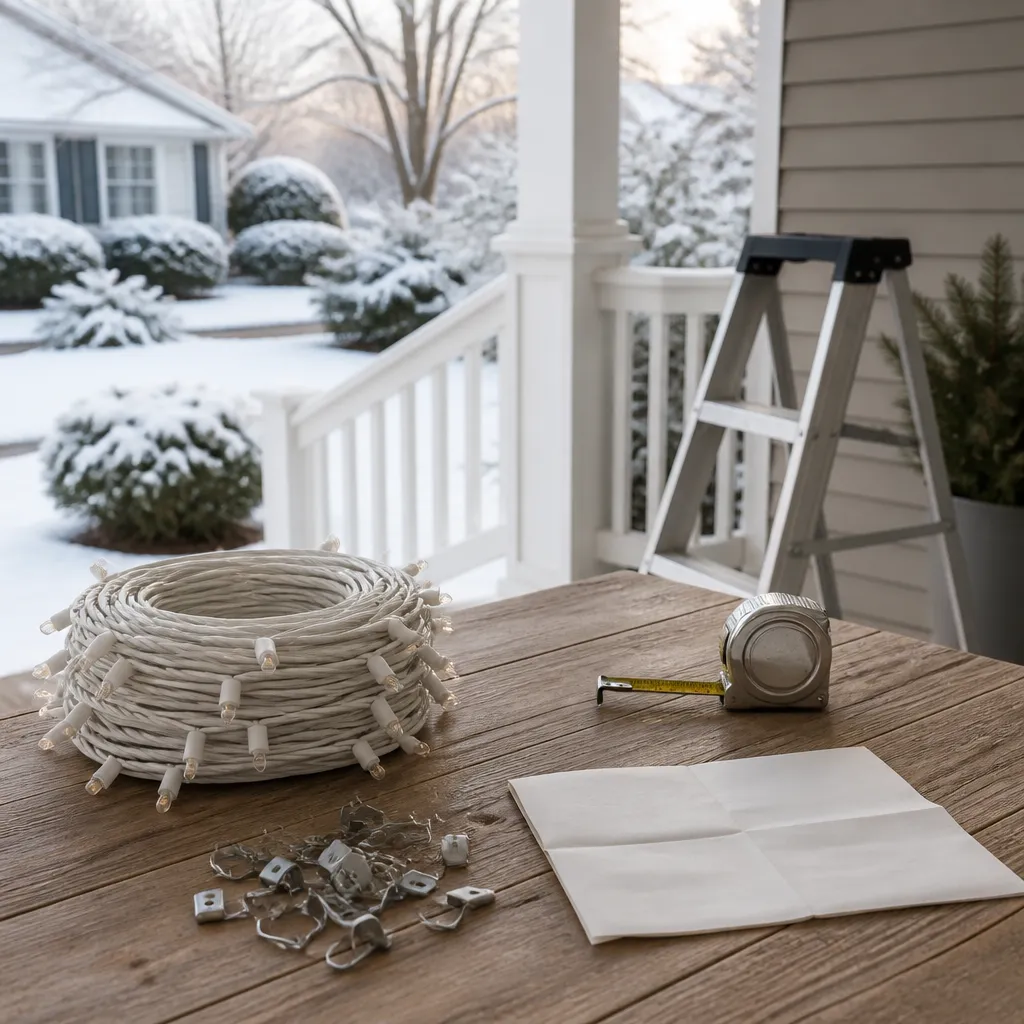
Clogged gutters hide the lip where clips grip, and standing water can loosen fasteners over a season. Gutter cleaning before the lights go up gives the crew a clean edge to work with and removes the leaves that would otherwise sit in the gutters all winter alongside the strands.
Roof and eave condition
Moss, algae, and dark streaks along the roof edge make a home look dirty even when the lights are on. Roof washing before installation removes that buildup, so the lights become the focus instead of the stains. Mention any loose shingles or soft fascia when you book so the crew can plan around those spots.
Pro tip: Locate every outdoor outlet and mark it with tape, and clear snow and debris from the eave line before the crew arrives. A crew that spends the first hour digging out outlets is an hour you are paying for.
Booking Before the Calendar Fills
Timing is the most underrated part of the job. Late October is the last comfortable window for many Sparta homes, because crews book up as the weather turns and the first cold snaps arrive. A visit in mid-November is still possible, but you will have fewer date options and less room for a rain delay.
The best time to hang lights is before anyone needs to see them, and the second best time is before the first hard frost locks the roofline.
What to ask when you request a quote
Ask for a written layout, the number of runs, the type of clip used on your gutters and shingles, the takedown date, and where the strands will be stored. Confirm the company is fully insured. A serious provider expects these questions and answers them without hesitation.
Choosing a schedule that fits your holiday plans
If you are considering permanent lights, book the site visit now so the design can be approved and installed before the holiday rush. Seasonal clients should confirm the takedown window in writing, since lights left up well past the holidays are the most common reason a display looks tired by spring. Flow State Pressure Washing offers free quotes for Sparta and nearby towns, so reach out early to lock in your date.
Frequently Asked Questions
Book as early as you can, ideally before the end of October. Crews fill their schedules quickly once the season starts, and early bookings get the best dates for a clean install.
For most homeowners working on two-story roofs, yes. Professionals work from a planned layout, set up ladders properly, and avoid the solo climbs that cause most falls.
Many do, but only when takedown is part of the quote. Confirm the takedown date and storage arrangements in writing before the install.
Done correctly, the lights attach with clips that grip the gutter lip or fascia without punching through roofing. Ask which clip type the crew uses, and avoid any setup that relies on staples or nails pushed into shingles.
Yes. Clean gutters give clips a solid grip, and removing debris now keeps water from sitting where the strands run.
Yes. Permanent roofline and holiday lighting is installed once and controlled for each season, though it costs more up front than a single seasonal install.
Tell us about your experience: did you hang your own lights this season or switch to a professional crew, and what would you change next time?
References
Ready For A Clean Home?
Schedule Quality Sparta Power Washing Today!