
Why Fall Commercial Pressure Washing Protects NJ Properties

Most commercial property managers book exterior cleaning when a tenant complains or a lease renewal is coming up. That timing misses the point. Fall is when the grime your building absorbed all summer, from pollen and tree debris to algae in shaded corners, starts bonding to concrete, masonry, and roofing materials that winter will freeze, salt, and soak. Commercial pressure washing in NJ done in September or October is not a cosmetic luxury. It is inexpensive protection against gutter failures, slip hazards, and stains that turn into repair bills.
Table of Contents
- Quick Takeaways
- Why Fall Is the Window Your Building Cannot Skip
- What Fall Grime Does to Your Building
- Protecting Asset Value and Lease Appeal
- Winter Slip Risk and Walkway Safety
- Building a Fall Cleaning Schedule That Works
- Comparing Fall Cleaning Approaches
- Common Mistakes That Cost Property Managers Money
- Frequently Asked Questions
- References
Quick Takeaways
| Key Insight | Explanation |
|---|---|
| Book the fall walk-through before the heavy leaf drop | Gutter sag, drainage problems, and staining are easiest to spot once the surface is clean and the debris load is manageable. |
| Treat algae as a moisture problem, not a cosmetic one | Organic growth holds water against masonry, sealant, and walkways, which speeds deterioration over the winter. |
| Clean walkways and dumpster pads before the first freeze | Grease, organic film, and grit make ice harder to see and deicers less effective on a dirty surface. |
| Match the method to the surface | Soft washing suits roofs, siding, and painted brick. High pressure belongs on concrete. Using the wrong one can etch, strip, or void a warranty. |
| Bundle fall services into one mobilization | Gutters, roofs, windows, and walkways done in one visit reduce tenant disruption and cut the per-building cost. |
| Put the scope in writing and ask for proof of insurance | A written scope, surface-by-surface method, and current insurance certificate protect you if something goes wrong on the property. |
Why Fall Is the Window Your Building Cannot Skip
Summer keeps commercial buildings busy. Foot traffic, delivery trucks, outdoor seating, and landscaping crews all leave residue on walls, walkways, and dumpster areas. By the time September arrives, that layer has had months to settle into porous surfaces. A fall cleaning removes it before cold weather locks it in place.
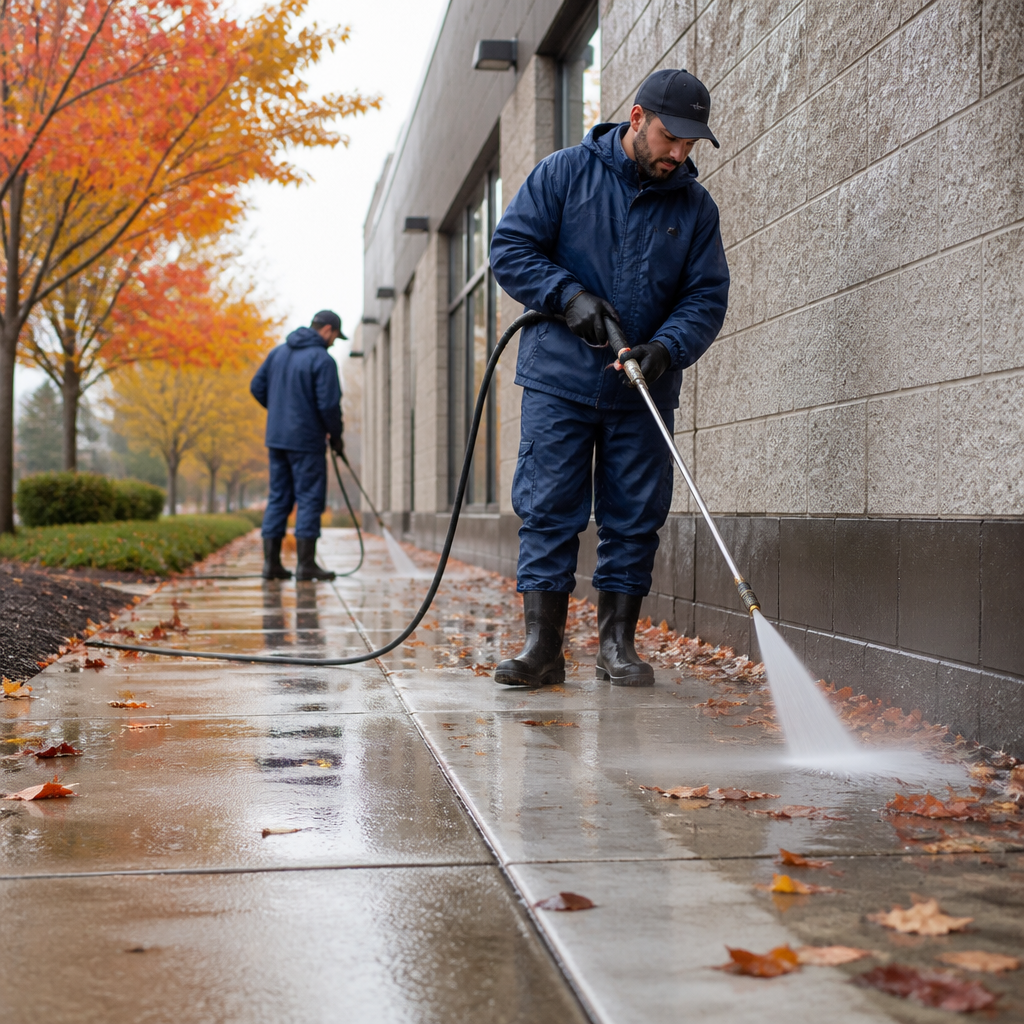
In practice, we see the same pattern at multi-tenant buildings in Newton, Andover, and Franklin Lakes. The exterior looks acceptable through August. Then the first heavy leaf drop fills the gutters with grit, and dark algae bands appear along the parking lot edges that were there all along. Managers often read these as cosmetic issues. They are usually moisture problems sitting on the surface and feeding on it.
Fall also gives you a practical advantage over spring. Temperatures are still workable for exterior water work, and the building has not yet been through a full freeze-thaw season. Problems found in October can be scheduled, budgeted, and fixed before your tenants or insurers start asking questions in January.
Pro tip: Schedule the walk-through before the heaviest leaf drop, not after. A property manager who looks at the building in early October can flag gutter sag, staining, and drainage trouble while the crew is still on site and before the debris makes those problems hard to see.
What Fall Grime Does to Your Building
Fall grime does more than make a building look tired. Some of it is chemically active, and some of it holds water against materials that are supposed to shed it. Understanding which is which tells you where to spend your cleaning budget first.
Gutters and Roofline Debris
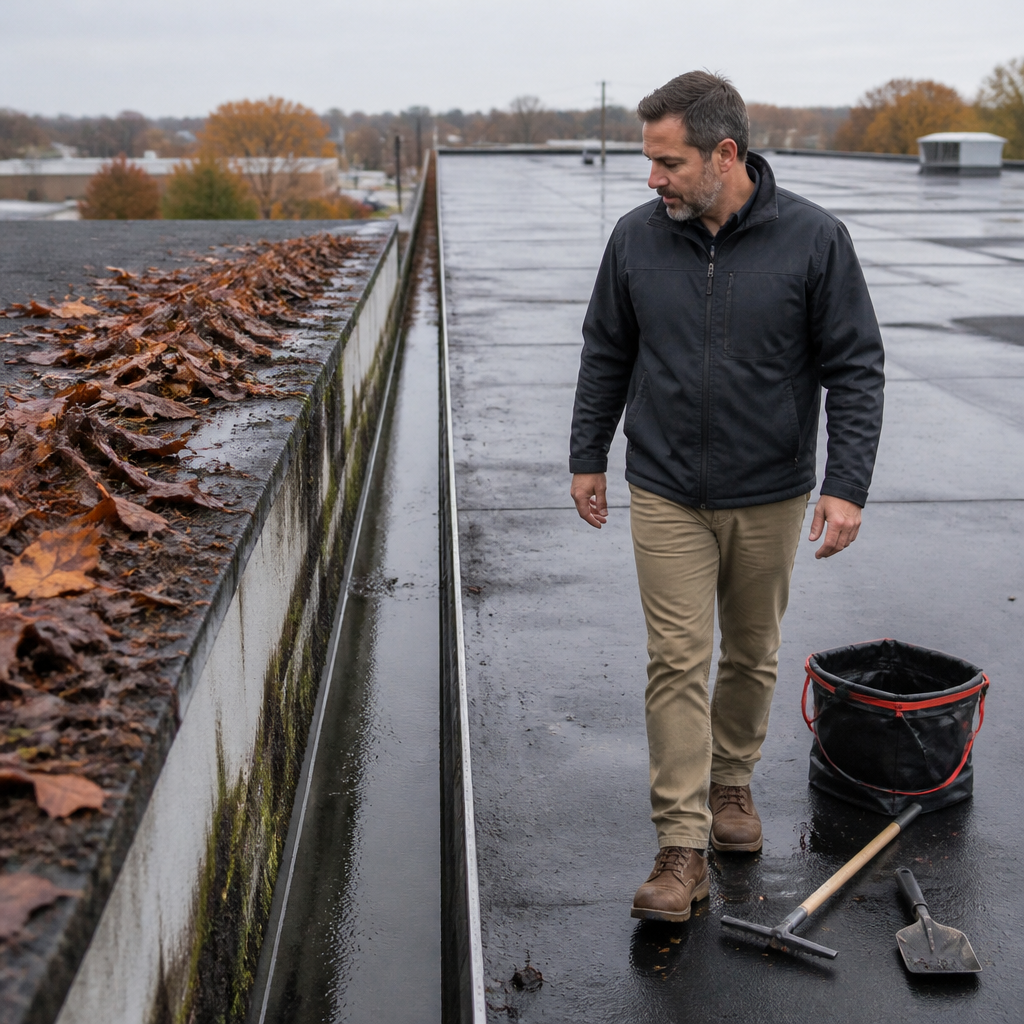
Leaves, pine needles, and granular roof debris pack gutters, then hold moisture against fascia boards and roof edges. Bird droppings add another problem. They are acidic, and when they sit on roof edges and gutter systems for months, they can weaken the materials they touch. Regular cleaning removes droppings before they become structural damage, and it costs far less than replacing a section of gutter after it fails under a heavy snow load.
Algae and Moss in Shaded Zones
Algae and moss favor north-facing walls, dumpster enclosures, under awnings, and the shaded side of a parking lot. A high-pressure blast will knock off the visible growth, but it often leaves the roots behind. Soft washing works differently. It uses a low-pressure, chemically formulated solution to kill growth at the root, and a properly applied treatment can slow regrowth for weeks or months depending on shade, moisture, and rainfall.
Tannin Stains From Fallen Leaves
Leaves left on pavers and concrete release tannins, which leave brown stains that look like dirt but behave like dye. If the stain sits through a few wet weeks, it soaks deeper and becomes harder to remove. Paver restoration and paver sealing are the right answer once the stain has set, but the cheaper path is a fall cleaning before the stain has time to bond.
Most exterior damage we are called to repair did not begin as damage. It began as a stain or a film that stayed on the surface longer than it should have.
Pro tip: Ask your vendor to note which surfaces have algae regrowth from the previous season. Repeat growth in the same spot usually means a drainage or shade issue that cleaning alone will not fix, and that is worth raising with your maintenance team.
Protecting Asset Value and Lease Appeal
A commercial building is judged in the first thirty seconds. Prospective tenants, buyers, and lenders notice clean entries, clear walkways, and windows that let in light. Exterior condition is one of the few factors you can change quickly and at a predictable cost, which makes it one of the most efficient ways to protect asset value.
Curb Appeal at Lease Renewal
Renewals and new listings are the moments when exterior condition is most visible to decision makers. Schedule fall cleaning so the building looks its best when tenants renew, when you show available space, and when your asset team reviews the property. Storefront washing and commercial window cleaning give the biggest visible return because they are the surfaces people look at first.
Keeping Tenants Satisfied
Tenants rarely send a message that says the parking lot looks dirty. They say the walkway is slick, the dumpster area smells, or the entrance looks neglected. These complaints often show up in the same few months every year. Apartment complex washing and drive-thru cleaning, when the surfaces are in use every day, reduce those complaints and keep the property feeling managed rather than merely maintained.
Building a Record of Maintenance
Good property management leaves a paper trail. A scope sheet listing each surface cleaned, the method used, and before and after photos gives you something concrete for your owners, lenders, and insurers. It also makes next year’s bid easier to compare, because you can see exactly what was done and what the condition was when the crew started.
Winter Slip Risk and Walkway Safety
New Jersey winters bring repeated freeze-thaw cycles, and walkways are where that cycle does the most visible harm. A thin film of algae, oil, and organic residue turns a concrete walk into a slick surface long before snow arrives. Once salt and grit are added, the walk becomes harder to read and harder to treat.
Clean surfaces also make winter maintenance more effective. Deicers work on the surface they reach, and a walkway covered in grime can hide the real condition underneath. A pre-season cleaning lets your snow contractor and maintenance staff see cracks, heaving, and low spots that need attention before the first freeze.
Sidewalks and Entry Walks
Sidewalks in front of a commercial building take the heaviest foot traffic and collect gum, food residue, and tracked-in mud. Sidewalk washing and sidewalk cleaning before the holiday season remove that film and keep the entrance safe for customers. Focus on the first ten feet inside the entrance, where tracked moisture freezes first.
Dumpster Pads and Drive-Thru Lanes
Dumpster pads and drive-thru lanes collect grease, oil, and food waste that become slick when temperatures drop. Dumpster pad cleaning should include the apron where trucks turn, not just the concrete pad itself. Drive-thru cleaning on a fall schedule removes the residue that builds up under heavy vehicle use and gives your staff a cleaner surface to work from during the busiest months.
Pro tip: Before the first forecast freeze, walk the property after rain and note where water pools for more than a few minutes. Those low spots are where ice will form first, and they are worth cleaning thoroughly and marking for your snow contractor.
Building a Fall Cleaning Schedule That Works
A good fall schedule starts with the weather and the building, not the calendar alone. The goal is to clean after the heaviest debris has dropped, while there is still enough warm, dry weather to rinse and dry surfaces properly. Stop all exterior water work before a hard freeze is forecast, because water left in cracks and joints can freeze, expand, and widen small defects.
Timing Windows Across the Season
Gutter cleaning works best after most of the leaves have fallen, so the system is not refilled the next day. Commercial roof cleaning should happen when the roof can dry before temperatures drop, and ideally before any roof inspection or insurance review. Walkways and dumpster pads can be cleaned at any point in the fall, but cleaning them before the leaf drop means you are cleaning them twice.
Bundling Services Into One Mobilization
The most cost-effective fall projects combine several services into one visit. Gutter cleaning, commercial roof cleaning, commercial window cleaning, and storefront washing can often be done in a single mobilization, which means one setup, one tenant notice, and one site walk. If you also plan commercial holiday lighting or permanent roofline lighting, get the roofline cleaned and inspected first so the installation surfaces are clean and sound.
Contract Terms That Protect You
Ask for a written scope that lists every surface, the method for each, and the expected result. Request a certificate of insurance before work begins, and confirm who handles overspray and landscaping protection. A twice-yearly schedule, one visit in fall and one in spring, keeps the building on a predictable rhythm. Reach out for a free quote if you want a scope sheet built around your properties and your tenant calendar.
Comparing Fall Cleaning Approaches
Property managers usually face three choices when they plan fall exterior work. Each one fits a different set of surfaces and budgets, and the right answer is usually a mix rather than a single method.
| Approach | Best Suited For | Main Trade-off |
|---|---|---|
| Soft washing with low-pressure chemical treatment | Roofs, vinyl and stucco siding, painted brick, and organic growth on walls | Requires proper dwell time and rinse planning, and is slower on heavy staining than a high-pressure pass |
| High-pressure surface cleaning | Concrete walkways, dumpster pads, loading docks, and parking areas | Can etch, chip, or strip softer materials, pavers, and coatings if the pressure is set too high |
| Reactive one-time cleaning after a complaint | Urgent stains, gum, or a single hazard that tenants have reported | Costs more over the year and usually misses the early signs of moisture and organic damage |
In practice, the strongest plan pairs soft washing for roofs and walls with controlled high-pressure cleaning for concrete. Reactive calls still have a place, but they should fill gaps in a scheduled program rather than replace one. A scheduled approach lets you catch small problems before they become line items in next year’s budget.
The biggest mistake we see is treating all surfaces the same. A single pressure setting across a building can be safe on a concrete dumpster pad and damaging on the painted trim above it. Ask any provider how they will adjust method and pressure for each surface, and expect a clear answer.
Common Mistakes That Cost Property Managers Money
The mistakes that cost the most are rarely dramatic. They are small decisions made under time pressure, usually at the end of a busy season. Avoiding them does not require a bigger budget. It requires a clearer scope and a schedule you actually follow.
Blasting Everything at One Pressure
Brick, pavers, and painted surfaces each respond differently to water. Brick can deteriorate over time if left unwashed, but it can also be damaged by excessive pressure that pushes water into the face and loosens mortar. Pavers can be etched or have their joint sand washed out if the pressure is too high. Setting a single high-pressure standard across the whole property is the fastest way to create a new repair list.
Waiting for a Tenant Complaint
Reactive cleaning feels efficient until it is measured against the cost of repairs that could have been prevented. Algae that has rooted into a surface, gutters that have overflowed into a wall, and grease that has soaked into concrete all cost more to correct than they would have cost to maintain. A standing fall visit prevents most of that drift.
Hiring on Price Alone
The lowest bid often leaves out the details that matter most, such as surface-by-surface method, chemical containment, and proof of insurance. Ask for those details in writing before you compare prices. A slightly higher bid with a clear scope is usually the cheaper option once a damaged roof edge or a stained entry is on the table.
Pro tip: Before awarding any fall contract, request the company’s certificate of insurance and a written note of the method they will use on each surface type. A vendor who hesitates on either request is telling you something useful about how they will handle your property.
Frequently Asked Questions
Late September through October is the strongest window for most commercial exteriors in New Jersey. Clean after most of the leaves have dropped, and finish before a hard freeze is forecast so surfaces can dry and water does not get trapped in cracks.
It prevents the kinds of repairs that start as surface problems. Removing acidic bird droppings, clearing gutters before they overflow, and treating organic growth before it roots into masonry all reduce the chance of rot, staining that needs replacement, or water intrusion. It will not fix a failing roof or a structural defect, but it makes those problems easier to see and to date.
Soft washing is generally the safer choice for commercial roofs because it relies on a low-pressure, chemically formulated solution rather than force. The roofing material still matters, so ask the provider how they will handle your specific membrane, shingle, or metal surface before work begins.
Most high-traffic commercial walkways and dumpster pads benefit from a fall cleaning and a spring cleaning at minimum. Properties with heavy restaurant, drive-thru, or apartment traffic may need additional visits during peak seasons, especially where grease and organic residue build up quickly.
Ask for a written scope that lists each surface and its method, a current certificate of insurance, a clear explanation of how overspray and landscaping will be protected, and the expected outcome for each area. Also ask how the company documents completed work so you have a record for owners and insurers.
Property managers in Sparta, Newton, Mahwah, and the surrounding towns, tell us what fall cleaning has done for your buildings or what you wish you had scheduled sooner, because your experience helps other managers plan a better season.
We would love your feedback and any insights you would share with others. What perspective would you add?
References
Ready For A Clean Home?
Schedule Quality Sparta Power Washing Today!