
Walkway Cleaning Sparta NJ: Safe Halloween Pathways

If you are planning walkway cleaning in Sparta NJ before the holiday, timing and method matter as much as the scrubbing itself. Trick-or-treaters move fast, often in the dark, and many of them carry bags that block their view of the ground in front of them. A front path that looks fine in daylight can turn slick once it’s damp, and a thin film of algae on a step is easy to miss under a porch light. A focused clean before October 31 removes most of that risk. Here is how we approach it, surface by surface, and what to avoid.
Table of Contents
- Quick Takeaways
- Why Dirty Walkways Become a Trip Hazard
- Soft Washing or Pressure Washing for Walkways
- Surface-by-Surface Cleaning for Walkways
- Entryways, Steps and Porch Edges
- Timing Your Walkway Cleaning Before Halloween
- Lighting Pathways Without Creating New Hazards
- Common Mistakes That Leave Walkways Slippery
- Frequently Asked Questions
- References
Quick Takeaways
| Key Insight | Explanation |
|---|---|
| Clean the path in daylight, then check it at night | Algae and residue are hard to see under porch lights. Walk the route after dark to find the slick spots you missed. |
| Algae is the biggest slip risk | Green film on concrete and pavers is slicker than wet leaves in many cases, and it concentrates on shaded sections. |
| Match the method to the surface | Soft washing suits algae and delicate surfaces. Controlled pressure suits hardened grime on sturdy poured concrete. |
| Rinse until no soapy film remains | Leftover cleaner dries into a slippery layer that is worse than the dirt you removed. |
| Treat the steps and edges as priorities | Trick-or-treaters step on riser edges, landings and porch corners. Those spots need hand attention, not just a pass with the wand. |
| Use battery light, not open flames | Flashlights and glow sticks are safer around dry leaves and paper decorations, and cords should be taped along the edge of the walk. |
| Book at least two weeks ahead | Early booking leaves room to reschedule if rain moves in during the final week of October. |
Why Dirty Walkways Become a Trip Hazard
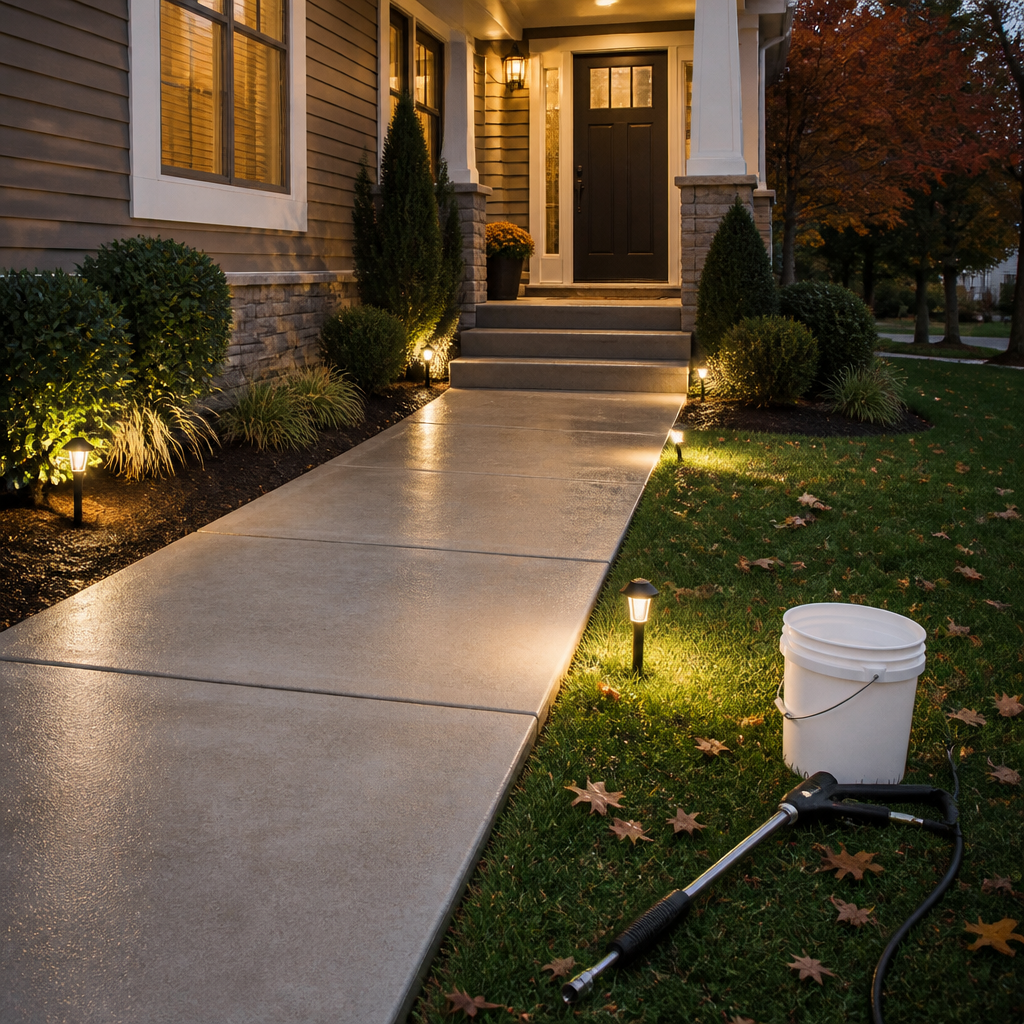
On most Sparta front walks, the first surface to fail is the shaded section. Algae, mildew and moss build up where the sun rarely reaches, usually on the side of the house facing away from afternoon light or under a large tree. That film holds moisture, and wet concrete is far slicker than dry concrete, even when it looks clean.
Algae and Moss on Shaded Sections
Algae rarely looks dramatic until someone slips on it. It starts as a faint gray or green haze, then thickens into a layer that makes the surface shine when wet. In practice, the shine is the signal to watch for, because a walkway can look like plain concrete and still be the most dangerous part of the property.
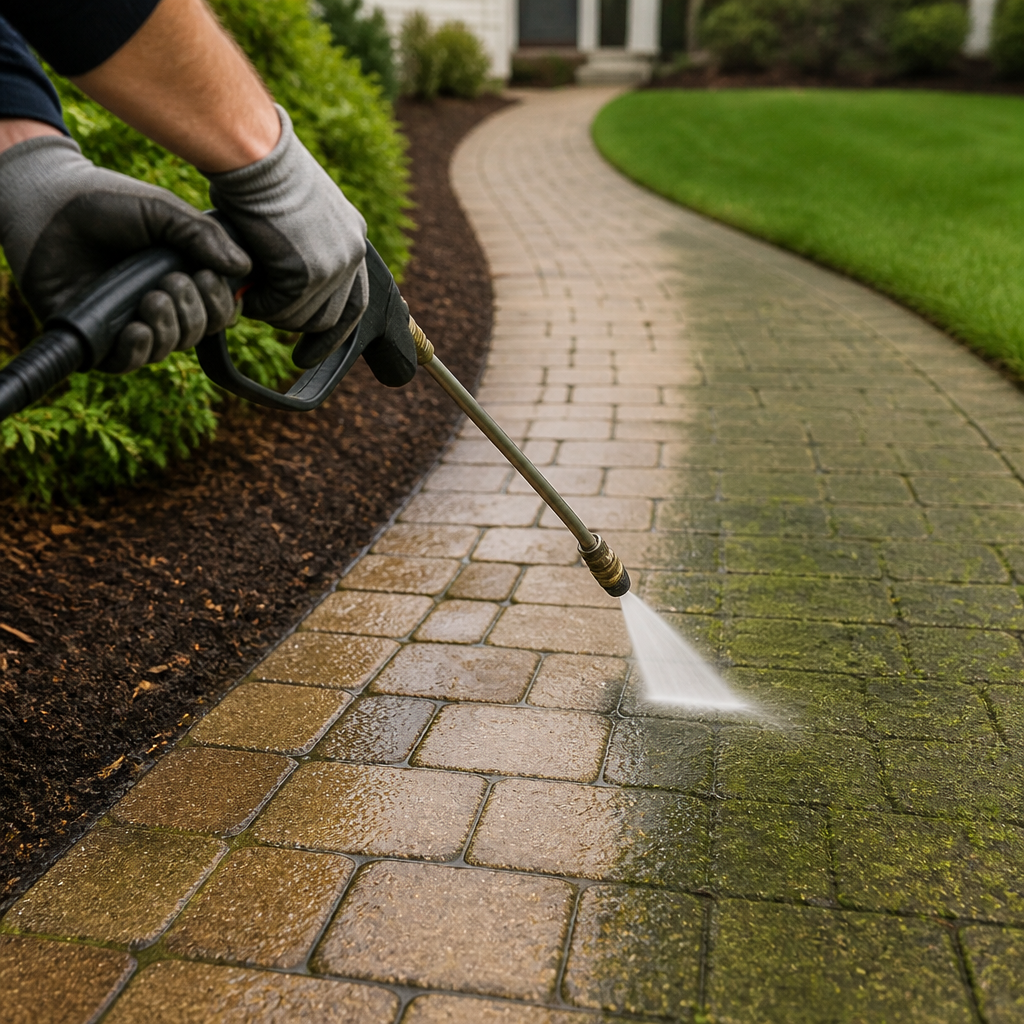
Moss is worse on pavers and at the joints. It roots in the sand between stones and lifts edges over time. Once it has settled in, a quick rinse won’t remove it, and scraping can damage the joints.
Leaves and Mud in the Joints
Wet leaves packed into seams and stuck to the bottom step act like a loose rug. Autumn rain makes this worse, and by late October many homes have weeks of leaf buildup that never got cleared after the last storm. Clear leaves first, then clean the surface beneath them so you are not just moving debris around.
Mud tracked from the lawn also matters because it hides the real condition of the surface. Walk the route before cleaning and check every step and transition for the shine that signals algae or residue.
Soft Washing or Pressure Washing for Walkways
The method you choose decides whether a walkway ends up clean or damaged. Soft washing uses low pressure and a cleaning solution that stays on the surface long enough to kill algae and mildew at the root. Pressure washing uses a much stronger stream to blast off hardened grime. Both have a place on a walkway, but they are not interchangeable.
| Method | Best For | Main Risk |
|---|---|---|
| Soft washing | Algae, mildew and moss on concrete, pavers and painted steps | Requires the right detergent and careful rinsing, and nearby plants need protection |
| Controlled pressure washing | Oil stains, old tire marks and built-up grime on sturdy poured concrete | Can etch concrete, chip paver edges and blow sand out of joints |
| Hand scrubbing with a stiff brush | Step nosings, small stains and areas close to shrubs | Slow and labor intensive, and it will not lift deep staining |
When Soft Washing Is the Right Call
On algae-covered concrete, painted porch steps and pavers near garden beds, soft washing is almost always the better choice. Low pressure is less likely to etch the surface or push water into mortar. The solution does the work, so the crew must rinse plants and nearby surfaces thoroughly to avoid residue.
Soft washing relies on proper detergents and technique. It is generally best left to trained crews, because an overly strong mix or a long dwell time can damage finishes and landscaping.
When Pressure Washing Makes Sense
Oil stains, tire marks at the end of a driveway and built-up grime on sturdy poured concrete respond well to controlled pressure. Pressure is also where you can lose material. Too much force cuts into soft mortar, erodes the top layer of concrete and blows sand out of paver joints, which lets weeds and moss take hold faster.
Pro tip: Start with the widest tip and the lowest pressure that still lifts the stain, then move closer only if needed. Always test a small hidden corner first.
Surface-by-Surface Cleaning for Walkways
Every walkway material reacts differently to water and cleaner. Treating a paver path like a concrete slab is the fastest way to create a new problem before the holiday. Start by identifying what the walk is made of, then choose your approach.
Poured Concrete Walks
Poured concrete is the most forgiving surface. It handles controlled pressure well, and a surface cleaner attachment keeps the spray even so you don’t leave striping. Work in sections, keep the wand moving and rinse toward the dry end so dirty water doesn’t run back over clean concrete.
Paver Walkways and Joints
Interlocking pavers need a different plan. Cleaning solution and water can wash joint sand out, and high pressure can chip edges. After cleaning, joints often need fresh sand swept in and compacted, and a paver sealer can slow future algae growth. Seal only after the surface is fully dry, which depends on the weather that week.
Pro tip: Before cleaning pavers, check whether the joint sand has washed low. Refill it first, because a sunken paver is a trip hazard that no amount of cleaning will fix.
Natural Stone and Flagstone
Natural flagstone and older stone walks are the most variable. Some stone is soft, some is porous, and some has been sealed with products that react badly to certain cleaners. If you see flaking, crumbling mortar or a surface that darkens quickly when wet, stop and test a small area before going further.
Entryways, Steps and Porch Edges
The entryway is where trick-or-treaters slow down, bunch up and step up. That makes the top step, the riser and the landing the priority. A clean walkway that ends in a dirty stair still creates a hazard right where kids are most likely to stumble.
Front Steps and Risers
Steps need the most attention along their edges. Algae builds on the nosing, the front lip of each tread, where water sits. Scrub that lip by hand with a stiff brush if the wand can’t reach it cleanly, and keep solution from pooling on the tread.
Porch Edges and Railings
Porch edges and railings collect pollen, grime and spider webs that blur the boundary between the walkway and the house. Trick-or-treaters use railings for balance, so they should not feel sticky. Check that the base of each railing is secure while you are working.
Doormats and Threshold Areas
Doormats and thresholds are often overlooked. Remove the mat, clean the surface beneath it and let everything dry before putting the mat back. A soaked mat on a wet step is a common cause of slips, and a mat sitting on grime leaves a dark line that keeps collecting water.
Timing Your Walkway Cleaning Before Halloween
Book walkway cleaning at least two weeks before Halloween if you can. That leaves room to reschedule if rain moves in, and it gives you time to fix cracked pavers or loose steps you find during the walk-through. Crews have less flexibility as the holiday approaches and the forecast starts to turn.
Schedule Two Weeks Out
A practical timeline looks like this. Walk the route in daylight, note any loose stones or pavers, then book the clean. Ask for repairs at the same visit when possible, because a cleaned walkway with an open joint still needs attention before trick-or-treaters arrive.
Watching the Weather Window
Choose a stretch of dry days and avoid cleaning right before a cold night. Late October nights can dip cool enough for surfaces to stay damp, which slows drying and leaves moisture sitting in the joints. Plan on the walkway being fully dry before you set out decorations or seating for guests.
A walkway that is clean but still slick is only half fixed. The goal is a surface that looks clear and is actually safe to walk on in the dark.
Lighting Pathways Without Creating New Hazards
A clean walkway still has to be visible. Trick-or-treaters should be able to see the edges of the path, the steps and any change in level. Keep lighting low and steady, and avoid fixtures that throw glare straight into a child’s eyes.
Battery Lights Along the Edge of the Walk
The state safety guidance linked in the references recommends flashlights or glow sticks instead of candles or incandescent lights when decorating walkways and yards. Open flames near paper decorations, dry leaves and dry shrubs are a fire risk, and battery light sources are easier to place away from anything that can burn.
Cords, Stakes and Inflatables
Run any cord along the edge of the walk, never across it, and tape it down or use cord covers. In practice, cords, stakes and inflatables cause more trouble than lighting itself. Keep stakes out of the path and check that nothing blocks the steps.
Permanent Lighting for Future Seasons
If you want walkway lighting that works every October without a ladder and a tangle of stakes, permanent outdoor lighting is worth considering. Color-changing fixtures can be set to seasonal shades for Halloween, then switched for other holidays, and the wiring stays out of the walk.
Common Mistakes That Leave Walkways Slippery
Most walkway problems come from a handful of repeated mistakes. They are easy to avoid once you know what to look for.
Leaving Cleaner to Dry on the Surface
Cleaning solution left to dry on concrete or pavers leaves a film that can be slicker than the algae it was meant to remove. Rinse thoroughly and check the surface by feel as well as sight once it dries.
Blasting the Joints Clean
Aggressive wand work at close range removes joint sand, weakens mortar and can leave shiny spots on concrete that collect water. Keep the nozzle moving and maintain a steady distance from the surface.
Skipping the Route Between Curb and Door
Many homeowners clean only the front stoop and forget the path from the sidewalk or driveway. Trick-or-treaters walk the whole route, so clean from the curb to the door.
Pro tip: Walk the path after dark using the same lights you plan to use on Halloween night. You will spot shadows, glare and trip points that daytime checks miss.
Frequently Asked Questions
Two weeks is a comfortable window. It gives you room to reschedule around rain and time to repair loose pavers or steps that the cleaning reveals.
Soft washing is generally gentler on pavers than high pressure, because it depends on solution contact time rather than force. Plants still need to be wetted down and rinsed, so ask whoever is cleaning how they protect nearby beds.
You can, but a rushed job often leaves residue, and wet surfaces cool overnight. If you do it yourself, finish at least a full day before trick-or-treating, rinse thoroughly and use a cleaner made for your surface type.
Battery-operated flashlights, glow sticks or low LED path lights placed along the edges of the walk are the safest options. Avoid open flames, tape down every cord and make sure nothing blocks the steps.
Cleaning helps, but leaves need to be cleared first. Sweep or blow them off the walkway and steps, then clean the surface underneath. Leaves that return after a rain can still cause trouble, so check the walk again on the night itself.
Shaded walkways often start growing algae again within a few months, and damp areas faster. Sealing pavers and clearing leaves and debris regularly slows that growth considerably.
We would like to hear which surface gives you the most trouble on Halloween night, so share your experience with us.
We would love your feedback and any insights you would share with others. What perspective would you add?
References
Ready For A Clean Home?
Schedule Quality Sparta Power Washing Today!