
Spooky Grime on Your NJ Home: Mold, Mildew, and Algae

Spooky season is not just for porches and jack-o’-lanterns. By late October, many North Jersey homes show dark speckles on the siding, green fuzz in the shady corners, and streaks running down from the roof edge. Most of that is mold, mildew, or algae, and each one grows for a different reason. If you are searching for mold mildew siding NJ advice, the fall weather is working in the growth’s favor: cool nights, wet leaves, and rain that never fully dries off the north walls. This guide covers what we see on local homes, how to tell each growth apart, and what actually cleans it without damaging the surface.
Table of Contents
- Quick Takeaways
- Mold and Mildew on Siding
- Algae on Roofs Across North Jersey
- Moss and Gutter Growth
- Fence, Deck, and Patio Growth
- Safe Cleaning Methods That Work
- Prevention Schedule for Fall and Winter
- Commercial Properties and Apartment Complexes
- Frequently Asked Questions
- References
Quick Takeaways
| Key Insight | Explanation |
|---|---|
| Shaded siding grows mildew first | North and east walls stay damp longest after dew and fall rain, so start your inspection on those faces and along the bottom courses. |
| Dark roof streaks are usually algae | The most common culprit is a blue green algae called gloeocapsa magma, which is often mistaken for mold or dirt. |
| Moss is a structural problem | Moss can lift and curl shingle edges, which opens a path for wind damage and leaks. Remove it rather than just rinsing it. |
| Rinse at low pressure, never blast | Let a cleaning solution dwell, then rinse gently. Letting the solution dry on the surface can prevent a complete rinse. |
| Clean before you paint, stain, or caulk | Paint applied over moldy surfaces is likely to peel, so clean, dry completely, and only then refinish. |
| Clear gutters before the hard freeze | Clogged gutters hold water against the fascia and the top courses of siding, feeding growth on the walls below. |
Mold and Mildew on Siding
Siding is the most visible surface on most homes, and it is one of the easiest places for growth to take hold. Mold and mildew need three things to thrive: moisture, a food source such as dust, pollen film, or dirt, and time. Fall supplies the first two in abundance, and the cool weather slows drying so the growth gets the third.
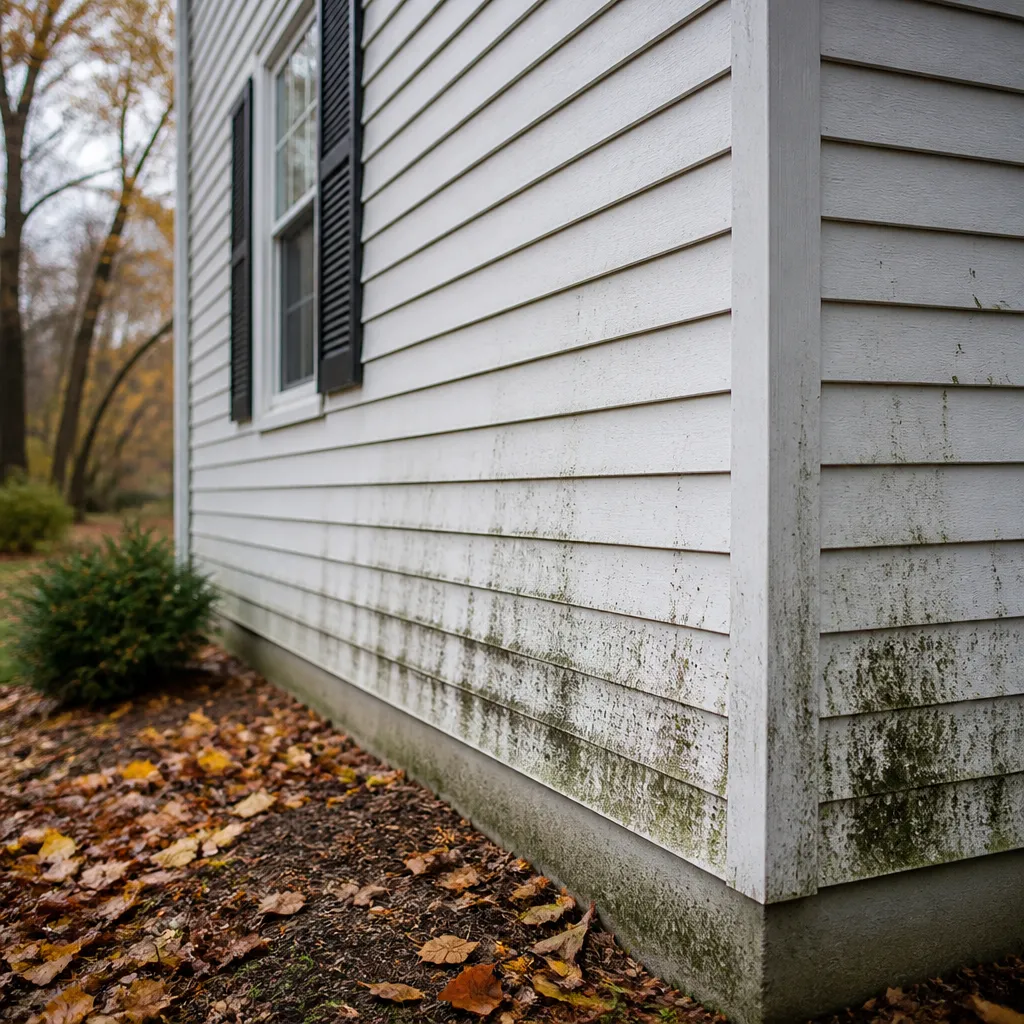
Why Shaded Siding Grows Mildew First
The north and east walls often stay damp the longest. Shade keeps the sun from drying the surface after morning dew, and fall rain sits in the lower courses near the grade. In practice, the first sign is usually a faint gray or brown haze around the bottom boards, not the bright green most people expect.
A common mistake is waiting until the haze turns black. By then it has worked into the surface texture, and the cleaning takes longer and needs more care.
Mildew, Mold, or Dirt: How to Tell Them Apart
Mildew tends to look flat and powdery, and it ranges from light gray to brown. It usually wipes off more easily than mold. Mold looks fuzzy or spotty, can be black, green, or white, and often sits in pockets where water collects.
The New Jersey Department of Health’s mold advisory lists Aspergillus, Cladosporium, Penicillium, and Alternaria among common molds and notes that molds reproduce by making spores. That spore reproduction is one reason dry brushing spreads the problem instead of solving it.
Growth on siding is rarely a cosmetic problem on its own. It is a moisture problem showing up on the surface, and cleaning only lasts when the water path is fixed too.
Pro tip: Check the bottom two feet of siding and the area under downspouts first. Those spots stay wet longest and show growth before the upper walls do.
Algae on Roofs Across North Jersey
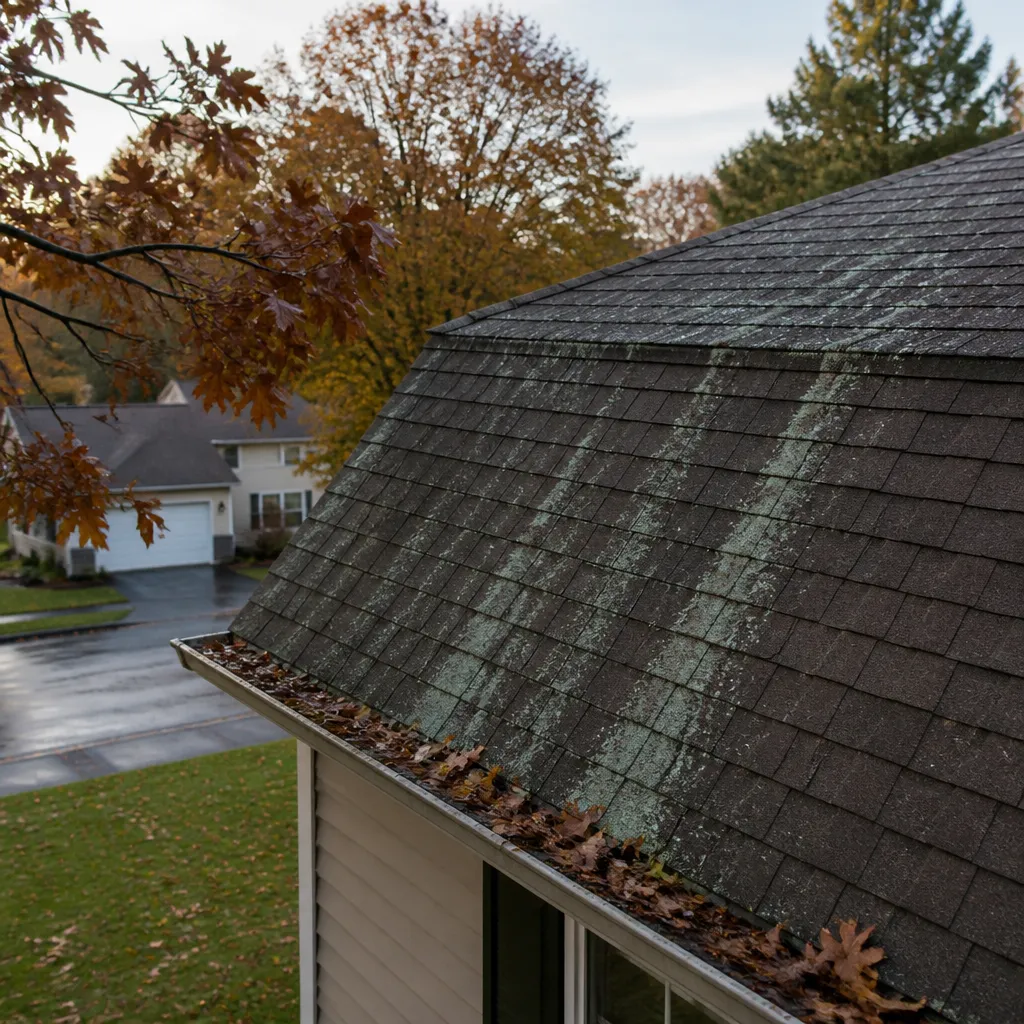
Algae is the growth we see most often on shingle roofs, and it gets blamed on mold more than any other. The black or dark gray streaks are usually algae, most commonly gloeocapsa magma, which shields itself from ultraviolet light with a dark pigmented sheath. Because the streaks look like soot or stains, many homeowners wait until the roof looks dirty from the street.
Why Algae Streaks Spread From House to House
Algae spores travel on wind and on animals, so a roof with heavy growth usually means its neighbors are next. Townhouse rows, condo buildings, and apartment complexes often show the same streak pattern across many roofs at once. Algae starts as small spots and turns into streaks over time, so by the point you can see streaks, it has often been growing for months.
Does Algae Damage Shingles?
Here is the straight answer. Algae mostly affects appearance on standard asphalt shingles, and there is no scientific evidence that it damages them the way moss does. Cool or highly reflective roofs are the exception, because algae can meaningfully affect how those systems perform over time, so treat them as a priority.
In practice, the bigger risk to a shingle roof is often the cleaning itself. A roof scrubbed hard or blasted with high pressure can lose granules, and that shortens the shingle’s life far more than a streak ever would.
Pro tip: Never climb a roof alone to clean it. Use a crew with proper fall protection and equipment, and keep the work at low pressure from a safe position.
Moss and Gutter Growth
Moss is a different problem, and it deserves faster action than algae. It is a non-vascular plant that takes in water through its leaves rather than its roots, so it needs damp conditions to survive. That is why it settles on shaded roof planes, especially north-facing ones, and under overhanging branches that drop debris and hold moisture.
Moss Lifts Shingles and Invites Leaks
Moss can cause the leading edges of shingles to lift or curl. That gap gives wind a way under the shingle and raises the risk of blow-off during storms. In severe cases, moss buildup can push water sideways under the shingles, damaging the roof deck or causing leaks.
Removing moss is structural maintenance, not just a cosmetic wash. If you see lifted edges, have them checked before the next wind event rather than after.
Gutters Feed the Growth
Gutters packed with wet leaves hold water against the fascia and the top courses of siding. That moisture keeps the lower walls damp deep into the cold months. Gutter cleaning and gutter brightening belong in the same job as roof work, because a clear gutter moves water off the house instead of letting it sit against the wall.
Fence, Deck, and Patio Growth
Horizontal surfaces and wood fences collect the same spores and moisture as siding, but they hide growth well. A deck that looks simply gray is often carrying a green film underneath, and a patio in full shade can turn slick faster than most people expect after a wet stretch.
Green Film on Pressure-Treated Wood
Fences and decks in shade develop a green or dark film long before they show visible rot. High pressure at full force can raise the grain and tear soft wood, so the right approach is a low pressure wash with a cleaning solution, a full rinse, and enough drying time before any new finish goes on.
If the wood is ready for fresh color, deck staining or deck painting should wait until the surface is fully dry. Finishing over a film traps the growth underneath and guarantees a peeling coat by spring.
Patios, Pavers, and Pool Decks in Shade
Pavers and concrete in shade hold moisture between joints, and that is where growth settles. Paver restoration and paver sealing both help, but sealing over a film locks the problem in place. Clean first, let the surface dry, then seal, and the sealer will bond to the stone rather than to the grime.
Safe Cleaning Methods That Work
Most growth jobs go wrong at the cleaning stage. The EPA’s basic mold cleanup guidance centers on scrubbing hard surfaces with detergent and water and drying them completely. That principle carries over to exterior work: use the right chemistry at the right pressure, then keep the surface from staying wet.
Soft Washing Versus High Pressure
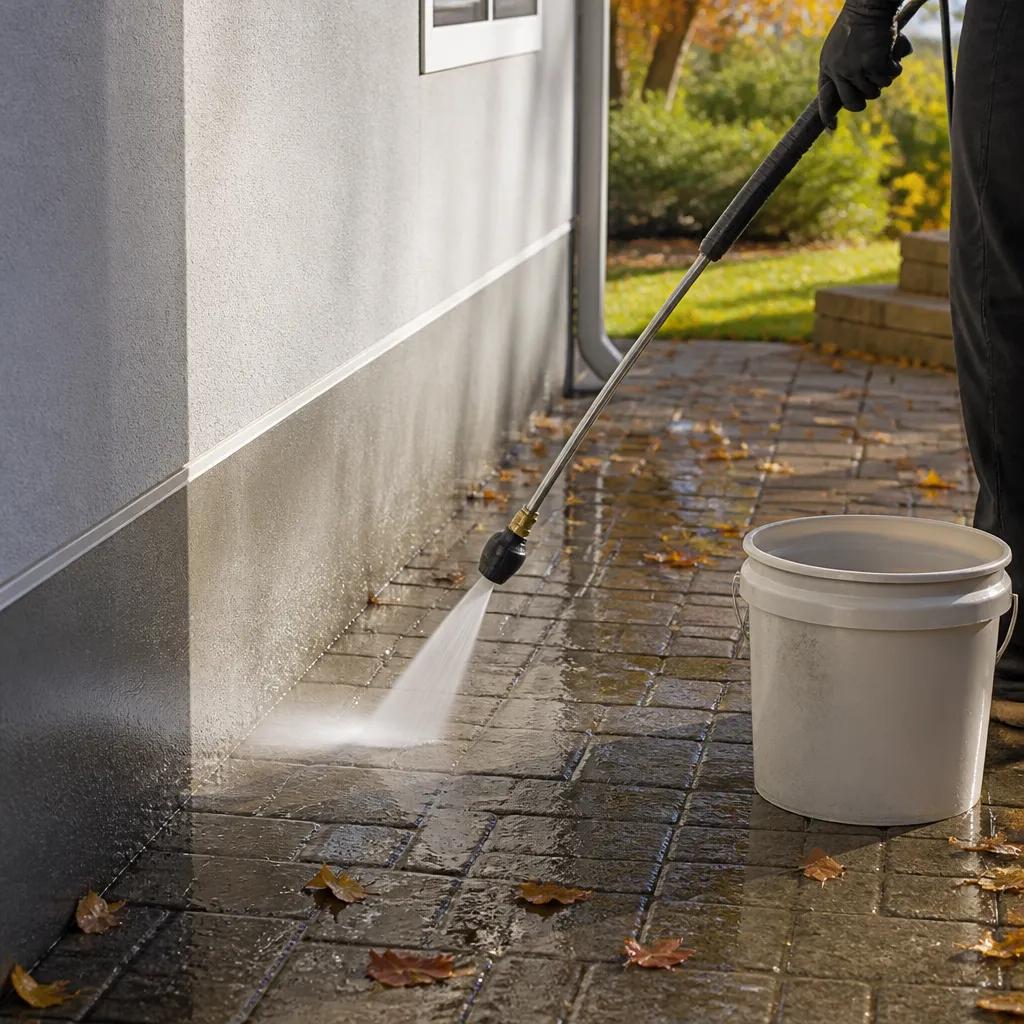
Soft washing uses low pressure and a cleaning solution that stays on the surface long enough to work, then rinses away. High pressure mostly removes the top layer and often leaves the roots behind, which is why a stain can return within a single season. On siding and shaded walls, the soft approach is almost always the better result.
The Bleach Mix and Dwell Time on Roofs
For roof algae and moss, the most effective method roofing specialists describe is a 50:50 mix of laundry strength liquid chlorine bleach and water. Apply it with a sprayer, let it dwell for 15 to 20 minutes, then rinse thoroughly at low pressure. Heavy growth may need a longer dwell, but do not let the solution dry on the surface, because that can prevent a complete rinse.
Pro tip: Pre-wet plants, shield metal fixtures, and rinse from the top down so solution runoff does not dry on walkways or landscaping.
| Method | Best For | Main Risk |
|---|---|---|
| Soft washing with a cleaning solution | Siding, shaded walls, and fences with mildew or early mold | Requires proper dwell time and careful plant protection |
| Low-pressure bleach mix with a long rinse | Algae streaks and moss on asphalt shingle roofs | Runoff can harm landscaping and metal if not managed |
| High-pressure wash alone | Concrete and stone with set-in grime that is not organic growth | Strips softer materials, raises wood grain, and can damage shingle granules |
Prevention Schedule for Fall and Winter
The best time to beat growth is before it sets in, and fall is the window. Cooler nights and falling leaves keep surfaces damp longer, so the work done in October carries your home through the winter with far less effort.
Clear Gutters Before the Hard Freeze
Clear gutters and downspouts once most of the leaves have dropped, then check again after the first big windstorm. Water that backs up in gutters is one of the more common reasons siding stays stained season after season, so this is one of the cheapest prevention steps you can take.
Fix Water Problems Before You Clean
The key to mold control is moisture control. Fix leaking hose bibs, failing caulk, and water pooling at the foundation before you spend money on cleaning, because a surface that stays wet will regrow. After cleaning, dry everything completely, since growth returns quickly on surfaces that never dry out.
Pro tip: Schedule exterior cleaning before you put up permanent holiday lighting. A clean surface gives mounts and clips a better bond and keeps the finished look sharp all season.
Commercial Properties and Apartment Complexes
Commercial buildings carry the same growth risks, only on a bigger scale. Apartment complexes, storefronts, and dumpster pads often show growth together because they share shade, drainage patterns, and foot traffic. A property manager who waits for tenant complaints is already behind schedule.
Storefronts and Dumpster Pads
Storefront washing and dumpster pad cleaning matter because standing moisture and food debris attract growth quickly. Schedule these services before the cold months, so staff are not managing slick walkways in December. Commercial soft washing is a better fit for most storefront siding than high-pressure work.
Planning a Multi-Building Route
Work in a set sequence: roofs first, then siding and windows, then flatwork. Keep a written record of which buildings were treated and when, so the next visit targets the spots that regrew first. Properties across Sparta, Andover, Lafayette, Newton, and Franklin Lakes often need this kind of planned route to keep maintenance predictable.
Frequently Asked Questions
It can be either, and both respond to a low-pressure wash with a cleaning solution. Mildew usually looks flat and powdery and wipes off more easily, while mold looks fuzzy and sits in pockets. If it returns within weeks, the moisture source is still there and needs to be fixed.
There is no scientific evidence that algae damages asphalt shingles, although it clearly affects appearance. Cool or highly reflective roofs are the exception, because algae can affect long-term performance on those systems, so address it sooner.
You can, but high pressure is the wrong tool for shingles. A low-pressure bleach solution with a proper dwell time and a gentle rinse is the approach that works, and working on a roof alone carries real fall risk.
For most shaded homes, we recommend one professional cleaning each fall. Properties with trees overhanging the roof usually benefit from a second visit in spring.
No. Paint applied over moldy surfaces is likely to peel, so clean the area, let it dry completely, and then paint or stain.
We serve Sparta, Andover, Lafayette, Newton, Franklin Lakes, Mahwah, and surrounding communities. Request a free quote and we will confirm service details for your property.
Tell us what growth you have noticed on your siding or roof this fall and what, if anything, you have already tried.
References
Ready For A Clean Home?
Schedule Quality Sparta Power Washing Today!