
Solar Panel Cleaning NJ: Boost Output Before Winter

If your solar array has collected a season of pollen, road grime, and bird droppings, you are probably losing some energy on every sunny afternoon. Solar panel cleaning in NJ is not complicated work, but timing matters. As days shorten and the sun sits lower over Sparta and the rest of Sussex County, each percentage point of lost output costs more, because your system has fewer productive hours to make up the difference. This guide covers when cleaning actually pays off, when it wastes your money, and how to prepare your panels before winter arrives.
Table of Contents
- Quick Takeaways
- Why Dirt Costs Less Than You Think
- When Winter Makes Cleaning Worth Scheduling
- How Our Crew Cleans Panels Safely
- Comparison of Cleaning Methods
- Snow, Ice, and Shading Problems
- Scheduling Cleaning Across North Jersey
- Frequently Asked Questions
- References
Quick Takeaways
| Key Insight | Explanation |
|---|---|
| Even dust rarely justifies a service call | A solar performance monitoring provider reports that normal dust, leaves, and bird droppings hardly affect production. Check your app before you book anything. |
| Localized soiling is the real problem | A dark band or a cluster of droppings on one section can cut output more than a thin, even film across the whole array. |
| Book cleaning after the last big leaf drop | Late October through November is a practical window in North Jersey, before the first hard freeze and before the sun drops much lower. |
| Never use a pressure washer on panels | High pressure can crack glass, damage frame seals, and push water under the edges. Purified water and soft brushes are the safe standard. |
| Rinse with purified water, not hose water | Minerals in hard water dry into spots that scatter light and undo the benefit of cleaning. |
| Stay off snow-covered roofs | Clear only the lowest row from the ground with a soft roof rake. Never chip ice with a shovel or metal tool. |
| Measure the gain instead of guessing | Compare output on similar sunny days before and after cleaning. Treat any published percentage gain as a range, not a promise. |
Why Dirt Costs Less Than You Think
Most homeowners assume a dusty panel is a losing panel, and that assumption drives a lot of unnecessary service calls. The honest answer is that ordinary dust, leaves, and light pollen do far less damage than most people expect. One solar performance monitoring provider states that solar energy production is hardly impacted by normal pollutants like dust, leaves, and bird droppings. Rain does much of the work for free on a typical array.
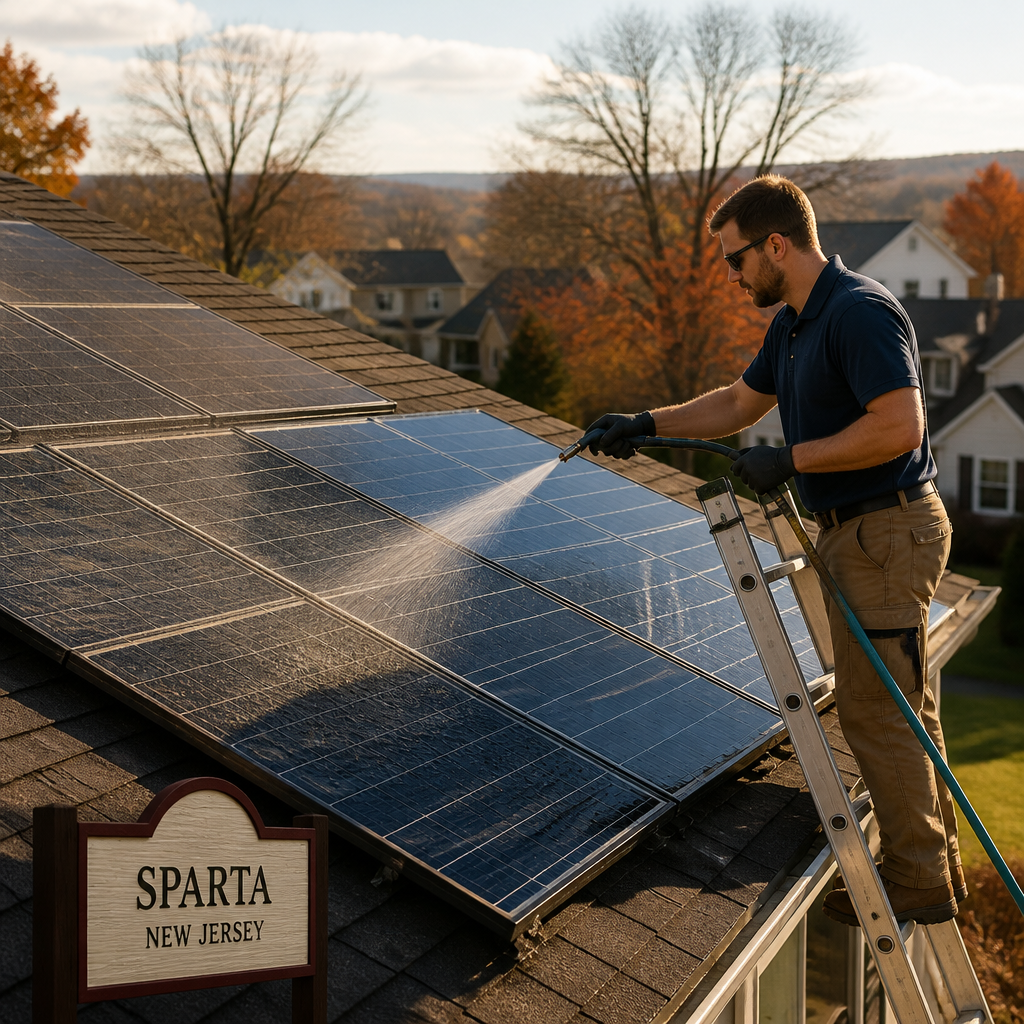
That does not mean dirt never matters. In practice, the problem is rarely a thin, even film. It is localized soiling, such as a patch of droppings on one corner or a band of leaf litter pressed against the lower edge of the array. Those spots can throw off more output than the same amount of dust spread evenly across the surface.
Localized soiling versus even dust
Solar panels are wired as strings of cells. When one area is shaded or covered, that section can limit the current flowing through the rest of its string. Bypass diodes exist to reduce this damage, but they do not erase the loss. A clean array on a sunny day behaves differently from one with a dark stripe across the bottom row, even when the dust level looks similar to the eye.
Our working rule is simple. If you can see a clear pattern, such as a line of droppings or a stripe from a gutter overflow, treat it as a real problem. If the panels look uniformly hazy but the monitoring app shows output close to what the weather predicts, you can wait. That one check saves more money than any cleaning package.
Bird droppings and gutter overflow
Bird droppings are the most common cause of visible spots we see on residential arrays. They bake onto the glass, and a quick rinse with a garden hose often does not lift them. Gutter overflow is the second culprit. During heavy storms, water spills down the roof and leaves a dark stripe of grit along the lower row, and that stripe often sits where it blocks the most sun during the middle of the day.
If you see that pattern, fix the gutter first. Cleaning the panels without correcting the source means the same stripe comes back after the next storm, and you pay twice for one problem.
When Winter Makes Cleaning Worth Scheduling
Winter does not make panels dirtier, but it makes every lost hour more expensive. Days are shorter, the sun sits lower, and there are fewer hours each day when the array runs near its peak. Dirt that cost you a little in July can cost you noticeably more between November and February. That is why late fall is the window we push most clients toward.
Dirt that barely registers in summer can take a visible bite out of a short winter day, so the decision to clean should follow your production data, not just the calendar.
Checking output before you book
Open your monitoring app and compare recent sunny days with similar weather from last month. If output has fallen while your roof faces the same direction and the weather was comparable, soiling is a likely suspect. If the drop is small, rain may already be doing the job. Be honest with that comparison, because a week of clouds can look like a dirty array when it is not.
Also look at the roof itself. The U.S. Department of Energy’s homeowner guide notes that solar panels perform best on south-facing roofs with a slope between 15 and 40 degrees, though other roofs may be suitable too. Lower-tilt arrays shed rain and debris less effectively, so grime tends to linger on them longer. Those are the systems we inspect first when a client says the output curve looks flat.
Pro tip: Schedule the cleaning after the last big leaf drop but before the first hard freeze. Panels cleaned in that window go into winter with a clean surface, and you avoid paying to wash off leaves that fall the following week.
How Our Crew Cleans Panels Safely
Our approach to solar panel washing in Sparta follows three rules: use purified water, use soft contact tools, and never blast the glass. A panel is a sealed glass and metal assembly, and it will not tolerate the pressure or harsh chemicals that work well on a driveway. Our crews work from the ground whenever the array allows it, and they go onto the roof only when the job requires it and conditions are safe.
Why water quality matters more than pressure
Tap water in many North Jersey homes carries dissolved minerals. When that water dries on glass, it leaves a film of spots that scatters light and can reduce output, which defeats the point of cleaning. Deionized water removes those minerals, so the panel dries clean without residue. We rinse with purified water, then wipe with soft brushes or microfiber applicators where needed.
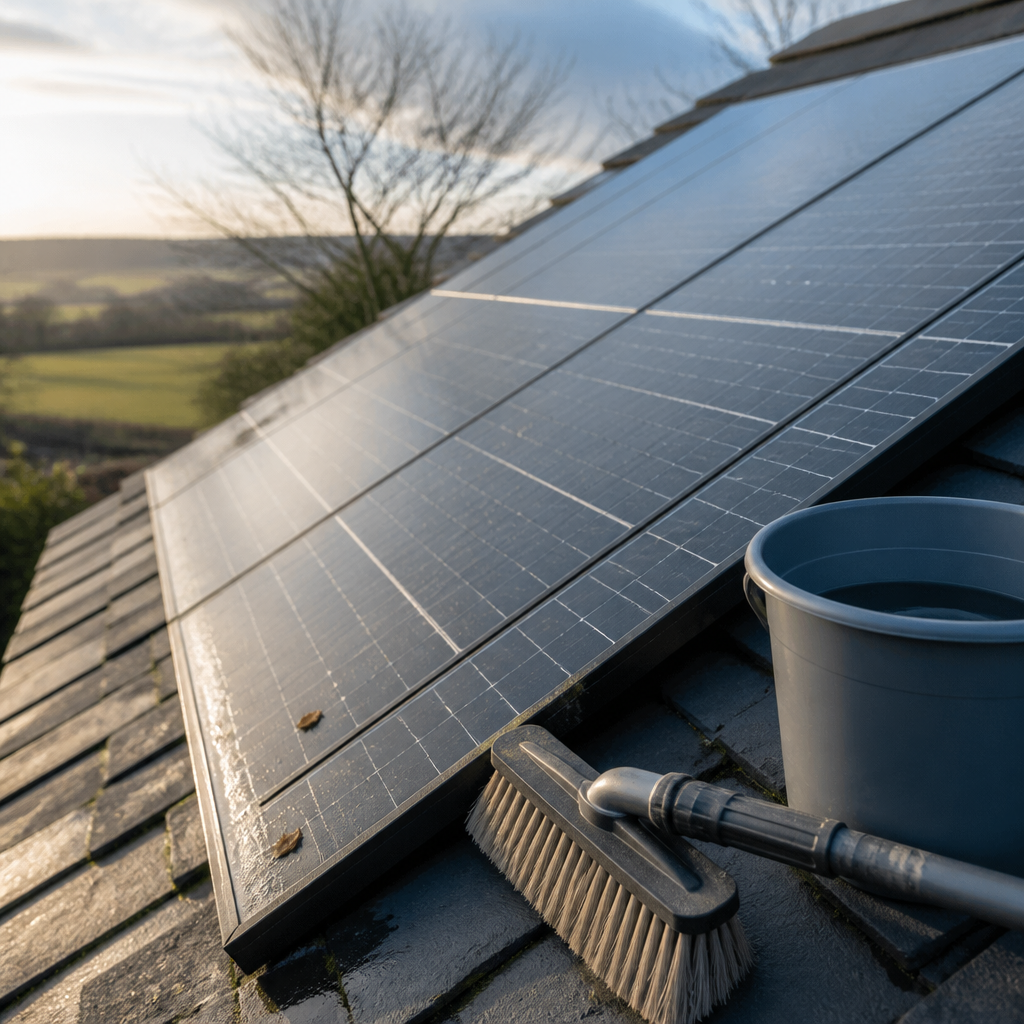
Pressure is the other half of the equation. A stream strong enough to lift a stubborn bird dropping can also drive grit under the edges of a frame or crack a tempered glass surface. Soft contact with purified water removes the same grime without that risk, and it takes a few extra minutes per row.
What we inspect before the first wipe
Before any cleaning begins, we look at the mounting hardware, the wiring runs, and any cracked glass or lifted edges. Dirt can hide damage, and a cleaning crew should be the first to flag it, not the last. If a panel is cracked or a connection looks scorched, we stop and recommend a qualified inspection before anything else happens.
Pro tip: Ask any cleaner what water they use and whether they carry a purification system. If the answer is a garden hose and dish soap, expect streaks within days and a cleaning that barely moves your output numbers.
Comparison of Cleaning Methods
Not every cleaning method is worth paying for. The table below compares three approaches that homeowners and property managers in Sussex County and Morris County tend to consider. The real difference is not how fast the panel gets wet, but how much residue and risk each method leaves behind.
| Method | Best Use | Main Risk |
|---|---|---|
| Purified water with a soft brush, worked from the ground | Routine cleaning of accessible arrays, pollen, and light droppings | Takes longer than hosing, and requires a proper purification setup |
| Mild soap and soft brush, rinsed thoroughly | Stubborn droppings on low-tilt arrays that rinse water cannot lift | Soap film if not rinsed completely, plus roof access risk |
| High-pressure washing | Not recommended for solar glass at any stage | Cracked glass, damaged frame seals, and water pushed under the edges |
The first two options are the ones we recommend, and the difference between them usually comes down to access and how stubborn the residue is. Most arrays can be cleaned safely with purified water alone. Soap belongs only in the rare case where a dried deposit will not lift, and even then it needs a complete rinse.
When rain is enough
Enphase’s winter guidance notes that its panels are designed to handle cold weather and keep producing whenever the sun is shining, and that rain and snowfall usually clean them. That matches what we see. On a steep roof that sheds water well, a few good storms take care of loose dust and pollen. Rain does not remove dried droppings, sticky sap, or the mineral film left by hard water, so those are the cases where a visit makes sense.
Why we rule out pressure washing on solar glass
A driveway can take a high-pressure wash. A solar panel cannot. The glass is designed to transmit light, not to absorb blasts of water at close range, and the seals around the frame are not built for that force. The short-term benefit of blasting off a stain is not worth the long-term risk of a cracked module, so we never use a pressure washer on panels, even on request.
Snow, Ice, and Shading Problems
Winter brings a different set of problems. Snow can cover an array for days, and ice can form along the lower edge where meltwater refreezes. Shading from trees, chimneys, and neighboring structures matters more in winter too, because the sun travels a lower path and shadows stretch further across the roof.
Clearing snow without climbing
Our rule is simple: do not walk on a snow-covered roof to clear panels. The risk of a fall is real, and foot traffic can crack glass. Most snow slides off once the panels warm slightly in direct sun. If you must act, use a soft roof rake from the ground to clear the lowest row, and never chip ice off the glass with a shovel or any metal tool.
After a heavy snowfall, give the array a day or two. If the snow is still sitting on the panels after a sunny spell, that is when a ground-level rake or a professional visit makes sense. Waiting costs far less than a scratched surface or an injury.
Shade you can fix and shade you cannot
Some shade is seasonal. A maple that blocks the array in February is a pruning question, not a cleaning question. Trimming branches that overhang the roofline often gains more output than any wash, and it keeps leaves from piling up on the lower row. Shade from a neighboring structure is harder to fix, and it usually calls for a layout conversation with your installer rather than a cleaning crew.
Before you blame the panels for a weak winter month, walk outside at midday and note every obstruction that casts a shadow across the array. A cleaning will not help if a branch is blocking the top row every afternoon from late November through January.
Scheduling Cleaning Across North Jersey
Our service area includes Sparta, Andover, Lafayette, Newton, and the surrounding communities across Sussex County. We also serve homeowners and property managers in Franklin Lakes, Saddle River, Mahwah, Ramsey, Chatham, and Morristown. For most properties, scheduling depends more on roof access and monitoring data than on the town you live in.
Residential arrays in Sussex County
Most residential jobs we book in Sparta and Andover are single-family roofs with one or two strings. A visit is short when the array is accessible and the water supply is set up properly. We often combine solar cleaning with gutter cleaning, since the same leaf debris that dirties the panels also clogs the gutters above them.
Commercial and multi-building properties in Morris County
Property managers with commercial roofs or several buildings need a schedule, not a one-time fix. We usually recommend a cleaning cycle tied to monitoring data and seasonal debris, typically one visit in late fall and another when spring pollen peaks. Documenting output before and after each visit gives your team a clear record and shows whether the program is paying off. For multi-building sites in Morristown or Chatham, we plan routes so crews spend only as long on the roof as the job requires.
Pro tip: Ask for the before-and-after output numbers in writing, and compare them with weather in the same period. A cleaning that does not move the numbers is a signal to look for a shading or wiring issue, not to pay for another wash.
Frequently Asked Questions
For most residential arrays, one cleaning a year in late fall works well, with extra visits only when monitoring data shows a clear drop or visible droppings build up. Properties near heavy tree cover or construction dust may need more frequent attention.
It can, but the gain depends on how dirty the array is. One installer’s guide reports that homeowners often see a 15 to 25 percent improvement after cleaning, but treat that as a best-case figure rather than a promise. A lightly dusted array may see little change, so compare output before and after to know what you actually gained.
No. High pressure can crack tempered glass, damage the seals around the frame, and push water under the edges. Soft washing with purified water and gentle brushes is the safer approach.
Rain handles loose dust and light pollen, and it works best on steeper roofs. It does not remove dried bird droppings, sticky sap, or the mineral film left by hard water, so localized soiling often needs a manual wash.
Clearing snow from the ground with a soft roof rake is generally safe for the lowest row. Walking on the roof is not. Never use metal tools or shovels on the glass, and never try to chip ice off the surface.
Often yes. Leaves and grit that dirty the panels usually clog the gutters above them, and roof debris can affect the same lower rows. Combining services in one visit can save time, but only if the crew uses purified water and soft contact methods on the glass.
We would like to hear how your panels performed last winter, so tell us whether a cleaning changed the numbers you saw, or reach out for a free quote if you want our crew to check your array.
We would love your feedback and any insights you would share with others. What perspective would you add?
References
- Monitoring provider analysis on whether dust and bird droppings reduce solar output
- Installer guide to solar panel cleaning costs, benefits, and output gains
- Manufacturer guidance on keeping a solar system productive through winter
- U.S. Department of Energy homeowner guide to solar roof orientation and tilt
Ready For A Clean Home?
Schedule Quality Sparta Power Washing Today!