
Soft Washing vs DIY Pressure Washing for Sparta Roofs

Most Sparta homeowners who decide to clean their own roof start with the pressure washer already sitting in the garage. It looks like the fastest fix for black streaks and green patches, and the stream of water seems to be doing real work. The problem is that the force that lifts a patio stain can also strip protective granules off asphalt shingles and push water under flashing in a single pass. Soft washing roof work in Sparta NJ is built on a different idea: use low pressure and a proper cleaning solution so the growth dies at the root without damaging the roof underneath. This guide explains why that difference matters for North Jersey homes and how to judge a roof cleaning job before you hand over a dime.
Table of Contents
- Quick Takeaways
- Why Pressure Washing Hurts Roofs
- What Soft Washing Actually Does to Roof Growth
- The Real Cost of DIY Roof Cleaning
- Comparing DIY, Soft Washing, and Pressure Washing
- Chemical Safety for Your Roof and Yard
- Signs of a Careless Roof Cleaning Job
- Frequently Asked Questions
- References
Quick Takeaways
| Key Insight | Explanation |
|---|---|
| Pressure is the main risk | Pressure washing typically runs around 1,500 to 4,000 PSI. Soft washing runs roughly 60 to 200 PSI, about garden-hose strength, which is why it is the safer choice for shingles. |
| Granule loss is the hidden damage | High-pressure spray knocks granules off asphalt shingles. Look for grit collecting in gutters and downspouts after a DIY job as an early warning sign. |
| Soft washing kills growth, it does not just remove it | The solution is left to dwell so algae, mold, and mildew are killed at the root. Pressure alone removes the visible layer and the spores regrow. |
| Falls are the biggest DIY cost | Falls are the leading cause of death in home improvement projects. A wet, steep roof in Sparta, Andover, or Newton is a poor place to learn on the job. |
| Cheap supplies can get expensive | Basic DIY supplies often run about $100 to $300, but a redo, a leak, or a damaged shingle can cost far more than a professional visit. |
| Never accept a pressure-washed roof | If a company offers to pressure wash your roof or siding, treat that as a red flag and ask how they plan to clean without force. |
Why Pressure Washing Hurts Roofs
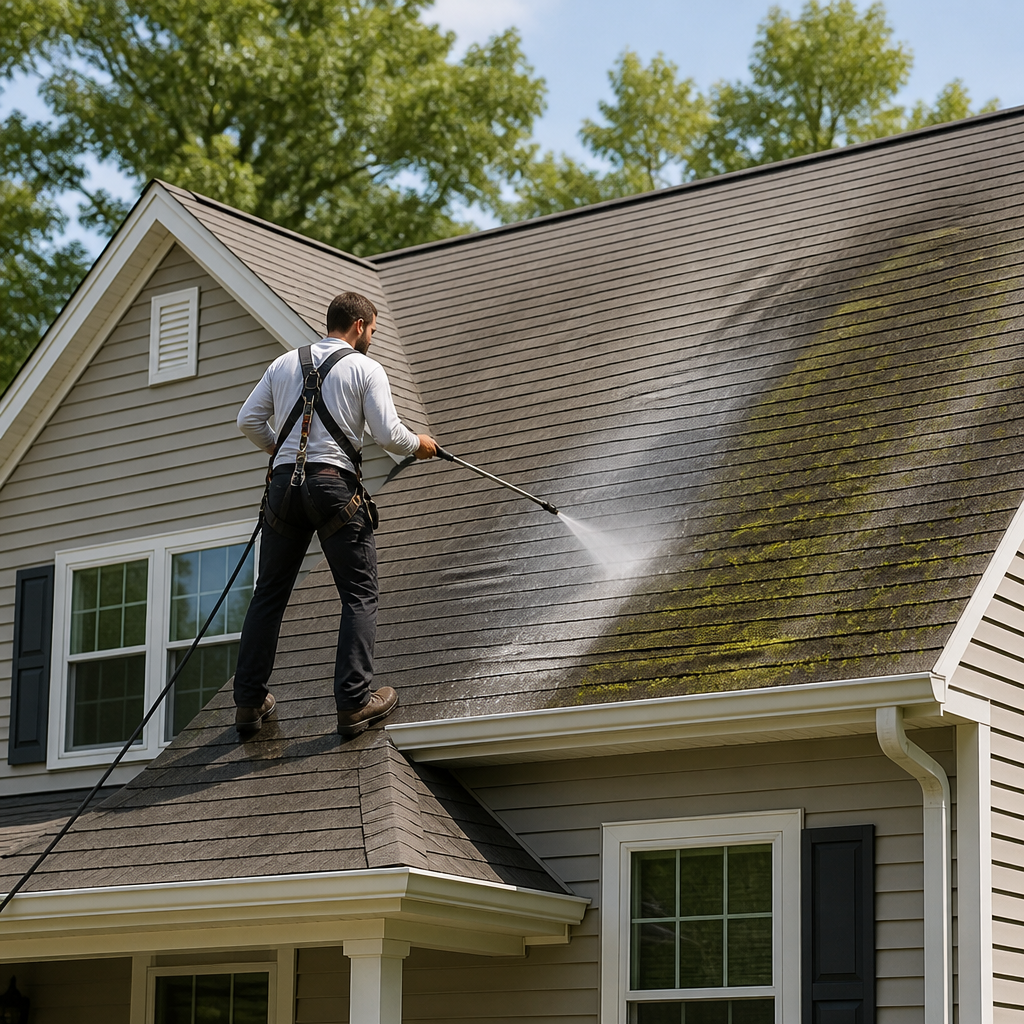
On an asphalt roof, pressure washing is the most common and most damaging mistake we see from homeowners who try to save money. The gap between the two methods is large. Pressure washing usually runs around 1,500 to 4,000 PSI, while soft washing stays near 60 to 200 PSI. That difference is the whole story.
The damage is mostly invisible at first. High-pressure streams blast off the mineral granules that shield shingles from UV light, and you often see them piling up in gutters and downspouts afterward. Once the granules are gone, the asphalt underneath ages faster, and the roof loses years of service life.
What Granule Loss Looks Like in Practice
A DIY cleaner who sprays at close range rarely notices the damage right away. The shingles look cleaner, sometimes even brighter, which is exactly what makes the problem easy to miss. Bare spots appear over the following seasons, and the roof looks worn long before its time.
Warranty coverage is another issue. Some roof warranties can be voided when a roof is not properly maintained, and surface damage from a pressure washer is very hard to argue as a manufacturing defect. If you are unsure whether your roof has a warranty, check the paperwork before you pick up a sprayer.
Water Pushed Where It Should Never Go
High-pressure water does not stop at the shingle surface. It gets forced into seams, under ridge caps, around vent pipes, and along flashing. On older roofs or roofs with cracked sealant, that water can reach the decking and the attic without leaving a trace on the outside.
The leak often shows up weeks later as a stain on a bedroom ceiling, far from the spot you sprayed. By then, the link between the cleaning day and the leak is easy to forget, and the repair bill arrives without a clear cause.
Pro tip: Before you clean any roof, walk the attic after a heavy rain and look for new staining on the underside of the decking. If you find it, stop and call a professional before you spray anything.
What Soft Washing Actually Does to Roof Growth
Soft washing is a chemistry process more than a force process. A surfactant-based cleaning solution is applied at low pressure, given time to work, and then rinsed away. The solution is meant to kill algae, mold, mildew, and bacteria at the cellular level instead of simply knocking them off the surface.
That matters for the black streaks common on many North Jersey roofs. Those streaks are usually caused by Gloeocapsa magma, an algae that embeds itself in shingles. Pressure washing removes the visible top layer, but spores left in the shingle regrow, and the streaks return.
Why Dwell Time and Rinsing Matter More Than Pressure
Dwell time is when the solution does its job. Rushing it, or letting the solution dry on the shingles, undoes the work. In practice, a good operator wets the area, applies the solution from the bottom up, lets it sit, and then rinses gently.
The rinse is where many DIY jobs go wrong. People tend to switch to the high-pressure nozzle at the end to “finish it off,” which brings back all the damage the soft wash was meant to avoid. The rinse should be low pressure, controlled, and done with the same care as the application.
How Long a Soft Wash Result Lasts
One widely cited soft-wash guide puts results at roughly two to five years, compared with months to about a year after pressure washing. The exact timing depends on tree cover, shade, and how quickly the area gets moisture back. Homes with heavy shade under mature trees, which is common in parts of Franklin Lakes and Wyckoff, may need more frequent cleaning.
Most guidance suggests cleaning a roof every one to three years depending on exposure and climate. Humid summers and damp shaded slopes push growth faster, so plan on the shorter end of that range if your roof stays wet for long stretches.
A clean roof on the day you finish is the wrong goal. The right goal is a roof where the growth is dead, the shingles are intact, and the streaks do not come back before the next scheduled cleaning.
The Real Cost of DIY Roof Cleaning
The appeal of DIY is easy to understand. You skip the labor charge, you choose the time that works for you, and you keep full control over the products. For a homeowner on a tight budget, the upfront numbers look very attractive, and basic supplies such as a sprayer, a solution, a ladder, and safety gear often run about $100 to $300 if you do not already own them.
The problem is that upfront cost is only the first line on the bill. The bigger costs show up in risk, in damage, and in the redo that often follows a poorly done first attempt.
Ladder and Roof Access Risk
Roof work is dangerous, and falls are the leading cause of death in home improvement projects. A wet, steep roof is the worst possible combination. Many two-story homes in Andover, Newton, and Lafayette have pitches that feel manageable from the ground but become unstable once the shingles are wet and slick.
Our crews work from the ground whenever the design allows. We use extended wands and controlled rinsing so no one needs to stand on the roof for the bulk of the job. If a DIY plan requires climbing onto a wet slope with a pressure wand in hand, that is the point to stop and reconsider.
The Hidden Cost of Getting It Wrong
A common pattern is a homeowner who sprays too hard, sees the streaks lighten, and calls a professional afterward. Now the roof needs a full assessment for granule loss, possible shingle replacement, and a fresh soft wash. The total cost is higher than the original professional quote would have been.
Leftover chemicals also add up. Many people buy a large container for one job and end up with product they do not know how to store or dispose of. Factor the sprayer, the ladder rental, and your own time into the comparison, not just the price on the label.
Pro tip: Ask any roof cleaner for a written plan that names the solution, the pressure range, and the rinse method. A reputable operator will answer without hesitation, and a vague answer is a signal to keep shopping.
Comparing DIY, Soft Washing, and Pressure Washing
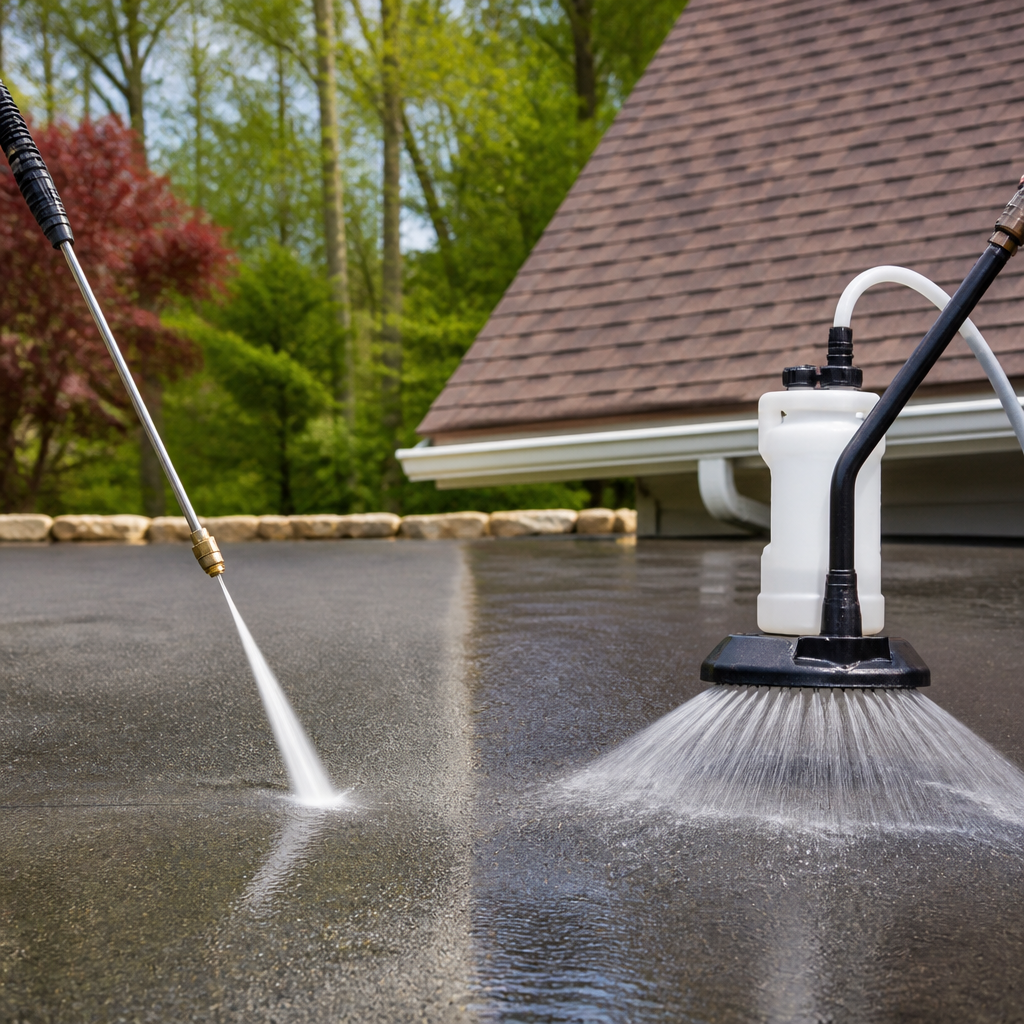
The three options most homeowners actually weigh are a DIY soft wash with a store-bought solution, a professional soft wash, and a pressure wash done by a DIYer or a contractor who uses high force. Each one has a different risk profile, and the results are not equal. The table below shows where each approach tends to land on a typical asphalt shingle roof in the area.
Choosing Between the Three
If you have a single-story roof with easy access and you are comfortable with the process, a careful DIY soft wash can work for light growth. The key word is careful. You need to match the solution to the shingles, pre-wet nearby plants, and rinse without pressure.
For heavier growth, multiple roof planes, or steep pitches, a professional soft wash is almost always the better choice. The equipment is set up for low pressure, the chemistry is dosed for the job, and the crew carries the access risk instead of you.
| Approach | What You Get | Main Risk |
|---|---|---|
| DIY soft wash with a store-bought solution | Lower upfront cost and flexible timing. Good for light growth on single-story, easy-access roofs. | Fall risk on wet slopes, incorrect dilution, and rinsing that drifts back into high pressure. |
| Professional soft wash | Low-pressure application, controlled dwell time, and ground-based work where possible. Growth is killed at the root. | Cost is higher upfront, and quality depends on the operator, so ask about their method before booking. |
| Pressure washing a roof | Fast removal of visible surface dirt in the short term. | Granule loss, water forced under shingles and flashing, and regrowth within months. Generally not recommended on asphalt shingles. |
Chemical Safety for Your Roof and Yard
Soft washing is gentler on the roof, but it is not chemical-free. The solution has to be chosen and diluted for the surface it touches. A mix that suits one material can corrode metal flashing, stain painted trim, or harm the finish on other parts of the exterior if it is used carelessly.
Some DIYers prefer plant-safe or biodegradable products, and those choices are reasonable. Even with gentler products, you still need to protect the area below the roof, because runoff carries the solution down gutters, past downspouts, and onto beds, lawns, and walkways.
Protecting Plants, Shrubs, and Gutters
Before any roof work begins, wet down shrubs and perennials near the drip line with plain water, then cover delicate plants with tarps. After the rinse, flush the plants again with clean water. This simple step cuts down on leaf burn and keeps the solution from concentrating in the soil.
Gutters need attention too. Once the roof is rinsed, check the gutters and downspouts for debris that washed loose, and flush them with clean water so the cleaning residue does not sit in the troughs.
Matching the Solution to the Roof Material
Not every roof reacts to cleaning the same way. Asphalt shingles, wood shakes, and metal roofing each need a different approach, and the cleaning solution should be matched to the material. Ask whether the product is designed for the specific roof type, and whether the operator has experience with it.
In practice, this means a professional should look at the roof before the first drop of solution goes on. A quick inspection for loose shingles, cracked sealant, and existing granule loss tells you whether the roof is ready for cleaning or whether it needs a repair first.
Signs of a Careless Roof Cleaning Job
A good roof cleaning job is quiet. There is no roar of a high-pressure wand, no pile of granules in the gutters, and no damp patches showing up inside the house a few weeks later. A careless job leaves signs that are easy to spot once you know what to look for.
The most obvious red flag is an offer to pressure wash the roof. Some companies still use high force on shingles, and some homeowners are told it is faster. It is not the right method for asphalt roofs, and you should walk away from any quote that depends on it.
Pro tip: After any roof cleaning, look at the gutters and the ground under the eaves. A light scatter of fine grit is normal, but a heavy pile of granules is a sign that too much pressure was used.
Questions to Ask Before Booking
Ask the operator which pressure range they use, how they dose the solution, how long they let it dwell, and whether they rinse at low pressure. Ask whether they carry liability insurance and how they protect plants and the ground. A professional should answer these questions without needing to check with someone else.
Ask for a written scope that lists the roof areas, the method, and the follow-up schedule. If the company cannot tell you when the roof should be cleaned again, they are not thinking past the day of the job, and that usually shows in the result.
Frequently Asked Questions
Yes. Soft washing uses low pressure and a cleaning solution, so it avoids the granule loss and forced water entry that high-pressure cleaning causes. The growth is killed at the root, which also means the cleaning lasts longer.
You can attempt it on a single-story roof with easy access and light growth, but the fall risk on wet slopes is serious. A professional is the better choice for steep pitches, multiple planes, or heavy algae and moss.
Black streaks are usually caused by algae that embeds in the shingles. If the cleaning only removed the surface layer, the spores regrow. A proper soft wash with dwell time targets the growth itself, which is why results tend to last longer.
Most roofs benefit from cleaning every one to three years, depending on tree cover, shade, and humidity. Heavily shaded roofs stay damp longer and may need more frequent attention.
An offer to pressure wash your roof is the clearest warning sign. A reputable operator will explain how they clean without high force and will be happy to walk you through the method before any work starts.
Have you tried cleaning your own roof, or had a professional soft wash done? Share what worked, what surprised you, and what you would do differently next time.
References
- Guide comparing soft washing and pressure washing pressure ranges and suitable surfaces
- Overview of DIY versus professional roof cleaning pros, cons, and costs
- Article on the risks of pressure washing and soft washing a roof
Ready For A Clean Home?
Schedule Quality Sparta Power Washing Today!