
Soft Washing Chester NJ Siding: Book Before the First Freeze

Homeowners searching for soft washing Chester NJ crews usually notice the same thing first: the siding on the shaded side of the house has turned a dull gray-green, and the trim has a dark film that no garden hose will move. That film is mildew, algae, and pollen working together, and it tends to thicken as the season turns. Soft washing is the right method for it, but timing decides how well the job goes. If you wait until the first hard freeze to call, you may be stuck on a waiting list while the nights get colder. Here is what to expect when you book soft washing for your siding in Chester and Mendham before the ground hardens.
Table of Contents
- Quick Takeaways
- What Soft Washing Actually Does to Your Siding
- Why Siding Builds Up Before Winter in Chester and Mendham
- Siding Materials and How Each One Responds to Soft Washing
- Scheduling Before the First Hard Freeze
- Soft Washing Compared With Other Methods
- Pricing and What Drives the Quote
- What to Expect on Service Day
- Frequently Asked Questions
- References
Quick Takeaways
| Key Insight | Explanation |
|---|---|
| Soft washing relies on solution, not force | The cleaning mix breaks down mildew and algae at the surface, which protects vinyl seams, paint, and trim better than high-pressure spray does. |
| Book while temperatures are still mild | A crew needs a stretch of above-freezing days to apply the solution, let it dwell, and rinse thoroughly. Late bookings get squeezed into the cold. |
| Ask how the rinse will be handled | Leftover residue and standing water on siding are the problems you want to avoid once nighttime temperatures drop below freezing. |
| Protect landscaping and fixtures first | Diluted solution can burn plants and damage some outdoor lighting or equipment if it is not covered or rinsed away carefully. |
| Siding material sets the approach | Vinyl, fiber cement, painted wood, and aluminum each need a different solution strength, dwell time, and rinse technique. |
| Compare quotes by scope, not price alone | A low number may leave out gutters, trim, shaded sections that need a second pass, or the rinse of the lower wall. |
Soft washing siding is one of the few exterior jobs where the cheapest option and the best option can look identical from the driveway. The difference shows up months later, when the stain either stays gone or quietly comes back. That is why the questions you ask before booking matter as much as the wash itself.
What Soft Washing Actually Does to Your Siding
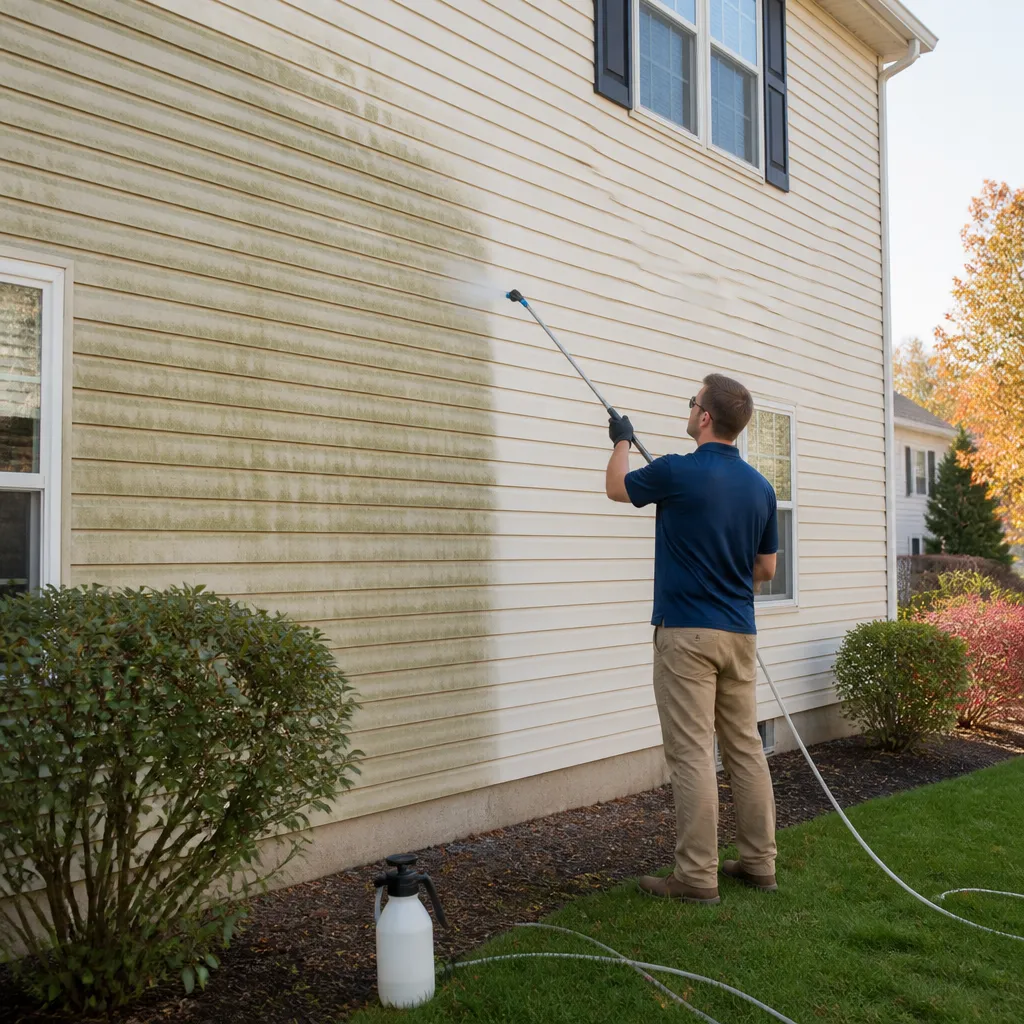
Soft washing is a low-pressure process. A crew applies a diluted cleaning solution, usually a mix built around a mild bleach-based chemical with a surfactant that helps it cling to the surface, lets it sit so it can break down organic growth, and then rinses it off. One equipment guide describes soft washing as a gentler alternative that uses lower pressures to clean surfaces, which makes it better suited to delicate materials. That matches what we see on siding every week. The pressure is not what removes the stain. The chemistry does most of the work.
How the Solution Does the Work
The most important step is dwell time. The solution needs several minutes sitting on the surface, not a few seconds, to kill the mildew and algae and loosen their grip on the paint or vinyl. In practice, a crew that sprays and rinses right away is only wetting the siding. If the surface dries before the solution has finished working, the growth often returns faster in the same season.
Strength matters too. A solution that is too weak will leave streaks and a faint shadow of the stain. One that is too strong can lighten painted surfaces or leave a chemical smell that lingers for days. A good crew adjusts the mix for each wall based on how heavy the growth is and what the surface is made of.
On siding, the cleanest result comes when the chemistry does the lifting and the water only carries the residue away.
Why Pressure Alone Causes Damage
High-pressure washing forces water into seams, behind lap joints, and under the edges of trim. Vinyl can be pushed out of its locking channel, paint can be stripped down to primer, and soft wood can be gouged or raised into fuzzy grain. Water pushed behind the siding can also reach the sheathing, where it may not dry out before the cold arrives.
These problems are not always visible on the day of the job. That is why homeowners often blame the next storm for a leak that actually started with an aggressive wash.
Pro tip: Ask the crew what pressure they run on the siding and whether they switch to a wide, low-pressure tip for the rinse. A capable team will answer in specifics. Vague answers usually mean the work will be rushed.
Why Siding Builds Up Before Winter in Chester and Mendham
Siding does not get dirty evenly. The buildup we see most often in the fall is concentrated in specific spots, and knowing where to look tells you what the crew should focus on during your estimate. Most homeowners only notice the problem once the lower courses turn green or the trim starts to look like it has a permanent shadow.
Shaded Walls Hold Moisture Longest
The north-facing and heavily shaded walls of a home dry slowly after rain, morning dew, and humid spells. That extra moisture is what mildew and algae need. In a typical house, the first visible streaks often appear just below the eaves, under overhangs, and along the bottom courses near the grade where splash-back from the lawn keeps the siding damp.
Trees make this worse. A canopy that blocks the afternoon sun can keep one side of a home damp for days after a rain, which is exactly the condition that allows growth to spread.
Leaves, Pollen, and Downspout Runoff
Fallen leaves that sit against the siding trap moisture and stain the surface with tannins. Pollen and tree sap add a sticky layer that holds dirt. Downspouts that overflow or clogged gutters send water in sheets down the same line of siding every time it rains, leaving a vertical streak that many homeowners mistake for permanent discoloration.
In practice, the best fall results come from clearing gutters and debris first, then soft washing. If the gutters are full when the crew arrives, the runoff will undo part of the job within days.
Siding Materials and How Each One Responds to Soft Washing
Not all siding reacts the same way to a cleaning solution, and a crew that treats every wall identically is cutting corners. The material determines how strong the solution can be, how long it can dwell, and how carefully the rinse needs to be done. Ask your provider to explain their approach for each material on your home, not just a single blanket method.
Vinyl Siding
Vinyl is the most common siding we clean, and it is forgiving when the wash is done correctly. The main risk is pressure. Vinyl panels lock together, and forcing water up under the lap can unseat them or drive water behind the wall. A soft wash with a low-pressure rinse keeps the panels in place and leaves the color even.
Vinyl also tends to show streaking if the solution is allowed to dry on the surface, so the crew should rinse from the top down while the wall is still wet.
Fiber Cement and Painted Wood
Fiber cement and painted wood depend on their paint. Aggressive spraying can strip the finish, expose raw material, and create a patchy look that is harder to fix than the original stain. The paint also needs time to recover before any repainting, so a clean wash with a gentle rinse is the safer route here.
Soft wood near the ground is especially vulnerable. If you see soft spots, flaking paint, or raised grain, mention it before the crew starts, because the approach for those sections should be different.
Aluminum Siding
Aluminum siding is durable, but its painted finish can chalk and oxidize over time. A soft wash removes the surface film and brings back some of the original color. Aggressive pressure can dent panels and scratch the finish, so the crew should work with a wide, gentle spray and keep the nozzle moving.
Because aluminum shows a film quickly, it is one of the easiest materials to see improvement on after a proper soft wash.
Scheduling Before the First Hard Freeze
A hard freeze is the kind of cold snap that stays below freezing long enough to damage plants and freeze standing water. For siding work, the concern is simple. A proper soft wash needs time for the solution to dwell and then time for the wall to rinse and dry or at least drain. If the nights are too cold, the residue and water can freeze in place, which is not what you want on a wall you just paid to clean.
Working Backward From the Freeze
Start with the date you expect your first hard freeze, then count backward. A crew will usually want a stretch of mild days for the job itself, plus a buffer in case rain forces a reschedule. Booking early gives you room to move the appointment without losing the window. Booking in the last week before the cold sets in leaves you with almost no room for error.
When you call, ask the crew what their typical lead time is in the fall. The answer tells you whether you can book now or need to act sooner.
Pro tip: Book the appointment on a day with a longer forecast of mild weather, not just a single clear afternoon. If rain shows up the next morning, a crew working with a clear multi-day window can reschedule without rushing the rinse.
Why Bookings Slip Into Cold Weather
Bookings slip for predictable reasons. Homeowners wait until the leaves are down, then discover that every crew in the area has a backlog. Rainy weeks push jobs back, and by the time a crew can reach your home, the morning temperatures are dropping. Some homeowners also wait for a sunny day, not realizing that a wet, cool wall is normal for a soft wash and will dry as the day goes on.
The fix is to book while the weather is still forgiving and accept that a short delay is much better than an unfinished job in the cold.
Soft Washing Compared With Other Methods
Homeowners usually end up choosing between three options: a professional soft wash, a standard high-pressure wash, or a do-it-yourself job with a hose and a store-bought cleaner. Online forums often debate which is better, and the honest answer is that each one fits a different situation. For siding, the decision should hinge on the material, the amount of growth, and how much risk you are willing to take with the finish and the seams.
| Approach | Best For | Main Risk |
|---|---|---|
| Professional soft washing | Vinyl, painted surfaces, and siding with mildew, algae, or light staining before winter | Quality depends on the crew’s mix ratios, dwell time, and rinse. Ask for their process before booking. |
| Standard high-pressure washing | Concrete, brick, and hard surfaces that can handle force | Forcing water into seams, stripping paint, and driving moisture behind siding |
| DIY with a hose and store-bought cleaner | Small, low-height areas with light surface film | Uneven results, incomplete dwell time, and reaching upper walls safely with a ladder |
In practice, the DIY route is where most homeowners get frustrated. The cleaner goes on, the wall looks wet, and the stain is still there after rinsing because the solution never had time to work. A professional crew with the right mix and the right height equipment usually finishes the job in less time and with a more even result.
Pricing and What Drives the Quote
Price is where many homeowners get stuck, and it is worth understanding what goes into it. One third-party cost guide for Ridgewood, NJ lists average pressure washing costs around $2.50 per square foot. Treat that as a rough benchmark from a directory, not a quote for your home, because height, access, surface condition, and the number of stories all move the number.
What the Square Footage Number Leaves Out
A square footage price assumes a clean, accessible wall. Real houses have second stories, steep grades, tight side yards, and sections that need a second pass because the growth is heavier in some spots than others. Ask whether the quote includes the upper walls, the gable ends, and the lower courses near the ground, since those are often where the real work is.
Also ask whether the price covers protecting plants and fixtures. That prep takes time, and a quote that skips it may look cheaper but leaves you with burned shrubs.
Add-Ons Worth Bundling
Many homeowners clean siding and then notice the gutters, trim, or windows look worse by comparison. Bundling those tasks into one visit can save on setup and keeps the house looking consistent. Gutter cleaning is the most useful add-on before a soft wash, because it stops the runoff from undoing the work.
Pro tip: Compare quotes by listing the exact scope in writing, including the number of walls, the material, the rinse method, and whether plant protection is included. Two numbers that look far apart often describe two very different jobs.
What to Expect on Service Day
A good soft wash day is quiet and methodical. The crew should walk the property before starting, talk to you about any sensitive areas, and set up protection before any solution goes on the wall. If the process feels rushed from the first hour, that is usually a sign it will be rushed in the rinse too.
The Walkthrough and Protection Step
Before the solution goes on, the crew should cover or wet down plants, shrubs, and garden beds near the house. They should also check outdoor lights, vents, and any exposed electrical fixtures. If you have a fragrant garden or pets that spend time outside, mention it so the crew can adjust the rinse schedule.
Walk the perimeter with the crew and point out any soft spots, loose trim, or old caulk you want them to avoid. That short conversation prevents most of the surprises homeowners complain about afterward.
Application, Dwell, and Rinse
The crew applies the solution from the bottom up, which keeps streaks from forming as it runs down the wall. They let it dwell for the time their process calls for, then rinse from the top down using a low-pressure setting. The rinse should be thorough enough to remove residue without forcing water into the seams.
Watch for the lower courses near the grade. They often get the heaviest splash-back and the most residue, so they need extra attention during the rinse.
After the Crew Leaves
Walk the house once the crew is finished. Look for any missed sections, standing water in trim corners, or residue on windows and light fixtures. A reputable crew will come back for a touch-up if a section was missed.
Over the next week or two, you may notice a small amount of runoff in the gutters or the ground. That is normal. Sustained dripping from a wall, soft spots, or new staining should be reported right away.
Frequently Asked Questions
Book as early as your schedule allows, ideally while the weather is still mild and crews have open dates. A soft wash needs time for the solution to dwell and the wall to rinse and drain, and a booking pushed into the coldest nights leaves little room for a reschedule if rain shows up.
Yes, when it is done with a low-pressure rinse and the right solution strength. The risk comes from aggressive pressure pushing water up under the panels or unseating them. Ask the crew how they rinse vinyl before the job starts.
It can, if the plants are not protected. A good crew covers or thoroughly wets down plants and garden beds near the house before applying the solution, then rinses them afterward. Mention your landscaping during the estimate so the prep is part of the plan.
Quick re-staining usually means the growth was not fully killed, the solution did not dwell long enough, or the shaded areas and gutters were not addressed. Clearing gutters and trimming back overhanging branches can slow the return of mildew and algae.
You can clean small, low areas yourself, but reaching upper walls safely with a ladder and mixing the solution correctly is harder than it looks. Uneven dwell time is the most common reason DIY results disappoint, and a professional crew usually finishes faster with a more even result.
What was your experience booking siding cleaning before the cold set in, and what would you have wanted to know sooner?
References
Ready For A Clean Home?
Schedule Quality Sparta Power Washing Today!