
Roof Stain Removal Denville NJ: Black Streaks Guide

If you are looking into roof stain removal in Denville NJ, you have probably noticed dark, vertical streaks running down your shingles after a damp week. Most homeowners assume it is dirt, soot, or tar, and they wait for the next heavy rain to wash it away. It will not. In most cases, those black streaks are a blue-green algae called Gloeocapsa magma, and fall is the best window to remove them before cool, wet weather lets the growth settle in for the winter. This guide explains what the streaks are, how to tell algae from real damage, and what a proper job looks like.
Table of Contents
- Quick Takeaways
- What Those Black Streaks Actually Are
- Telling Algae From Damage You Should Worry About
- Why Fall Is the Time to Act
- Pressure Washing Versus Soft Washing
- What a Proper Roof Stain Removal Involves
- Local Considerations for Denville and Mountain Lakes Homes
- DIY Versus Hiring a Pro
- Frequently Asked Questions
- References
Quick Takeaways
| Key Insight | Explanation |
|---|---|
| Black streaks are usually algae, not dirt | Gloeocapsa magma is a living growth attached to the shingle, so a hose rinse or a rainstorm rarely removes it completely. |
| Fall is the right time to clean | Cooler temperatures and longer damp periods keep the surface wet, which lets streaks thicken before winter. |
| Check for damage before you clean | Look for missing granules, cracked or curled shingles, soft spots, and ceiling stains. Those point to problems that cleaning cannot fix. |
| Skip high-pressure washing on shingles | High-pressure water strips the protective granules off asphalt shingles and shortens the roof’s life. |
| Soft washing removes algae with less risk | A low-pressure cleaning solution kills the growth at the root, and a gentle rinse carries the dead residue away. |
| Clean gutters during the same visit | Debris in gutters and downspouts holds moisture against the fascia and keeps the roof edge damp, which invites regrowth. |
What Those Black Streaks Actually Are
Walk up to a streaked roof and you will see dark bands running down the slope, often starting near the ridge or along the top edge of a shingle course. The color ranges from charcoal to near black, and it looks like someone dragged a dirty brush down the surface. The streaks are not caused by the house, the trees, or the air around it.
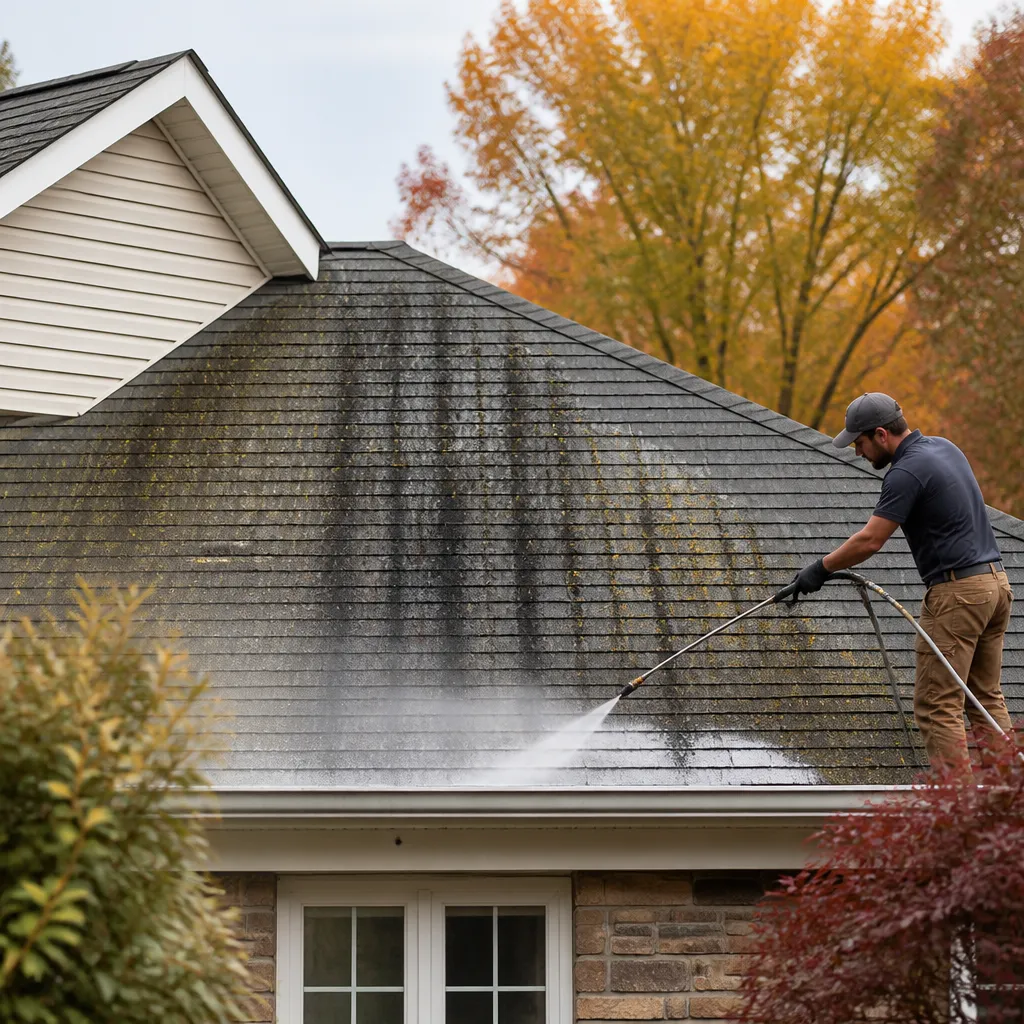
The culprit is Gloeocapsa magma, a blue-green algae that grows on exposed roofing surfaces. Multiple sources describe it the same way, as a type of algae that leaves a dark residue as it grows and dies. Rainwater carries that residue down the slope, which is why the marks form vertical lines instead of random blotches. Once you know the cause, the solution becomes clear: you need to kill the growth, not just move it around.
Why Shingles Give It a Foothold
Algae needs moisture, shade, and a surface it can cling to. Asphalt shingles provide all three, especially on slopes that stay damp after rain or sit under tree cover. The granules on the shingle surface give the growth sheltered spots to anchor, which makes it hard to brush off by hand.
In practice, the heaviest streaking shows up on slopes that dry slowly. A roof that gets morning sun dries faster and usually stays cleaner than a shaded slope that holds dew until midday. When you walk the property, the streaks on the shaded side are often the first thing you notice.
Why Rain Does Not Wash It Off
Many homeowners wait for a heavy storm to clear the streaks, and it rarely works. The algae is alive and attached to the shingle, so water shifts it only slightly. Each season it returns in the same pattern, which is why the streaks look worse year after year.
A common mistake is assuming the marks are surface grime that will fade with time. Algae that goes untreated keeps spreading across the same slope, and the stain gets darker as the colony matures.
Black streaks are usually a sign that the roof surface holds moisture longer than it should. The fix is to clean the growth off gently and then manage the conditions that let it come back, not to blast it away with force.
Pro tip: Take a close phone photo of the streaks from the ground, zoomed in as far as the image stays sharp. If the dark marks look like a smooth film, they are likely algae. If they look like scorch marks, dark spots that feel raised, or areas where the granules look missing, have a roofer inspect them before any cleaning.
Telling Algae From Damage You Should Worry About
Not every dark streak is harmless. Black streaks can point to algae growth, but they can also signal moisture trapped under the shingles, which is a more serious problem. Telling the two apart is the first job before any cleaning begins, and it decides whether a wash alone will solve the issue.
Check the Shingle Surface
Get a close look at the shingles on the streaked slope, ideally from a ladder you can handle safely or from a neighboring structure. Algae sits on top of the granules and can be rinsed away with the right method. If the granules themselves are missing, bare black asphalt shows through, and the shingle has lost the protection it was designed to give.
Check the gutters too. A heavy load of granules in a downspout after a storm suggests the shingles are wearing faster than they should, and that wear will not be fixed by cleaning.
Look for Soft Spots, Curling, and Cracks
Walk the roof only if it is dry and safe, and you have proper footwear. Curled tabs, cracked shingles, and soft spots that flex underfoot are signs of deck or underlayment trouble. Cleaning will not repair those problems, and a roofer should inspect them first.
Treating a leak source as a cosmetic problem is one of the most expensive mistakes we see. If you notice a stain on a ceiling below the streaked area, stop planning a wash and call a roofer before anything else.
Read the Pattern
Algae streaks run in vertical lines because water carries the residue down the slope. Dark patches that do not follow the flow of water, or stains that spread in a blotch around a vent, a pipe boot, or a flashing, deserve a closer look. Those patterns often point to water getting into the roof rather than to surface growth on the shingles.
Why Fall Is the Time to Act
Spring and summer are busy seasons for exterior work, but fall is when a roof cleaning pays off most. Cooler temperatures and longer damp periods let algae recover and spread, and a clean roof going into winter has fewer places for growth to restart. Waiting until the following spring usually means a heavier job and a longer streak season.
Damp Nights Keep the Surface Wet
In the fall, dew forms earlier in the evening and lingers longer on shaded slopes. Algae stays active whenever the surface remains wet for long stretches, so streaks can thicken noticeably in a few weeks. Cleaning in early fall removes the growth before it gets a head start for winter.
We aim most roof stain removal work for the early fall window, when the weather is still mild enough for crews to work safely and the surface dries reliably between the wash and the rinse. Late-season cleanings are possible, but cold, damp days make drying and follow-up harder to plan.
Clear Debris Before the Leaves Pile Up
Leaves and needles that collect in valleys and along the roof edge hold moisture against the shingles. That debris also feeds the streaking problem, because it keeps the surface damp long after the rain stops. A cleaning that includes clearing gutters removes both the growth and the material that keeps it wet.
In practice, the best time to clean is after the first big leaf drop has been cleared but before the next wet stretch sets in. That timing gives the solution the best chance to do its job.
Set Up a Pre-Winter Check
Fall is also the time to look at flashing, vent boots, and the ridge for signs of trouble. Finding a cracked boot in October costs far less than discovering a leak in January. Pair the cleaning with a visual check, and you will know whether the roof is in shape for snow and ice.
Pressure Washing Versus Soft Washing
The method you choose matters more than the product on the label. Some providers still reach for high pressure because it looks powerful and fast, but on asphalt shingles it can do more harm than the streaks ever did. A roof is not a driveway, and it should not be treated like one.
High-pressure water strips the protective granules off asphalt shingles. Once the granules are gone, the shingle ages faster and the mat underneath is exposed to sun and weather. Hard blasting can also lift shingle edges and force water under the tabs, which creates leaks that show up months later.
What Soft Washing Does Differently
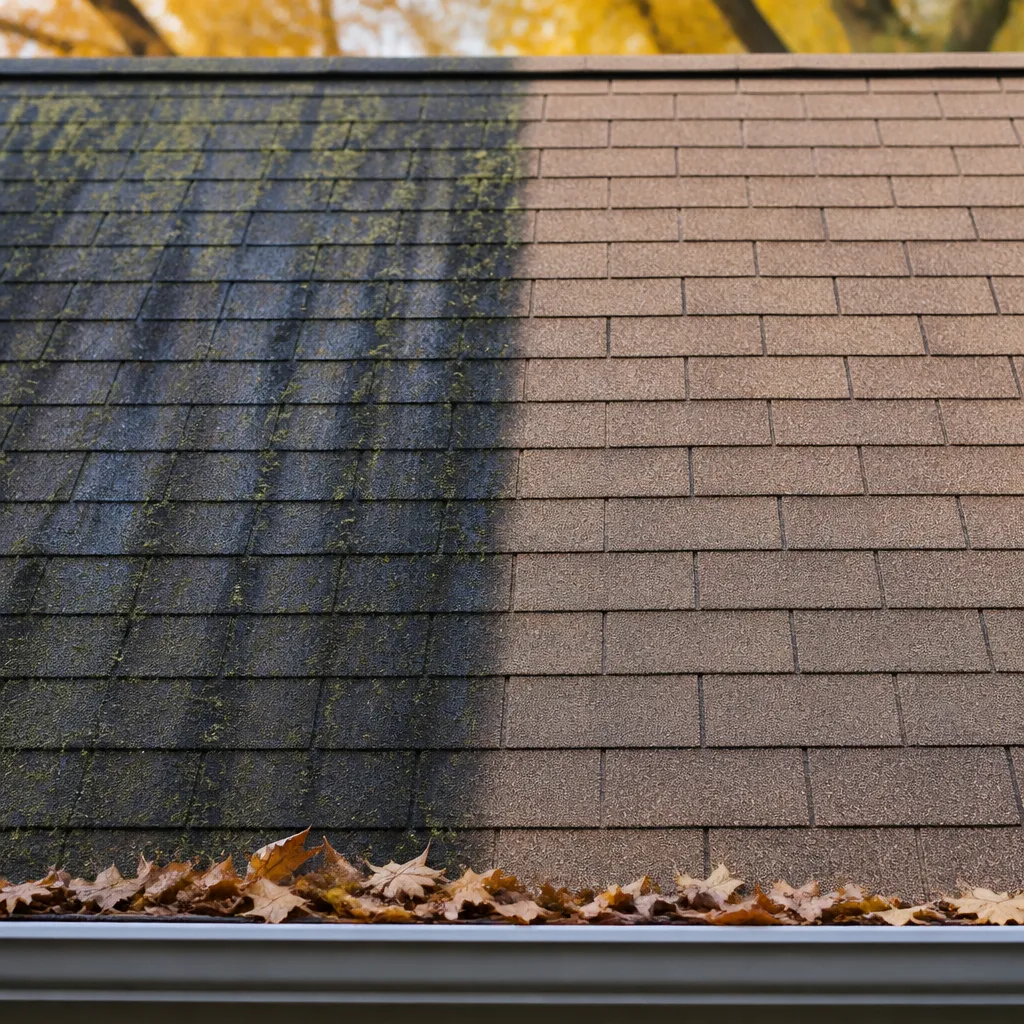
Soft washing applies a low-pressure stream of cleaning solution formulated to kill algae at the root. The solution needs dwell time to work, usually a few minutes on the surface, before a gentle rinse removes the dead growth. The shingles keep their granules, and the cleaning lasts longer because the growth is actually killed rather than just knocked loose.
Our crews wet down surrounding landscaping, cover plants, and protect windows, siding, and exterior lights before any solution goes on. Overspray on shrubs and siding is one of the most common problems in this trade, so the prep matters as much as the application itself.
Why Gutters Need Attention Too
Cleaning solution runs off the roof into gutters, downspouts, and onto the ground below. We rinse gutters and check downspouts so the solution does not sit inside them, and we look for granule buildup that signals wear. A roof stain removal job that ignores gutters leaves half the job unfinished.
| Approach | Best Use | Main Risk |
|---|---|---|
| Soft washing with low-pressure cleaning solution | Asphalt shingles and routine algae removal across the whole roof | Requires careful prep and dwell time. Rushed application can leave residue or streaks behind. |
| High-pressure washing | Concrete driveways, patios, and walkways | Strips granules from shingles, shortens roof life, and can lift shingle tabs. |
| Ground-level hose and store-bought cleaner | Light streaking on a low, single-story section you can reach safely | Often leaves growth behind, sends runoff onto plants, and creates a fall risk if you climb. |
What a Proper Roof Stain Removal Involves
A good job is mostly preparation and patience. The steps are not complicated, but skipping any one of them leaves streaks behind or damages something you did not intend to touch. Homeowners who understand the process are better able to judge whether a company knows what it is doing.
Inspection and Protection
Before any solution goes on, the crew should walk the property, note the slopes with the heaviest growth, and check for soft spots, loose flashing, and damaged shingles. Plants get covered or wetted down, vents and windows get protected, and exterior lights and siding are shielded from overspray.
This is also the point to discuss any problem areas with the homeowner. If a slope shows signs of moisture damage, that information changes the plan and may change the price.
Applying the Solution
The solution goes on at low pressure, working from the bottom of the slope upward so the cleaner does not run back over dry shingles and leave lines. Dwell time lets the algae break down. Rushing this step is the main reason streaks come back within a season, because live growth survives on the parts that were not fully treated.
Rinsing and Follow-Up
The rinse should be gentle and controlled, enough to remove dead growth without forcing water under shingle tabs. We finish by confirming the streaks are gone, checking that gutters run clear, and walking the property for any missed spots. A follow-up check a few weeks later catches anything that needs a second pass.
Pro tip: Ask any company how it protects shingles from water getting under the tabs during the rinse. A clear, specific answer tells you the crew understands roof work. A vague answer about “gentle pressure” does not.
Local Considerations for Denville and Mountain Lakes Homes
Many homes in Denville and Mountain Lakes sit among mature trees, which means more shade, more leaf litter, and more slopes that stay damp after a rain. Each of those conditions favors algae, so the same style of roof can streak faster here than on an open lot. Planning around local conditions makes the difference between a cleaning that lasts and one that needs repeating every few months.

Tree Cover and Shaded Slopes
When a tree shades one slope for most of the day, expect the streaks to concentrate there. Trimming overhanging branches back from the roof helps the surface dry sooner and reduces the leaf litter that traps moisture. Those two steps often slow regrowth more than any single cleaning.
Keep an eye on the shaded side after the cleaning is done. If streaks return there first, the shade is the likely cause, and the next step is pruning rather than another wash.
Mixed Roof Types and Roof Age
Many homes in these towns have roof sections added over the years. Older shingles with worn granules may show streaks faster than newer ones, and a patched area may look different from the rest of the roof. Inspect each section separately instead of treating the whole roof as a single surface.
Roof age also affects how aggressive you can be. An older roof with thin granule coverage needs even gentler handling, which is one more reason to avoid pressure washing on shingles.
Coverage for Local Properties
Flow State Pressure Washing serves Denville and Mountain Lakes along with Sparta, Andover, Lafayette, Newton, Morris Plains, and other nearby communities. If you manage a property with several buildings, such as an apartment complex or a commercial site, we can schedule roof cleaning and gutter work in a single visit to limit disruption for tenants and customers.
DIY Versus Hiring a Pro
Some homeowners decide to tackle a light streak problem themselves. That can work on a low, single-story section you can reach safely, but a full roof is a different job, and the risks go beyond cleaning quality. Deciding honestly where your limits are will save money and avoid injuries.
Ground-Level Options
You can sometimes treat a low roof section from the ground with a long-handled applicator and a cleaner made for roofs. Results are uneven on steep pitches, and you cannot inspect the shingles or rinse safely from below. Expect the streaks to return faster than they would after a professional job.
Ground-level work also tends to miss the gutters and valleys, where moisture collects. Without those areas treated, the growth has a place to restart.
Ladder and Roof Safety
Falls are the real hazard in this work. Wet shingles are slippery, and a ladder set on soft ground can shift without warning. If the roof has a steep pitch or you have any doubt about footing, hire a company that carries insurance and uses safe, controlled methods.
Ask for proof of liability insurance before anyone sets up a ladder. A reputable provider will supply it without hesitation. We are fully insured, and we are happy to share that information with any homeowner or property manager who asks.
When Hiring Makes Sense
Hire a professional if the roof is steep or multi-story, shows soft spots, or has streaks tied to moisture problems. A pro can also confirm whether the streaks are cosmetic or a warning sign. If you are unsure which category your roof falls into, a free quote is a practical first step.
Frequently Asked Questions
On their own, algae streaks are mostly cosmetic, but they can signal moisture trapped under the shingles. Check for missing granules, soft spots, and ceiling stains before you decide the marks are only surface growth.
It is a bad idea on asphalt shingles. High pressure strips the protective granules, shortens the roof’s life, and can force water under the tabs. Soft washing with a low-pressure solution is the safer method.
There is no fixed schedule because shade and tree cover vary a great deal from property to property. Inspect the roof each fall, and plan a cleaning when streaks return. Trimming branches and clearing gutters will stretch the time between cleanings.
They can, especially on shaded slopes that stay wet for long periods. A thorough soft wash kills the growth at the root, and keeping gutters clear and branches trimmed slows the return.
It is safe when the job uses low pressure, the right solution, proper dwell time, and a controlled rinse. Problems usually come from high-pressure methods or rushed work, not from the cleaning itself.
Call a roofer if you see leaks, soft spots, curled shingles, or missing granules. Call a cleaning company for algae removal, gutter clearing, and a pre-winter wash. If you are not sure, start with an inspection.
What black streaks have you noticed on your roof, and what did you try first?
References
- Guide to whether black roof streaks signal algae growth or moisture damage
- Question and answer guide to identifying and removing algae-based roof streaks
- Roof cleaning guide explaining why high-pressure washing harms residential shingles
- Comparison of roof-cleaning methods for algae, moss, and stains
Ready For A Clean Home?
Schedule Quality Sparta Power Washing Today!