
Pressure Washing Newton NJ: Andover and Lafayette Guide

Homeowners in Newton, Andover and Lafayette tend to notice exterior grime in the same places every year: the shaded siding that never fully dries, the driveway under the big maple, and the deck boards that have gone gray. Pressure washing in Newton NJ fixes all of that, but only when the method matches the surface. A correct job restores curb appeal and protects paint and wood. A wrong one can etch siding, strip finishes or force water where it does not belong. Here is how we approach exterior cleaning in these three towns and what to ask for before anyone turns on a machine.
Table of Contents
- Quick Takeaways
- Why Homes in Newton, Andover and Lafayette Need a Different Plan
- Soft Washing Siding Without Stripping Paint
- Driveways, Walkways and Pavers
- Moss, Shade and Roof Cleaning
- Decks, Fences, Gutters and Windows
- Comparing Three Cleaning Approaches for Local Homes
- Commercial Properties and Apartment Complexes
- Frequently Asked Questions
- References
Quick Takeaways
| Key Insight | Explanation |
|---|---|
| Shade sets the schedule | Lots with heavy tree cover in these towns usually need a yearly soft wash and a spring check, not a blast every few years. |
| Match pressure to material | Concrete and stone can take pressure. Painted siding, vinyl and cedar need soft washing or gentle handling. |
| Treat moss at the root | Scraping or blasting moss off the surface leaves roots behind, and it tends to return within a season or two. |
| Seal pavers only when dry | Sealing damp pavers traps moisture and causes hazing that is costly to correct. |
| Clean decks before staining | Stain bonds poorly over gray growth, so cleaning first extends how long the new finish lasts. |
| Ask how plantings are protected | A reliable crew explains dwell time, rinse direction and plant protection before starting the job. |
Why Homes in Newton, Andover and Lafayette Need a Different Plan
Every neighborhood has its own grime pattern, and the towns we serve are no exception. Homes with older vinyl or painted wood siding often show a dark, uneven film on the shaded side of the house. Stone walkways and driveways collect a green cast wherever leaves sit and stay damp. We plan each visit around what we see on the property, not around a flat price list.
Shaded Lots and Green Growth
Trees keep yards cool and damp, which is good for the lawn and bad for almost everything with a flat surface. Algae, mildew and moss grow fastest on shaded walls, under downspouts and along the edges of patios. If you have seen green streaks on siding after a wet spring, the cause is usually biological, not simple dirt. It needs a solution that kills growth rather than one that just pushes it around.
A common mistake is waiting until the green has spread to the roofline. By then the growth has usually reached the surface under the finish. Two cleanings a year, one in late spring and one before the leaves come down, keep most shaded properties from getting that far.
Painted Siding and Trim
Paint is the surface most often damaged by overzealous pressure washing. Peeling trim, cracked caulk lines and soft spots on fascia boards are common on older homes. A wand held too close will open those defects up within seconds. Before we start, we walk the property and mark problem areas so the crew knows where to reduce pressure or skip entirely.
Soft Washing Siding Without Stripping Paint
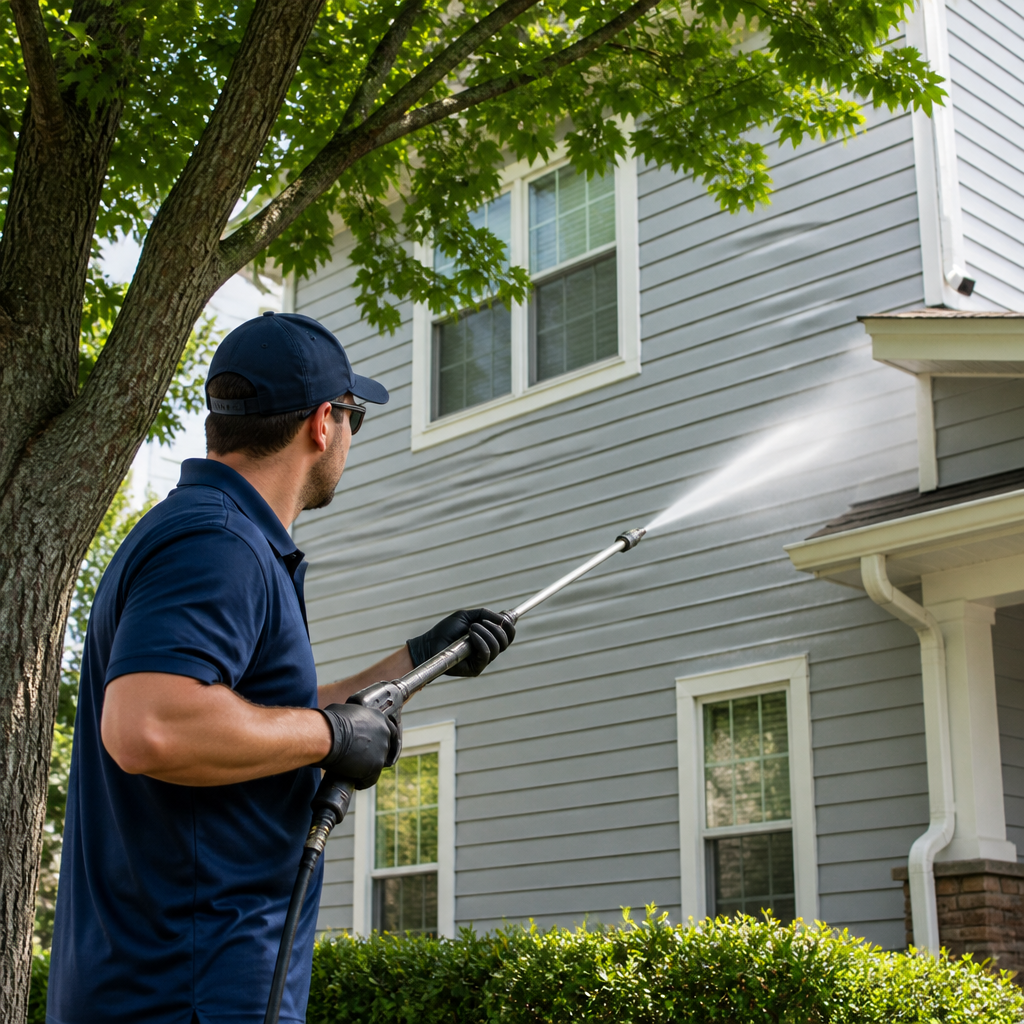
Most siding on homes in these towns responds better to soft washing than to high-pressure power washing. Soft washing uses low pressure and a diluted cleaning solution that stays on the surface long enough to kill mold and algae at the root. The water does the rinsing, not the fighting. For vinyl, painted wood and fiber cement, that approach removes the film without the etching and fuzzing that aggressive pressure leaves behind.
The goal of a good exterior wash is not a clean house on the day of the job. It is a house that stays clean through the next rainy season.
Dwell Time and Rinse Pattern
Dwell time is where most do-it-yourself jobs go wrong. The solution needs several minutes to work, and letting it dry on the siding before rinsing causes streaks. We rinse from the bottom of the wall upward in overlapping passes, which keeps the solution from running into dry patches. On a two-story house, the full sequence takes most of a morning once setup and cleanup are included.
Protecting Landscaping and Fixtures
Before any solution goes on, we wet down shrubs, cover outdoor lighting and check that window seals are sound. Solution left to pool can scorch hostas and burn lawn edges, so we rinse plantings thoroughly. Gutter cleaning is usually scheduled the same day so that rinse water does not carry debris back onto the siding.
Pro tip: Ask for the type of cleaning solution and how the crew plans to protect plantings before you approve the job. A company that cannot answer both questions in one sentence each is guessing.
Driveways, Walkways and Pavers
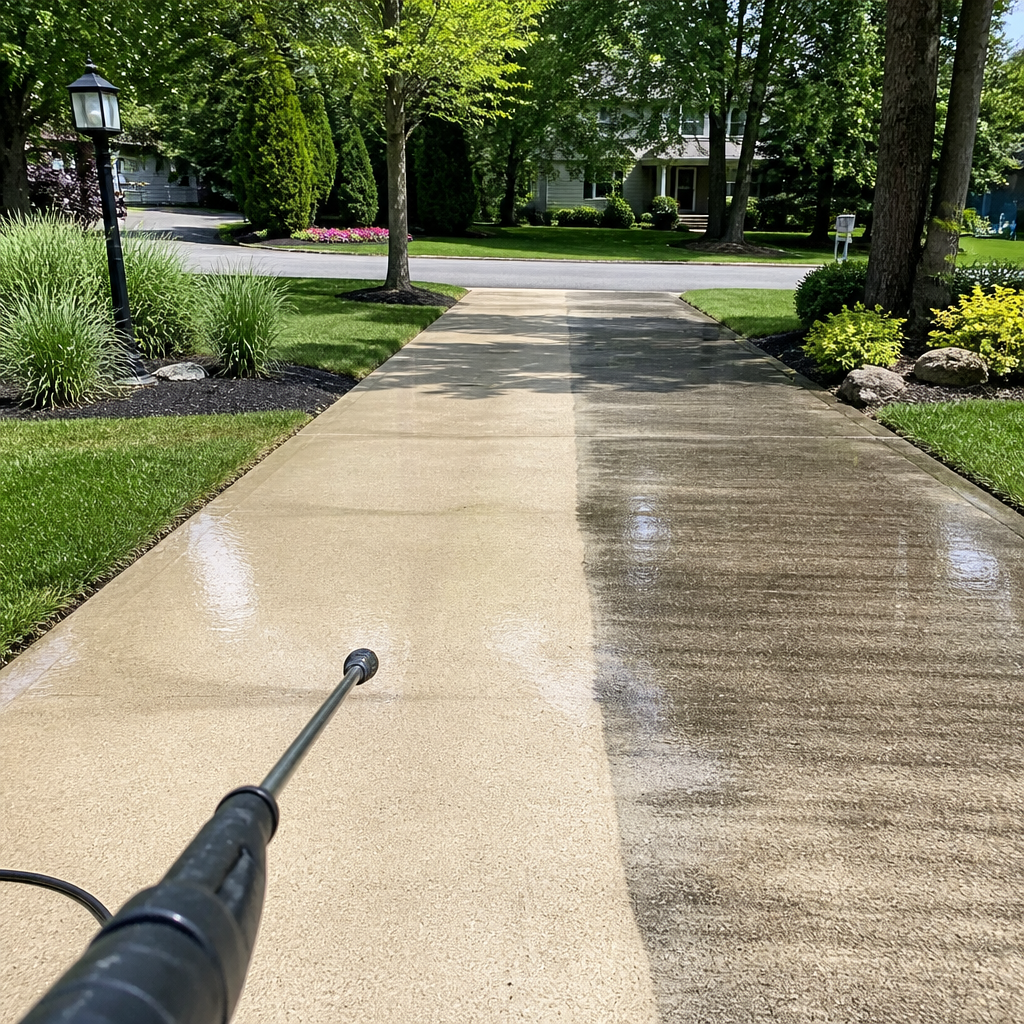
Concrete and paver surfaces show their age in the joints and in the low spots where water sits. Oil drips from parked cars, tire marks and the dark bloom of algae all look different and need different treatment. Our driveway and sidewalk cleaning uses a rotary surface cleaner for broad flat areas and a wand for edges, grout lines and corners, which keeps the finish even.
Oil Stains and Tire Marks
Oil does not come out with water alone. We pre-treat with a degreaser, let it work, then rinse. Stubborn stains may need a second pass, and we will tell you up front if a stain is unlikely to fully lift. Expect some residual shadow on older concrete, because cleaning removes the surface film but not oil that has soaked into the pores.
Paver Sealing and Restoration
Pavers need cleaning before sealing, and sealing before the old seal wears through. Sand loss between joints is the sign to watch for. When we restore pavers, we clear weeds and old sand, rinse, let the surface dry fully, and then apply sealer. Sealing over damp pavers traps moisture and leads to a cloudy haze, which is one of the most common problems we see from do-it-yourself sealing.
Sidewalk Cleaning Around Entries
Front walks and entry steps are where slip hazards develop. Algae and fine silt on stone become very slick after rain. We treat these areas first, because they get the most foot traffic and are the spots where a fall is most likely. Clean footing matters as much as a clean facade.
Moss, Shade and Roof Cleaning
Roof cleaning is the service people ask about least and regret skipping most. Moss and algae hold moisture against shingles, shorten their working life and push debris into gutters. Roof slopes in shade, which is common on wooded lots, can build up growth quickly, and a wet season makes it worse. Roof washing should be solution-based and low pressure, not a high-pressure blast that lifts shingle granules.
Moss Removal Without Damaging Shingles
Moss removal starts with the root, not the visible top. Brushing or blasting off the growth leaves the roots intact, and it returns within months. We apply a treatment that kills the growth, let it dwell, and then rinse gently. We ask about roof age and material before choosing a method, because older shingles tolerate less moisture and less force.
Roof Stain Removal and Gutter Debris
Dark streaks on asphalt shingles are usually algae, and they fade after treatment, though not always in a single cycle. Gutters are the next stop. Once the roof is clean, we clear gutters so runoff from the treatment does not wash debris down the fascia. If the gutters are streaked from the same growth, gutter brightening can be added to the same visit.
Why Timing Matters on Wooded Lots
The best window for roof work is when the surface is dry and the forecast stays clear for at least one day afterward. Rain within hours of treatment dilutes the solution and reduces results. We plan roof visits around the weather, and if a storm is coming, we move the job rather than rushing it.
Decks, Fences, Gutters and Windows
Wood and composite surfaces around the house take a lot of abuse from weather, foot traffic and shade. Those surfaces should be cleaned before any staining or painting, because a finish will not bond to a film of gray growth. Fences and decks in shaded yards often look like they need replacing when they really need proper cleaning and a fresh finish.
Deck Cleaning Before Staining
Deck cleaning is the first step to a good stain job. We clean the boards, let them dry for a day or more depending on weather, and check for raised nails and loose rails. Stain applied over a dirty deck tends to peel within a season. If the deck is due for a new finish, deck staining or deck painting can follow in the same visit window.
Fence Cleaning on Mixed Materials
Cedar, pressure-treated pine and vinyl fences each need different handling. Cedar can tear under high pressure, so we use a lower setting and work along the grain. Vinyl can be cleaned more firmly but still needs a gentle approach near seams. We confirm the material before we pick up the wand.
Gutter Brightening and Window Cleaning
Gutters that look chalky or streaked after a wet season are often coated in algae that gutter cleaning alone does not remove. Gutter brightening treats the surface so the color comes back. Window cleaning works best after exterior washing, since spray and runoff leave residue on glass. We schedule windows last so the final rinse finishes the job.
Pro tip: Clean the deck and fence before you choose a stain color. Stain looks different on bare, clean wood than on weathered wood, so pick the color on the surface you will actually be sealing.
Comparing Three Cleaning Approaches for Local Homes
Homeowners usually choose between a few approaches. The table below compares them on the surfaces we see most often in Newton, Andover and Lafayette. The right choice depends less on price and more on what each surface can take.
| Approach | Best For | Main Trade-Off |
|---|---|---|
| High-pressure power washing | Concrete driveways, sidewalks, stone and brick | Can etch painted siding, strip finishes and force water behind lap siding |
| Soft washing | Vinyl, painted wood, stucco and roofs | Takes longer because of setup and dwell time, and it depends on careful product selection |
| Low-pressure rinse with manual scrubbing | Delicate trim, older detailing and small areas | Slow and labor-heavy, and it can miss growth in textured surfaces |
In practice, most homes need two methods on one property. Concrete gets pressure, siding gets soft washing, and the roof gets its own treatment. A provider who quotes one method for everything is probably skipping steps on part of the house.
Commercial Properties and Apartment Complexes
Property managers face different pressures than homeowners. A storefront, an apartment complex or a drive-thru has to look clean when the doors open, and traffic, delivery trucks and trash areas add grime quickly. Commercial work is scheduled around business hours, and the most visible surfaces come first.
Dumpster Pads and Drive-Thru Lanes
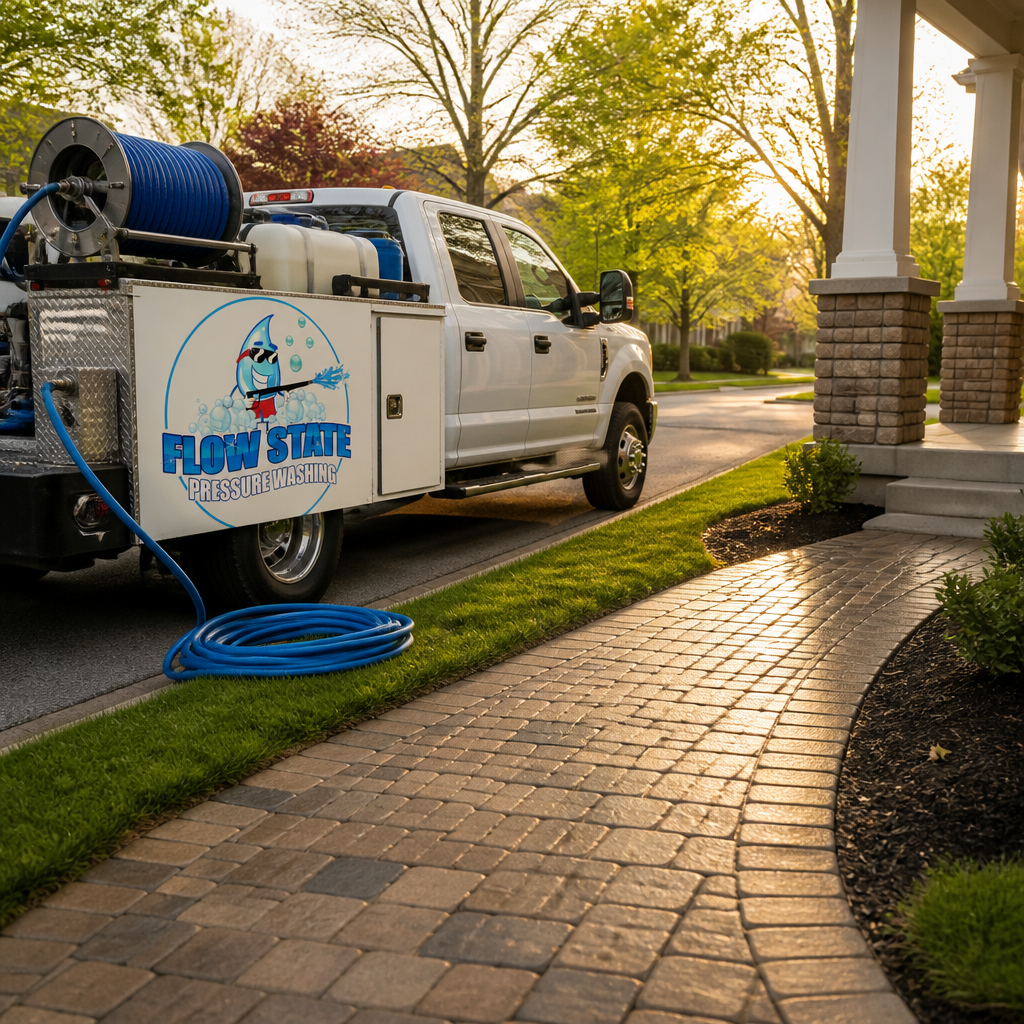
Dumpster pad cleaning is about grease and organic buildup, which create odor and attract pests. We degrease the pad, rinse the drainage path and direct wash water away from storm drains wherever the site allows. Drive-thru lanes need the same approach, with extra attention to oil drips at pickup windows.
Storefront Washing and Commercial Window Cleaning
Storefront glass and sign faces show every streak. We wash in an order that keeps foot traffic and tenants comfortable, then finish with commercial window cleaning so the glass is clear when customers arrive. Property managers who schedule this quarterly keep curb appeal consistent without emergency calls.
Apartment Complex Washing and Scheduling
Apartment complexes usually need building washes, walkways and parking areas on a rotating schedule. Breaking the property into zones lets us finish one section per visit without blocking entrances. Clear communication with tenants about start times and water use prevents most complaints before they start.
Frequently Asked Questions
Most homes with trees or heavy shade do well with a soft wash once a year, plus a lighter rinse in spring if green growth is heavy. Driveways and walkways can often go longer between cleanings. The right interval depends on exposure, so we recommend an in-person assessment.
For most siding types found on local homes, yes. Soft washing uses low pressure and a cleaning solution, which removes mold and algae without etching the surface or forcing water behind the siding. High pressure can still be the right tool for concrete and brick, but it is usually the wrong choice for painted or vinyl surfaces.
Yes, when the work uses a low-pressure, solution-based method and the crew matches the treatment to the shingle type and age. The goal is to kill moss and algae at the root. High-pressure blasting can lift granules and shorten roof life.
A standard residential driveway usually takes one to two hours, including pre-treatment for oil stains. Larger driveways, heavy staining or paver restoration take longer. We provide a time estimate with the quote so you know how much access we will need.
Most exterior jobs do not require you to be home. You should move vehicles, pets and outdoor furniture, and let us know about any fragile plants or fixtures. If you can, we are happy to walk the property with you before work starts.
Yes. Flow State Pressure Washing is fully insured, and we are glad to share proof of coverage when you request a free quote.
What has your experience been with pressure washing your own siding, driveway or deck in Newton, Andover or Lafayette, and what would you want a crew to do differently?
References
Ready For A Clean Home?
Schedule Quality Sparta Power Washing Today!