
Pressure Washing Morris County NJ: Luxury Home Guide

Most homeowners assume a clean house is a clean house, but on a high-end property that assumption gets expensive fast. A rented pressure washer can etch a natural stone walkway, strip paint from cedar trim, or drive water under roof shingles in one afternoon. If you are searching for pressure washing Morris County NJ, or exterior cleaning Bergen County NJ, for a home with custom millwork, stone veneer, and premium roofing, the method matters as much as the machine. This guide explains how we approach luxury home power washing across both counties.
Table of Contents
- Quick Takeaways
- What Makes High-End Exteriors Different
- Pressure Washing vs. Soft Washing on Luxury Surfaces
- Property Types Across Morris and Bergen Counties
- Comparing Your Options for Exterior Cleaning
- Roof, Gutter, and Safety Risks
- Solar Panels, Lighting, and Add-On Services
- Scheduling Exterior Cleaning Around the Seasons
- Frequently Asked Questions
- References
Quick Takeaways
| Key Insight | Explanation |
|---|---|
| Match the method to the surface | Soft wash roofs, siding, and painted trim. Save higher pressure for concrete and other durable flatwork. |
| Natural stone needs a lighter touch | Aggressive pressure can pit limestone and travertine, and it blows out the joint sand that holds pavers in place. |
| Clear gutters before the wash | Debris left in the troughs sends dirty water down siding you just cleaned. |
| Roof work carries real risk for DIY | Ladder falls, slick pitches, and shingle damage are the main reasons to hire out roof cleaning. |
| Ask for specifics before work starts | A qualified provider should name the pressure, tip, and cleaning solution planned for each surface. |
| Bundle services into one visit | Solar panels, windows, paver sealing, and lighting share setup and cut down on repeat trips. |
What Makes High-End Exteriors Different
A high-end home is rarely built from one material. In a typical property we see natural stone veneer, cedar or fiber-cement trim, painted wood or aluminum windows, concrete drives, and sometimes a pool deck. Each of those surfaces reacts differently to water pressure, heat, and cleaning chemicals, so one approach across the whole property usually causes damage somewhere.
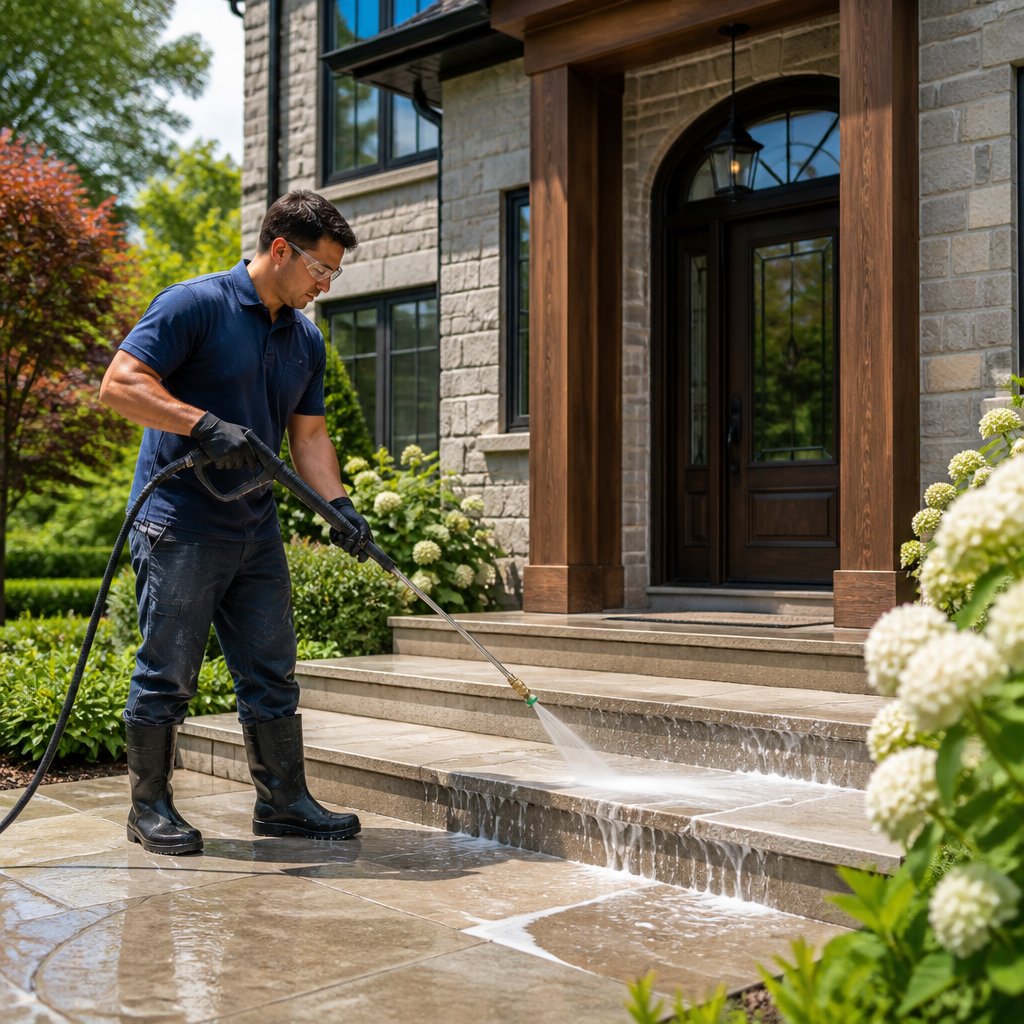
The bigger issue is what a mistake costs. Resetting pavers that were washed out of level or refinishing trim that was stripped by a careless wand costs far more than the cleaning itself. Surface knowledge is the real product, and it is the first thing a homeowner should evaluate.
Natural Stone and Pavers
Limestone, bluestone, and travertine can look clean after aggressive pressure, but they often come out with a rough, pitted surface that holds dirt faster afterward. Pavers also shift when the joint sand is blown out from between them. We check joint condition first, then use a wider fan tip at lower force, and we seal only after the surface has dried completely.
Painted Trim, Wood, and Cedar
Painted wood and cedar are where a rental pressure washer does the most visible damage. Paint lifts at board edges, and soft grain raises into fuzzy ridges that show up after the first rain. A Florida-based exterior cleaning guide we reviewed makes the same general point: high pressure belongs on concrete and durable surfaces, while delicate materials call for a gentler method.
Pro tip: Before anyone sprays your home, ask what pressure and tip they plan to use on your trim, stone, and roof. A provider who cannot answer in specifics is guessing with your finishes.
Pressure Washing vs. Soft Washing on Luxury Surfaces
Pressure washing and soft washing get lumped together, but on a high-end home they solve different problems. Pressure washing uses higher force to lift grime from hard, durable surfaces. Soft washing uses low pressure and a cleaning solution that targets mold, algae, and the growth that feeds regrowth, which makes it the right tool for roofs, siding, and painted trim.
On a luxury property, the cleaning method matters as much as the cleaning solution. The right chemistry with the wrong pressure still causes damage.
Where High Pressure Still Belongs
Concrete driveways, sidewalks, and some stone patios handle higher pressure well, especially when oil or tire marks are set in. We still keep the wand moving and test a hidden spot first. A driveway that looks clean but shows pitted aggregate is not a successful job.
Why Soft Washing Protects Roofs and Siding
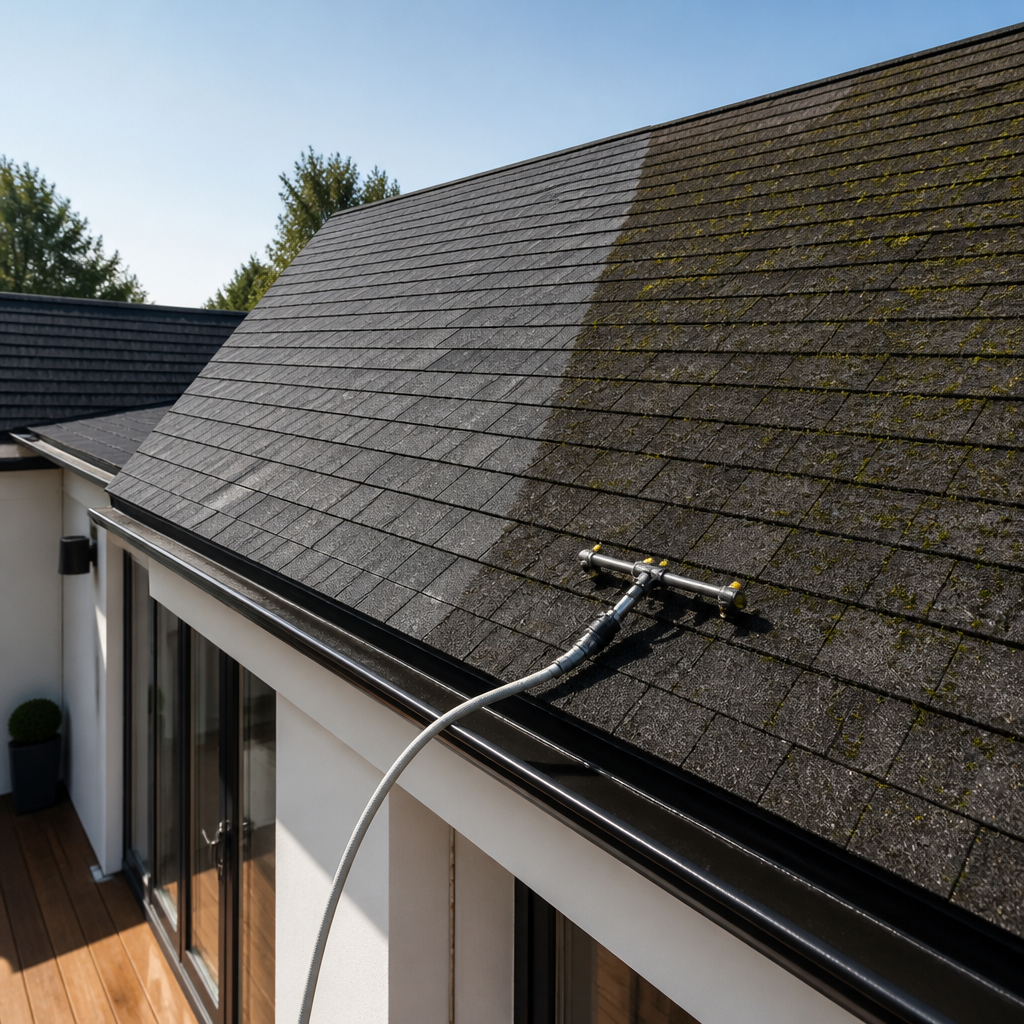
Sustained pressure can wear down the protective granules on asphalt shingles, and the damage shows up as bare patches after a few seasons. Soft washing lets the solution do most of the work, so the water only has to rinse. Roof moss cleaning and roof stain removal are handled as separate line items in our quotes because they require different dwell times and rinse plans.
Pro tip: If a contractor proposes high pressure on your roof, decline. Soft washing removes the same growth with far less risk to the shingles and to the manufacturer warranty that covers them.
Property Types Across Morris and Bergen Counties
Our work covers estate homes, custom builds, and multi-family and commercial properties in towns like Mendham, Chester, Montville, Mountain Lakes, Franklin Lakes, and Saddle River. Each property type has its own pattern of buildup, so the plan starts with the property, not the price list.
Wooded Lots and Tree Debris
Shaded sides of a house stay damp longer, and that is where algae and dark streaks settle first. Properties surrounded by mature trees also collect pollen, seed pods, and leaf litter that fill gutters and feed growth on the roof. On wooded lots we schedule a gutter and roof check before the main wash, because a blocked downspout will send water straight down the siding we just cleaned.
Driveways, Pavers, and Pool Decks
Long driveways and pool decks take the most foot and tire traffic, and they show every oil spot and leaf stain. We clean in sections, rinse as we go, and keep the edges wet so the cleaner does not dry into a visible ring. Textured or stamped concrete on a pool deck also needs a lighter touch than most homeowners expect, because the high points wear faster than the recesses.
Stone Entries and Hardware
Front entries often combine stone veneer, painted doors, and bronze or brass hardware. We mask hardware, protect glass, and keep chemistry away from metal finishes. It takes longer than hosing down an entry, and that extra time is why the entry still looks right the next season.
Comparing Your Options for Exterior Cleaning
Homeowners usually weigh three paths: a rented pressure washer, a general handyman with a machine, or a specialized exterior cleaning team. The right choice depends on what you own, how much risk you can absorb, and whether you want the work repeated on a schedule. The table below compares the three in practical terms.
| Approach | Best Suited For | Main Risk |
|---|---|---|
| Rented pressure washer (DIY) | Concrete and sheds where scarring is acceptable | Etched stone, lifted paint, and shingle damage that is hard to trace back to the wash |
| General handyman with equipment | Simple flatwork and single-surface jobs | Inconsistent technique across surfaces and little documentation if something goes wrong |
| Specialized exterior cleaning team | Mixed surfaces, roofs, windows, lighting, and recurring maintenance | Higher upfront cost than DIY, and results depend on choosing a team that is insured and trained |
The cost gap is real, but the cheapest option often becomes the most expensive once a stone walkway needs resetting. For a home with several finish types, one visit from a team that handles each surface differently usually beats three weekends of trial and error.
Roof, Gutter, and Safety Risks
Roofs and gutters are where DIY cleaning turns dangerous. Ladder falls and exposure to cleaning chemicals are the two risks that matter most when a homeowner works alone, and a wet roof gets slick faster than most people expect. Professional crews work with proper access equipment and surface-specific methods, which is the main reason we recommend hiring out this part of the job.
Gutter Cleaning and Gutter Brightening
Gutters need to be cleared before the wash, not after. Debris left in the trough sends dirty water over the fascia and onto the siding, so gutter cleaning is the first step on most of our residential jobs. Gutter brightening follows once the channels are clear, and it helps restore the color of aluminum or vinyl that has dulled from weathering.
Why Gutter Guards Are Not a Substitute
Gutter guard installation reduces how often you need to clean, but it does not remove the need for inspection. Leaves still settle on top of some guard systems, and fine debris can work through the openings. We treat guards as a maintenance decision, not a replacement for periodic checks.
Most exterior damage happens during the cleaning, not during the storm that follows. Safe access and the right method matter more than the machine.
Solar Panels, Lighting, and Add-On Services
A pressure wash is often the first visit a crew makes to a property, which makes it the right time to add related services. Solar panel cleaning, window cleaning, and paver sealing all benefit from being scheduled alongside the house wash, because the crew is already set up and the loose dust and debris are handled in one pass.
Solar Panel Cleaning Done Right
Solar panels need a low-pressure method and a rinse that does not leave residue behind. Hard water that dries on the glass leaves mineral spots, and those spots can reduce how much light reaches the cells. We clean panels separately from the house wash so cleaning solution does not dry on the glass, and we keep pressure away from the frame seals.
Permanent Lighting and Holiday Lighting
Permanent outdoor color-changing lights and roofline lighting are installed on the same visit as exterior cleaning, because the crew is already working on the fascia and the surfaces are clean. Holiday lighting can be installed and removed as one service, so nothing is left behind on the trim after the season ends.
Pro tip: Book window and solar cleaning in the same visit as the house wash. You avoid paying for two mobilizations, and you avoid rinse water drying spots on glass you just cleaned.
Scheduling Exterior Cleaning Around the Seasons
For most high-end homes in our service area, a full exterior cleaning once a year handles normal buildup, with a roof and gutter check in between. Shaded and wooded properties often need more frequent attention. The goal is to clean before growth turns into permanent staining, not after.
Spring Cleanup After Winter
Spring is when we see winter grime, salt residue from driveways, and early mildew on shaded siding. A spring visit clears these before summer heat bakes stains into porous stone and wood. Pavers and pool decks are often cleaned at the same time so they are ready for outdoor use.
Fall Visits Before the Holidays
Fall is the best window for roof moss cleaning and gutter clearing, before leaf drop buries the gutters again. A fall visit also prepares the property for holiday lighting installation, so the lights go up on clean surfaces and the fascia is ready to hold them.
Pro tip: Ask for a before-and-after walkthrough of problem areas, such as stone entries and roof valleys, so you can see what was done and what was left for a follow-up.
Frequently Asked Questions
It can be, but only with the right pressure, tip, and cleaning solution for that specific stone. Limestone and travertine are prone to pitting under aggressive force, so a careful provider uses a wider spray pattern and lower pressure. Always ask for a test area before the full job starts.
In most cases, no. Roof cleaning should use a soft wash with a solution that targets growth, because high pressure can wear shingles and affect warranty coverage. Roof moss and staining can usually be treated without the risk that comes with a wand.
Most properties do well with an annual full exterior cleaning. Shaded lots, wooded properties, and homes near heavy foot or vehicle traffic often benefit from a second visit, with gutters and roofs checked in between.
Yes, and we recommend it. Scheduling them together saves a second mobilization, and it keeps rinse water from drying spots on glass we just finished. Solar panels still get their own low-pressure method.
Yes. We are fully insured, use professional equipment, and follow detailed processes for each surface. Reach out for a free quote, and we will walk through the plan for your specific home before any work begins.
Tell us which surface on your property has given you the most trouble, and what you did about it.
References
- Comparison of DIY and professional exterior cleaning for home surfaces
- Explanation of pressure washing versus house washing for exteriors
- Overview of exterior maintenance benefits from pressure washing
Ready For A Clean Home?
Schedule Quality Sparta Power Washing Today!