
Pressure Washing in Late Fall NJ: Is It Too Late?

If you’ve been looking at the gutters, the driveway, and the green film on the shady side of the house and wondering whether exterior cleaning is already off the table, you’re not alone. Many homeowners in Sparta, Andover, and Lafayette assume the season ends when the leaves start falling, then wait until spring to deal with the buildup. The honest answer is that pressure washing late fall NJ is still possible, but the window narrows quickly, and the wrong day can leave you with ice, streaks, or damaged equipment. Here is how we decide when a late season wash makes sense and when it should wait.
Table of Contents
- Quick Takeaways
- When Late Fall Still Works for Pressure Washing
- Why Freezing Temperatures Change the Job
- Which Surfaces Can Still Be Washed in November
- Pre-Winter Cleaning and Why Timing Still Matters
- Hot Water, Detergent, and Technique in Cold Weather
- Comparing Late Fall Cleaning Options
- Common Late Fall Mistakes That Cause Damage
- Frequently Asked Questions
- References
Quick Takeaways
| Key Insight | Explanation |
|---|---|
| Late fall is still workable | A wash can be done on any stretch of dry, mild days, as long as the surface can rinse and dry before overnight temperatures fall toward freezing. |
| Freezing water is the real risk | Water trapped in hoses, pumps, and on surfaces causes most of the damage. The cold air alone rarely does. |
| Check the overnight low, not the afternoon high | A mild afternoon can still be followed by a night cold enough to freeze standing water on steps and walkways. |
| Use cold-weather rated detergents | Cold slows cleaning chemistry, so products designed for lower temperatures work more reliably on organic staining. |
| Wash walkways and steps first | Slippery surfaces are the biggest safety concern in late fall, so they get priority when only part of a project can be finished. |
| Pre-winter washing protects against buildup | Mold, mildew, and grime left on siding and decks through winter hold moisture longer and take more effort to remove in spring. |
| Schedule the wash before holiday lighting | Lights and fasteners go onto a clean, dry surface, and the wash does not get rushed against a lighting install date. |
When Late Fall Still Works for Pressure Washing
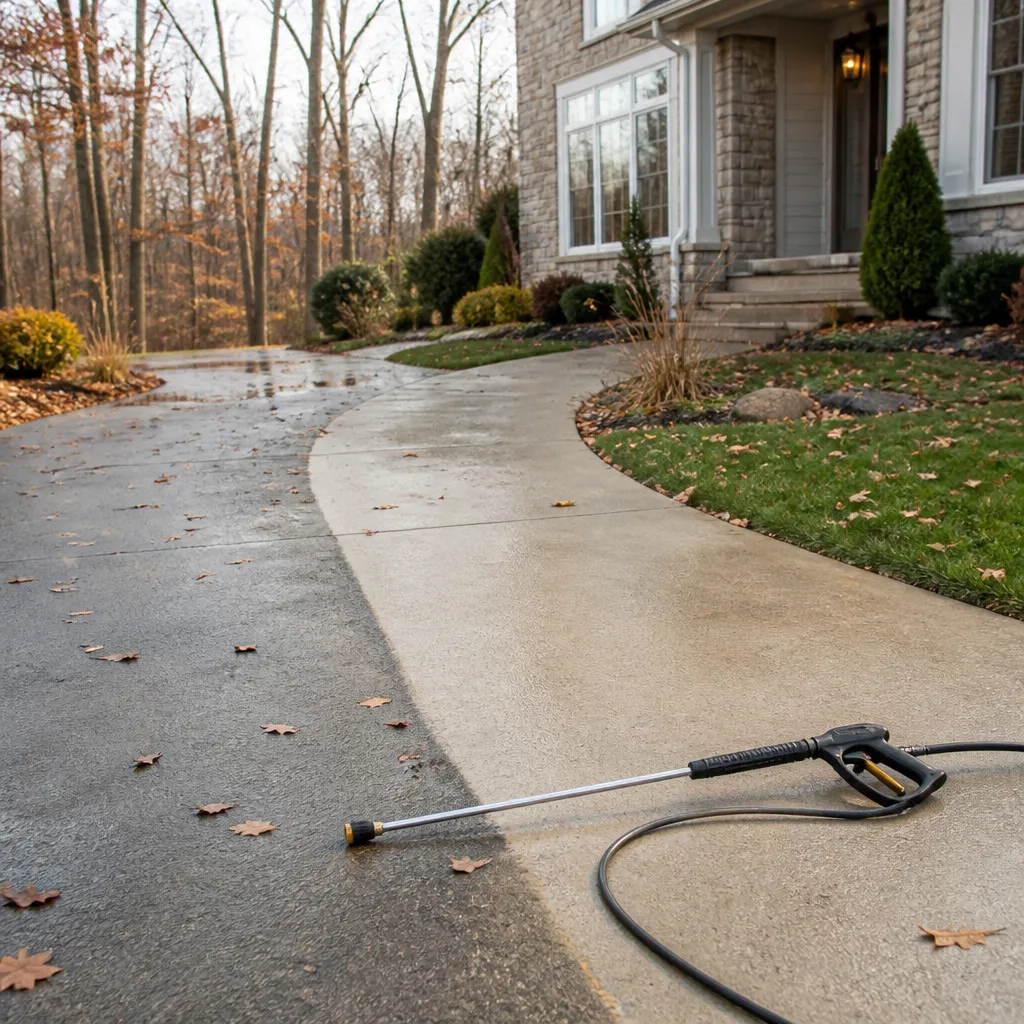
Late fall is still a workable season for exterior cleaning, but it runs on the weather, not the calendar. The useful question is not whether it is November, but whether you can get a stretch of dry, mild days long enough for the surface to be washed, rinsed, and dried before the temperature drops at night. The best late fall jobs we see are booked on a clear forecast with at least one reliable afternoon to finish.
Reading the Forecast Before You Book
Check the overnight lows for the next several nights, not just the daytime high. A mild afternoon can still be followed by a night cold enough to turn standing water into a slick film on decks and walkways. If the forecast shows a freeze within a day of your scheduled wash, move the job rather than hoping the surface dries in time.
Pro tip: Book your late fall wash for the first clear, mild stretch after a cold front passes, not the day before rain or a hard freeze is forecast. Surfaces need a full dry day after rinsing, and a wet night can undo a good job.
Why Fall Still Beats Spring in Some Cases
Fall has advantages that make it a good window even when it is getting late. Moderate temperatures and lower humidity help surfaces dry faster and more thoroughly, which is one reason a wash can hold its results longer. Fall also has fewer airborne allergens and less debris than spring, so there is less chance of fresh grime settling back onto a freshly cleaned driveway or patio.
Timing matters for homes that have guests, open houses, or family gatherings ahead. A pre-holiday wash leaves the front walk, steps, and entry looking fresh when people arrive. If your exterior has been sitting under leaves and tree sap since September, waiting until March means living with that look for the entire winter.
Why Freezing Temperatures Change the Job
The real risk in late fall is not the cold air itself. It is water that stays where it should not be. Water left in hoses, pumps, and on cleaned surfaces can freeze quickly, and ice inside a pressure washer can crack components or cause leaks that turn a simple job into an expensive repair.
Water Left in Hoses and Pumps
If you run your own machine, drain the hoses after every job and winterize the pump with antifreeze or a winterization kit before the first hard freeze. A machine stored in an unheated garage or shed can be damaged by a single overnight cold snap, and small cracks are sometimes hard to spot until you try to start it. Professional crews should store equipment in a heated space or an insulated area whenever it is not in use.
Cold weather rarely ruins a pressure wash by itself. Trapped water and ice do.
Ice on Cleaned Surfaces
Cleaned surfaces are the second risk. Water that pools on a driveway, steps, or a deck can freeze into a slick layer, and wet surfaces stay slippery longer in late fall because they dry slowly. That is why we treat walkways and entry steps as the priority: if we cannot be confident they will dry before dark, they do not get washed that day. A fall on an icy front step costs far more than a delayed driveway job.
Shade is the detail people miss. A side yard, a north-facing porch, or the area under a large tree can stay damp well into the evening, even when the rest of the property looks dry. Those spots are where ice forms first, so they need extra attention in both the planning and the rinse.
Which Surfaces Can Still Be Washed in November
Not every surface carries the same late season risk. Hard, flat surfaces that drain well are usually the easiest to clean in cool weather, while porous, painted, or aged materials need more caution. Matching the job to the surface is more important than the date on the calendar.
Concrete, Driveways, and Pavers
Concrete driveways, patios, and sidewalks handle late fall cleaning well when the forecast is steady. Driveway Cleaning and Concrete Cleaning are common late season requests because leaf stains, oil spots, and tire marks settle into the surface over the autumn months. Paver Restoration and Paver Sealing are a different matter. Sealers need dry conditions and mild temperatures long enough to cure, so the work is better pushed to a milder stretch than squeezed into the last cold weeks of the year.
Decks, Fences, and Siding
Wood decks and fences are where timing matters most. Wood that is wet when temperatures drop can stay damp for days, and the grain can hold moisture that feeds mold and mildew. Deck Cleaning and Fence Cleaning can still work in late fall as long as the wood dries completely before the next cold night. Deck Staining and Deck Painting should wait for milder weather, because coatings need dry wood and workable temperatures to bond properly.
Siding is usually better served by soft washing than by high pressure. House Washing with a low pressure, soft wash method removes mold and mildew without forcing water behind lap joints or under loose trim, which matters more when water has less time to evaporate. Ask whoever is doing the work how they plan to protect the surface before they start.
Roofs and Gutters
Roof Washing, Roof Moss Cleaning, and Gutter Cleaning are common fall tasks because leaves and moss build up through the season. Clear the gutters first, then wash the roof, so debris does not wash onto surfaces you have just cleaned. Roofs are a late fall judgment call, since the shaded sections of a roof can stay damp into the evening. We favor soft washing on roofs and only proceed when the forecast gives a full dry day after the rinse.
Pre-Winter Cleaning and Why Timing Still Matters
A late fall wash is not only about appearance. It removes the organic growth and grime that sit on a surface through the cold months, when that surface has the least ability to recover from it. Cleaning before the hard freeze starts the winter from a better place than leaving last season’s buildup in place.
Mold and Mildew Don’t Wait for Spring
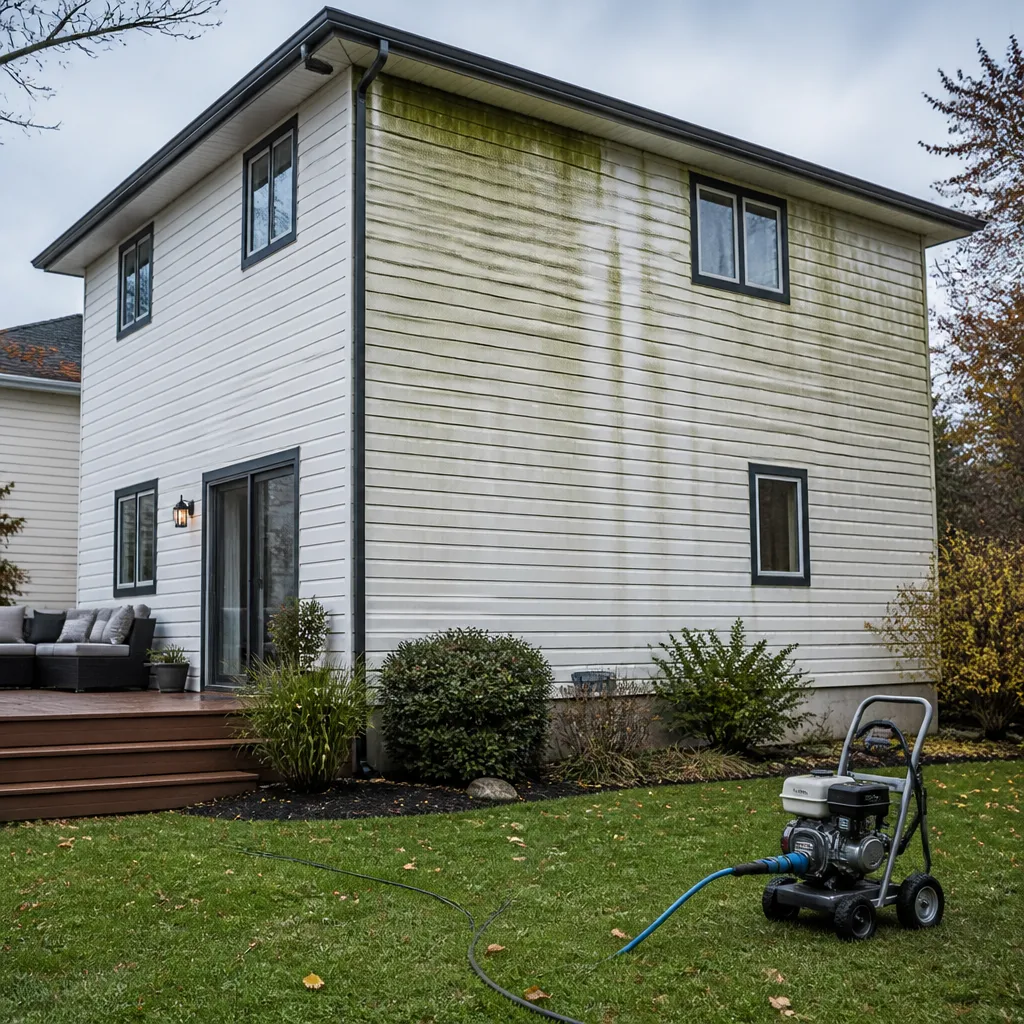
Dirt, grime, mold, and mildew can weaken surfaces when they are left through freezing conditions. Wet, shaded siding and decks that stay dirty through winter tend to hold moisture longer, which gives growth more time to take hold. A wash before the hard freeze removes what is already there, so the surface does not carry a full season of buildup into spring.
Fall also gives you a practical reason to inspect while you clean. Walk the perimeter after the rinse and look for soft wood, loose caulk, and cracked pavers. Problems you catch in November are much cheaper to address before they are wrapped in ice.
Holiday Lighting Goes Up on Clean Surfaces
If you are planning holiday lighting or permanent roofline lighting, schedule the pressure wash first. Clips, fasteners, and light strands go onto a cleaner and drier surface, and you avoid cleaning around fixtures later. It is the simplest order of operations, and it keeps the wash from being rushed against a lighting install date.
A clean exterior also shows lighting better. Dingy siding and stained concrete make even well-placed lights look dull, while a freshly washed facade lets the color and the outline of the house stand out after dark.
Hot Water, Detergent, and Technique in Cold Weather
Cold weather changes the chemistry as well as the water. Many cleaning solutions are designed for moderate temperatures, and colder conditions reduce their cleaning power. The practical result is longer dwell time, more rinsing, and a greater chance of streaking if the product does not work before it dries.
Choosing Cold-Weather Detergents
Cold-weather compatible detergents are formulated to keep working at lower temperatures, which makes a visible difference on organic staining. If a product is labeled for warm weather only, expect to spend more time on each section. Check the label before you start, and do not assume a detergent that worked in August will perform the same way in November.
Pro tip: Work in sections small enough that you can rinse each one before the sun drops. Cleaning solution left on a surface as the temperature falls can dry into a film that is harder to remove than the original stain.
Hot Water and Runoff Control
Hot water is especially useful in winter conditions because it improves cleaning power and helps keep water from freezing on the surface. Pre-treating with a de-icer, or warming the surface where possible, also improves results. Hot water does not replace good planning, though, since it still needs a dry window to finish the job safely.
Runoff is the part most people underestimate. Water needs a clear path off the surface and away from steps and walkways, so it does not turn into a sheet of ice overnight. Adjust your spray pattern and keep a consistent distance from the surface so you are not blasting one area while leaving the rest under-cleaned.
Comparing Late Fall Cleaning Options
Most homeowners face the same three choices in late fall: wash now with the right adjustments, use a gentler soft wash, or wait for spring. Each option fits a different surface and a different level of urgency.
| Approach | Best Fit | Main Trade-Off |
|---|---|---|
| Hot water pressure washing on hard surfaces | Concrete driveways, patios, and walkways when the forecast is clear and mild | Needs a dry window to finish and rinse, and hot water adds equipment and fuel cost |
| Soft washing with cold-weather detergent | Siding, roofs, fences, and wood where high pressure could damage the surface | Cold slows chemical action, so dwell time runs longer and rinsing takes more care |
| Waiting for early spring | Surfaces that are dirty but not slippery or hazardous, with no event or sale pending | Grime and growth sit through winter and may need a second pass |
If you have to choose, we lean toward washing walkways and entry steps now for safety, and deferring the rest to spring. A slick front step is a bigger problem than a dirty fence, and the sequence should reflect that. Ask your provider to explain which surfaces they would wash now and which they would hold.
Common Late Fall Mistakes That Cause Damage
Most late season problems come from timing and rushing, not from the equipment itself. The mistakes below show up often enough that they are worth checking before you book, not after the first cold night.
Washing Right Before a Freeze
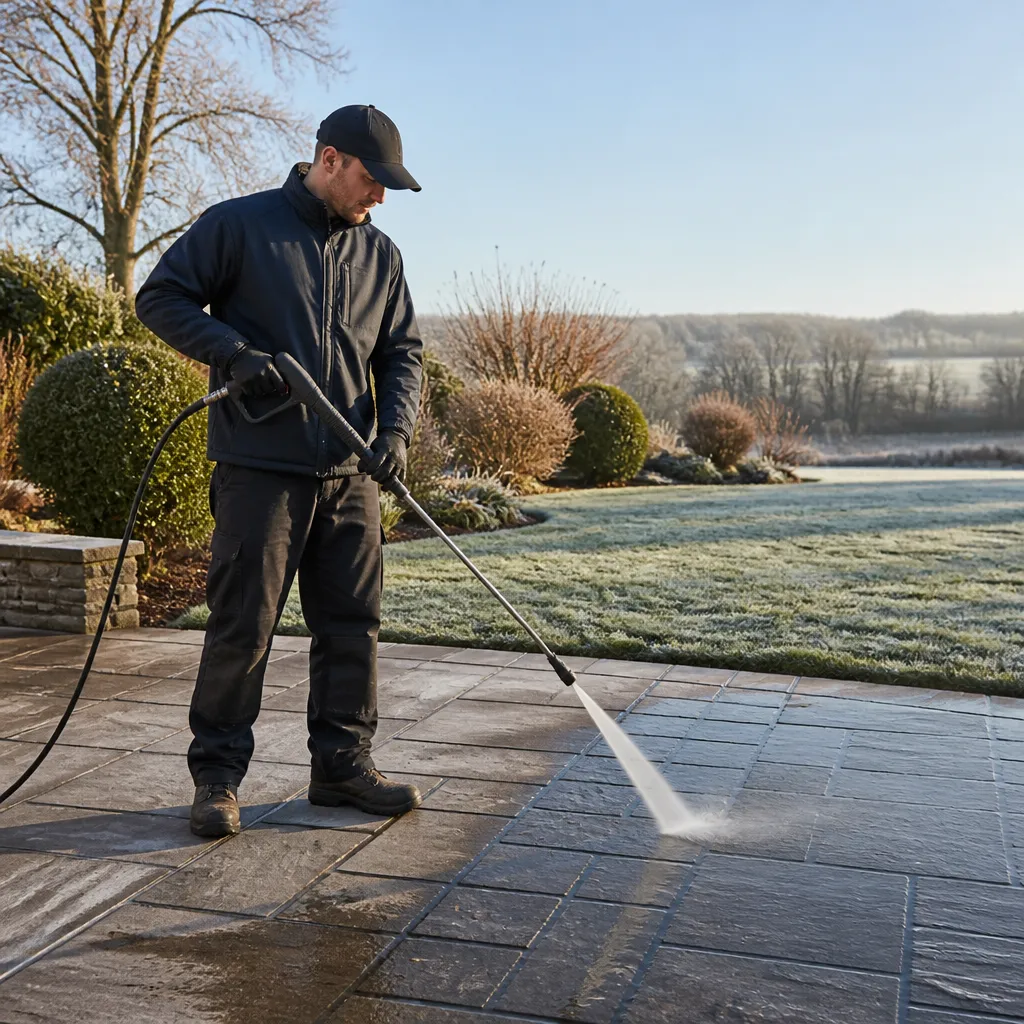
The most common mistake is timing, not technique. A job started at noon and finished by three can still leave water in cracks and in shaded sections that freeze by the next morning. Check the overnight forecast before you book, and reschedule if the night will be cold enough to freeze what you just cleaned.
Skipping Equipment Care
Homeowners who own or rent a machine often leave the hose full of water after a late season job. Drain it, coil it, and store the machine somewhere that stays above freezing. A few minutes of cleanup now prevents a repair bill when you go to start the machine again in spring.
Using Too Much Pressure on Old Wood or Siding
Late fall is also when people push harder to finish before the weather turns. Aged wood, painted trim, and vinyl are easy to damage with too much pressure. Use the lowest effective setting, and test an inconspicuous spot before you work across the whole surface. Pressure ratings vary widely between machines, so check the equipment before you assume it is right for the job.
Pro tip: Clean the gutters before you pressure wash the roofline and siding. Debris knocked loose during gutter work can wash down onto surfaces you have already cleaned, and that means a second pass you did not plan for.
Frequently Asked Questions
Yes, you can pressure wash in November in NJ, but the job has to fit the weather. Look for a run of dry, mild days where the surface can be washed, rinsed, and dried before overnight temperatures drop toward freezing. If the forecast does not offer that window, it is better to wait.
It is not too late for many jobs in Sparta, but priorities change as the season goes on. Walkways, steps, and high-traffic areas should come first for safety, while decks, fences, and paver sealing can often wait for milder weather. A late season wash still helps keep mold and grime from settling in over winter.
There is no single cutoff that fits every job, so focus on the forecast rather than one number. If overnight temperatures are likely to drop toward freezing, skip the job or choose a gentler approach, and make sure water has a clear path off the surface. Equipment should also be drained and stored above freezing before and after every session.
It can, when the wrong pressure is used or when wood stays wet into a cold night. Soft washing is usually the safer choice for siding and roofs, and wood decks should be washed only when they can dry fully before the next freeze. Testing a small area first is always worth the few minutes it takes.
Clean the gutters first. Debris knocked loose during gutter work can wash down onto siding, decks, and walkways, so clearing it before the pressure wash keeps the finished surfaces clean. This order also gives you a better look at the roofline before the wash begins.
Yes, and it is the best order of operations. Washing first means lights and fasteners go onto a clean, dry surface, and the wash is not rushed against the lighting date. Coordinating both services together also keeps the exterior looking its best for the holiday season.
What has your experience been with late fall exterior cleaning, and would you schedule it again next November?
References
- Best practices for pressure washing equipment and technique in cold weather
- Why fall is a practical season for planning exterior pressure washing
- Reasons fall works well for clearing summer buildup and protecting surfaces before winter
Ready For A Clean Home?
Schedule Quality Sparta Power Washing Today!