
Permanent Outdoor Lighting Near Me in Sparta, NJ Guide

If your home goes dark at 5 p.m. from November through February, the front elevation is the first thing your neighbors see, and it often looks unfinished. Permanent outdoor lighting near me searches usually come from homeowners who are tired of hanging strands from a ladder every fall and then untangling cords in January. In Sparta, cold snaps, wet snow and ice can arrive quickly, so the install window before the first holiday season is shorter than most people expect. This guide explains what a permanent system includes, what separates a durable install from a rushed one, and how to get your home ready before winter.
Table of Contents
- Quick Takeaways
- What Permanent Outdoor Lighting Covers
- Roofline Lighting: Where It Pays Off
- LED Fixtures and Color Control
- Installation Quality: Wiring and Connections
- Permanent Versus Seasonal Lighting Compared
- Preparing Your Home Before Installation
- Timing Your Install Before Winter
- Frequently Asked Questions
- References
Quick Takeaways
| Key Insight | Explanation |
|---|---|
| Book the survey in early fall | Exterior crews fill up once leaves drop and the first cold week arrives. Booking early gives you room for weather delays before your first holiday. |
| The roofline is the core of the system | Eaves, fascia and gable lines make the house read as lit from the street, and they stay nearly invisible in daylight. |
| Pick LED fixtures with app or panel control | Color, brightness and schedules let one system cover everyday warm white, game days and holidays without new hardware. |
| Ask how every connection is made | Failures often start at joints, not fixtures. Ask where splices sit, how they are sealed and what enclosure protects them. |
| Clean gutters and siding before mounting | Clean, dry, sound surfaces give clips a solid bond and let the installer spot soft or rotting wood before the lights go up. |
| Compare total cost over several winters | Seasonal décor costs labor every year. A permanent system front-loads the cost, which often works out better if you plan to stay in the home. |
What Permanent Outdoor Lighting Covers
Permanent outdoor lighting is a set of LED fixtures and cable runs mounted to the structure of your home, usually along the roofline, eaves, soffits and architectural features. The system stays up all year. Fixtures are matched closely to the color of the soffit or trim, so in daylight the hardware mostly disappears. At night, the same runs carry whatever color, brightness and schedule you have programmed.
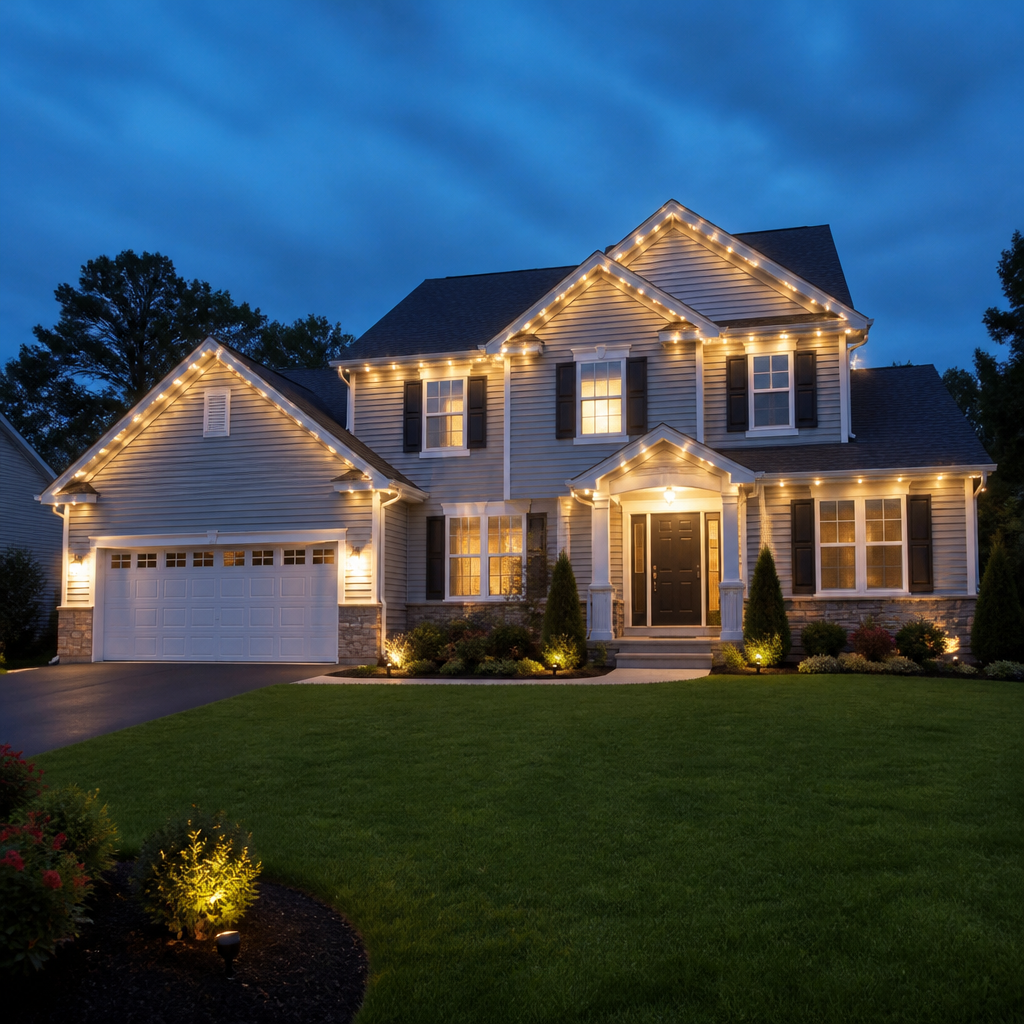
Most homeowners switch because they are tired of the seasonal cycle. There is the ladder, the tangled strands, the dead section you only find after the third hook, and the storage bin that never quite fits back in the garage. A permanent system removes the setup and teardown entirely. The lights are installed once, and seasonal changes happen on a phone.
What a complete system includes
A proper install is more than a string of lights on clips. Expect mounting channels or clips rated for your siding and trim, the LED fixtures themselves, a run of low-voltage cable, a power supply and a controller. Some systems add zone control so the garage, front door and porch can run separately. Ask the installer to name each part in the proposal, because the controller and power supply are where budget jobs tend to cut corners.
Where it differs from seasonal strings
Seasonal strings are cheap to buy and cheap to start, but the cost comes back every year in labor. A permanent system front-loads that cost. The trade-off is that the install has to be planned around how your house is built, not around a box of strands from a big-box store. Seasonal lights will always be more flexible for a one-time party. Permanent lights win when you want the same finished look from November through February and beyond.
Pro tip: Ask for a proposal that lists every run, zone, controller and power supply. A quote that says only “roofline lighting” cannot be fairly compared to another bid.
Roofline Lighting: Where It Pays Off
If you fund only one part of a permanent system, fund the roofline. Eaves, fascia and gable edges draw a clean line along the house that reads from the street, and they are where daytime invisibility matters most. A straight, evenly spaced line of light at the roof edge makes a two-story home look finished even when the yard is dark.
Eaves, fascia and gable lines
Straight eave runs are the simplest part of a job and the most visible. The crew should keep the channel level and evenly spaced, and that is a detail you can check from the driveway. Gable peaks need a different approach because the angle changes the spacing. A rushed gable run shows up as a sag or a bright hot spot at the high point.
Entries, columns and architectural accents
Front doors, porch columns and stone details look best with a small number of accent fixtures rather than a full wash of light. In practice, two or three well-placed accents do more for the front of a house than a row of fixtures that lights every surface evenly. Accents also make it easy to change the look for a holiday without touching the whole system.
Why the roofline outperforms the yard
Yard displays look good in photos, but they depend on lawn space, power access and how much you enjoy restaging them every season. A roofline system works on the structure you already have, whether you live in Sparta, Andover, Lafayette or Newton. It also sits well above the path of foot traffic, so it is less exposed to bumps and mowers. A house-first design is simpler to maintain than a yard display that gets rebuilt each year.
LED Fixtures and Color Control
LED is the baseline for any permanent system worth considering. A current buyer guide describes LEDs as using significantly less energy than traditional lighting while delivering brighter, more consistent illumination. Don’t stop at the word “LED” in a proposal. Ask which LED modules and drivers the system uses, and how many fixtures sit on each run.
Smart control versus panel control
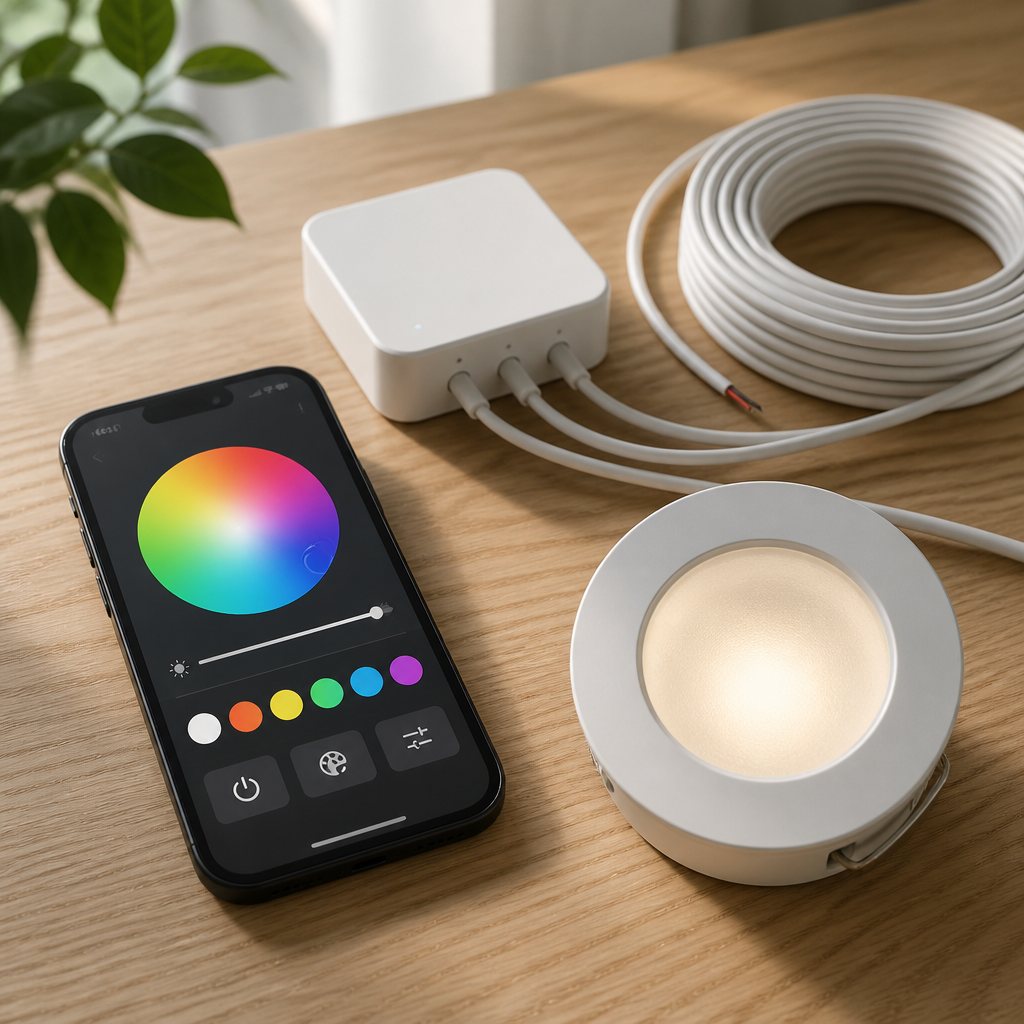
App control is the feature most people want. It handles schedules, color changes and zone on and off from your phone. The trade-off is that app systems depend on a network connection and an account. Panel or wall-controller systems are less flexible but keep working when Wi-Fi is down. For most homes, we would choose app control with a physical override switch so anyone in the house can turn the lights on without a phone.
Color temperature for everyday and holiday use
Warm white for everyday use keeps the house looking like a home. Full color belongs to holidays and game days. Run full color across the front of the house all year and it starts to look like a commercial sign. Set a warm white default, then schedule color for the days that matter.
Brightness and zoning
Brightness should be set by zone, not for the whole house at once. Overly bright garage runs are a common complaint after a first install. Zoning lets you dim the garage and driveway while keeping the entries and roofline at full strength. Ask the installer to demonstrate each zone at dusk before the walkthrough ends.
Installation Quality: Wiring and Connections
Most permanent lighting problems trace back to connections, not fixtures. One manufacturer’s installation write-up notes that mechanical connectors, which create many joints along a run, were a main cause of failures in its experience, and that the company moved to soldered and heat-shrunk connections. You do not need to be an electrician to ask an installer how they join wire.
Lighting rarely fails at the fixture. It usually fails at a joint, a controller box, or a cable pinched behind a gutter bracket.
A professional install takes longer because every run has to be routed, protected and tested. Shortcuts show up later as dead sections after a storm. The time spent on the layout is what you are paying for.
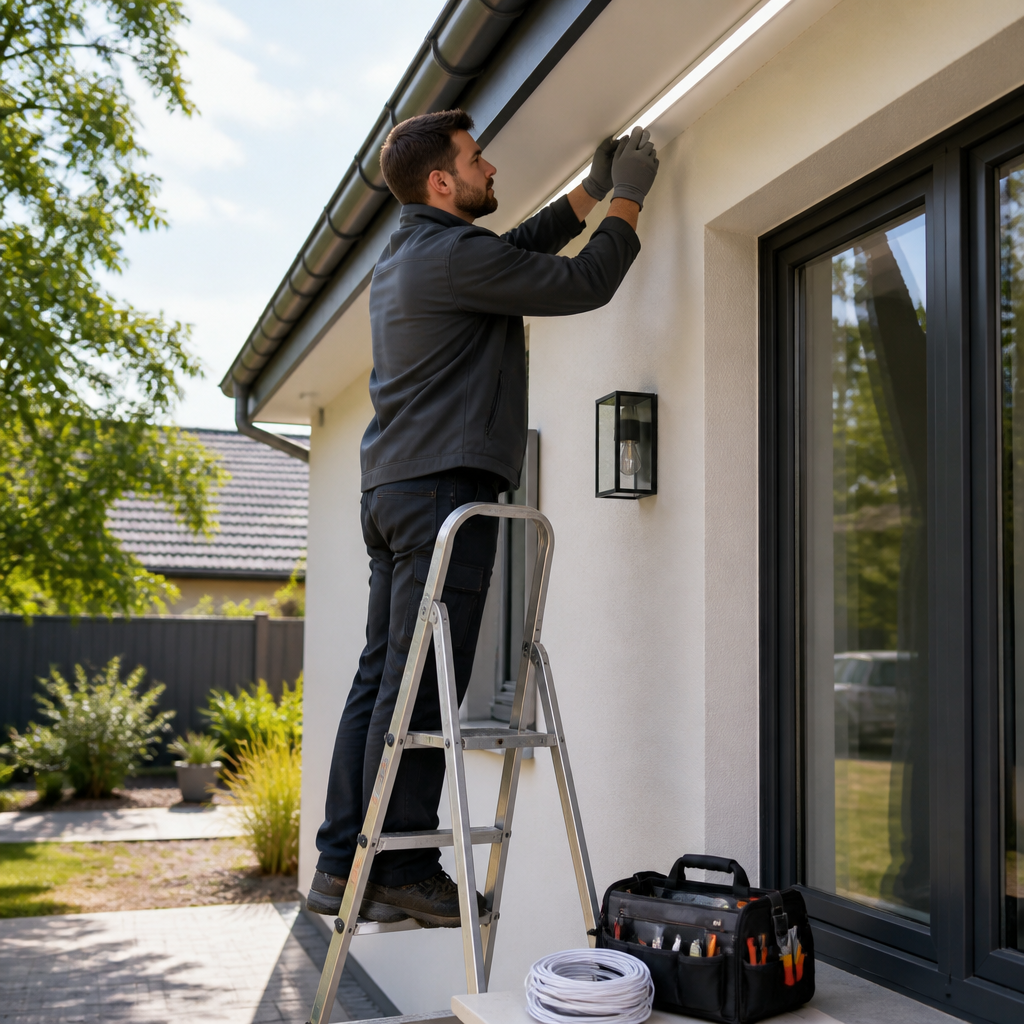
Connections, splices and weatherproofing
Ask where splices happen and how they are sealed. Joints should sit inside rated enclosures or be sealed with a method the installer can explain in plain language. Any run that drops into a gutter, or sits where water pools on the fascia, needs a closer look before it is accepted.
Power supplies, controllers and the outdoor box
The power supply and controller should sit in a weatherproof location with airflow and clear service access. Boxes hidden behind shrubs are hard to reach when a zone fails. Good installers label every run at the controller so troubleshooting does not start from scratch next November.
Questions to ask before you sign
Ask how many connections each run contains, how the cable passes through trim, what the warranty covers for fixtures compared with labor, and who services the system after the first winter. A vague answer on any of those points is a reason to get a second quote.
Permanent Versus Seasonal Lighting Compared
Three approaches cover most homes weighing this decision. Each has a clear use case and a clear weakness. The right choice depends on how much you want to handle each year and how the house is built.
Permanent roofline systems make the most sense if you want the same finished look every season and do not want to climb a ladder. They cost more at the start, but later winters cost little beyond power and an occasional service visit.
Seasonal plug-in strands are the cheapest way to begin, and they suit renters or anyone who changes the display every year. The hidden cost is labor and wear. Cords get stepped on, clips fail and storage damage adds up.
| Approach | Best For | Main Trade-off |
|---|---|---|
| Professionally installed permanent roofline LED system | Owners who want year-round presence, app control and no yearly ladder work | Higher upfront cost and a planned survey before install |
| Seasonal plug-in strands and clips | Renters or owners who want a low-cost, flexible display each December | Repeated labor, visible cords and more storage wear |
| DIY permanent kit on a simple single-story front | Handy owners with an easy-access, single-story layout | Connections and weatherproofing depend entirely on your work, and warranty coverage may be narrower |
A DIY permanent kit can work on a simple single-story front. The problem is that connections and weatherproofing are only as good as your workmanship. For anything above one story, the ladder risk alone is a reason to hire out.
Our position is straightforward. If you plan to own the house for more than two winters, a permanent install usually costs less over time than repeated seasonal labor. If you expect to move soon, seasonal lights are the better bet.
Preparing Your Home Before Installation
Good installs start before the first clip goes up. Mounts need to attach to clean, sound surfaces, and the work goes faster when gutters and siding are already clear. A pre-install cleaning visit is a step many homeowners skip, and it is one of the easiest ways to avoid callbacks.
Clean gutters and fascia first
Clogged gutters send water down the fascia, and that water can run behind a channel and freeze there. Clearing gutters before the install keeps the mounting surface dry and lets the crew see what is loose. We recommend gutter cleaning on the same visit as the install survey so both jobs share one set of access equipment.
Soft wash the surfaces under the mounts
Mildew and algae on siding and trim make it harder for clips and adhesive to bond, and they hide defects. Soft washing uses lower pressure and a cleaning solution, which suits painted trim and vinyl better than high-pressure spraying. House washing before the install gives the crew a clean, dry surface and a clear view of wear.
Pro tip: Schedule house washing a few days before the install so surfaces dry fully and any cleaning residue has been rinsed away.
Check for loose trim and soft spots
Mounts need solid wood or sound composite behind them. A soft fascia board or a loose soffit panel should be repaired before the lights go up, not after. Finding rot in the middle of an install adds delay and cost, and it is a repair you should make regardless of the lighting.
Timing Your Install Before Winter
The install window before winter is shorter than most people think. Crews fill quickly once the leaves drop and the first cold week arrives, and exterior work slows when cold and wet weather limit how much can be done each day. Work backward from the first holiday you want lit, and book the survey early in the fall.
Work backward from your first cold week
Set the date you want the system running, then give the crew time for survey, cleaning and installation. Build in a buffer for weather, because a rainy week can push back the schedule without any fault of the installer. If you want the house lit for a specific event, treat that date as the deadline and schedule the survey well before it.
Commercial properties and holiday programming
Commercial holiday lighting and permanent holiday lighting for storefronts and apartment complexes need more planning. Property managers should set the schedule, zones and expectations before the install. A storefront that lights on time every night looks cared for, and that matters to customers walking past.
Set the schedule before the first night
Program timers and scenes during the install walkthrough, not weeks later. Confirm sunset and sunrise triggers, holiday scenes and the off time for front zones. Walk the property at dusk with the installer to check brightness and aim.
Pro tip: Do the final walkthrough at dusk, not midday. Brightness, hot spots and color balance look very different once the sky is dark, and that is when the lights will actually be judged.
Frequently Asked Questions
Pricing depends on linear footage, number of zones, fixture type and how complex the roofline is. Ask for an itemized proposal that lists runs, controllers and power supplies, and get at least two written quotes. Be cautious about any price given from a single photo.
In most cases, the terms overlap. The same hardware can run warm white accents all year and switch to color or holiday scenes during the season.
A good install matches the fixture and channel color to the soffit or trim, so they are hard to see in daylight. Visibility depends on color match and placement, which is why the survey matters.
Choose a system with a physical override or a wall controller. App control should be a convenience, not the only way to operate the lights.
Yes, though far less than seasonal strings. Check for loose mounts after storms, clear debris from channels and keep gutters clean so water does not run behind the runs. An annual service visit is a practical habit to build.
Yes. Cleaning gutters and washing siding and trim gives clips a clean surface and lets the installer spot soft or damaged wood before work begins.
Have you switched from seasonal strings to a permanent system, or are you still weighing the decision? Share what made the choice easier or harder for you, or reach out for a free quote.
References
Ready For A Clean Home?
Schedule Quality Sparta Power Washing Today!