
Mold and Mildew on Siding: Why a Fall Soft Wash Helps

Walk around a North Jersey house in late October and you will often find a dark haze on the siding, usually in the spots the sun never reaches. That haze is mold, mildew, or algae, and it rarely waits for spring. If you are looking for a soft wash siding NJ crews can perform safely, fall is the season when the work pays off most. Growth that is removed before the cold settles in has less time to bond with the surface, and the walls start the wet months clean. Below is what we see on the job, why timing matters, and how to tell a soft wash from a pressure wash that could damage your siding.
Table of Contents
- Quick Takeaways
- Mold vs Mildew on Siding: What You Are Actually Seeing
- Why North Jersey Siding Stays Damp
- Why Fall Is the Right Window for a Soft Wash
- Soft Washing vs Pressure Washing on Siding
- Our Soft Wash Process for Siding
- Common Mistakes That Bring Mildew Back
- Mildew Cleaning for Commercial Properties
- Protecting Siding After a Fall Soft Wash
- Frequently Asked Questions
- References
Quick Takeaways
| Key Insight | Explanation |
|---|---|
| Shade is the main driver | Walls that sit in tree shade for most of the day dry slowly after rain and dew, so growth starts there first. |
| Fall beats spring for siding work | Cleaning before the wet months removes growth that would otherwise sit through November and December. |
| Pressure is the wrong tool for most siding | High-pressure water can etch painted surfaces, lift paint, and push water behind lap joints. |
| Soft washing works through the solution | Low pressure lets the cleaning solution do the work. Mix and dwell time matter more than force. |
| Gutters decide how fast growth returns | An overflowing gutter runs water down the same wall every storm, which undoes a clean in weeks. |
| Mulch and plants can feed the problem | Mulch piled against the foundation keeps the bottom section of siding wet and shaded. |
Mold vs Mildew on Siding: What You Are Actually Seeing
Homeowners use the words mold and mildew interchangeably, and for a cleaning job that is mostly fine. Both are fungi that feed on organic material such as dust, pollen, and the thin film that settles on painted and vinyl surfaces. The practical difference is appearance. Mildew tends to look flat, powdery, and gray or light brown, and it rinses off with little resistance. Mold looks fuzzy or slimy, can be darker, and is more likely to stain the surface beneath it.
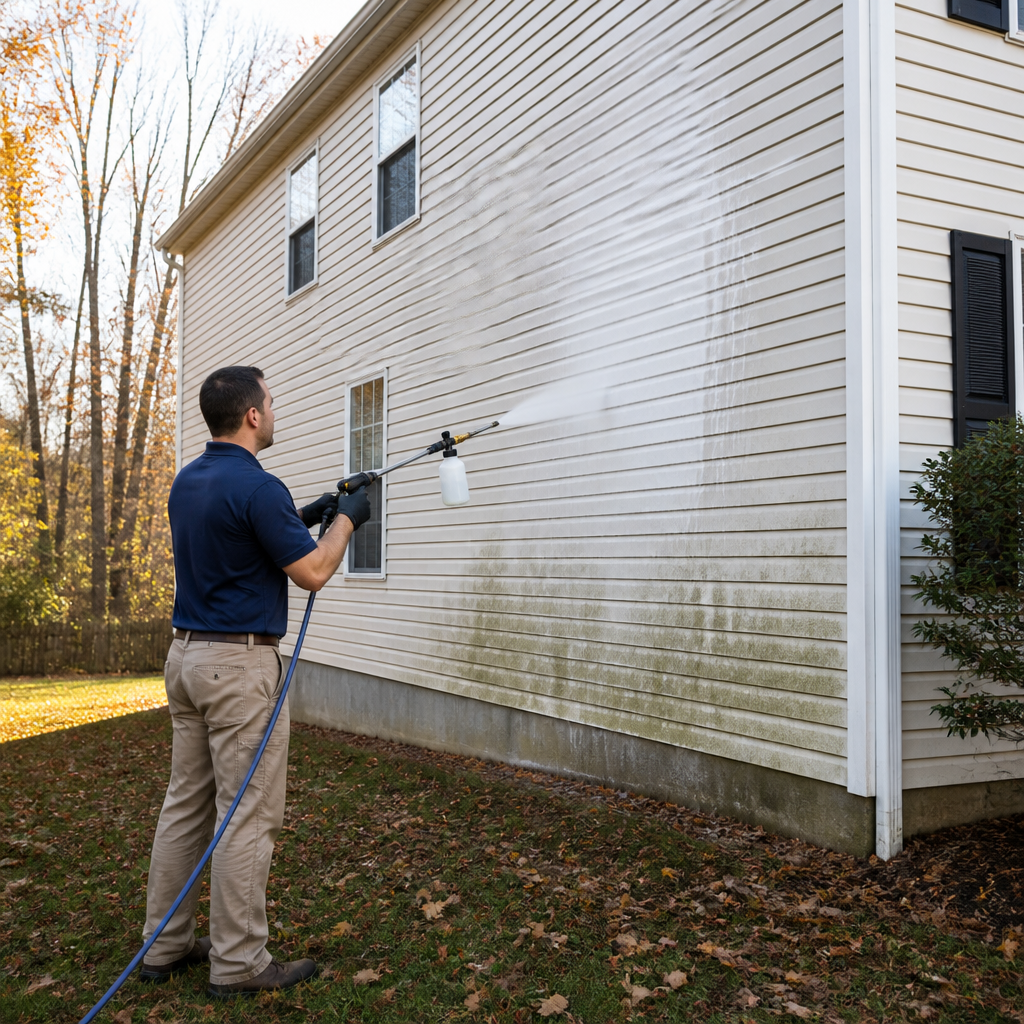
You will also see algae on siding, which is green, slick, and often mistaken for mold. It is a different organism, but it grows under the same damp conditions and responds to the same cleaning approach. A soft wash handles all three in one pass, so we do not spend a visit identifying each one before we start.
Black streaks versus fuzzy patches
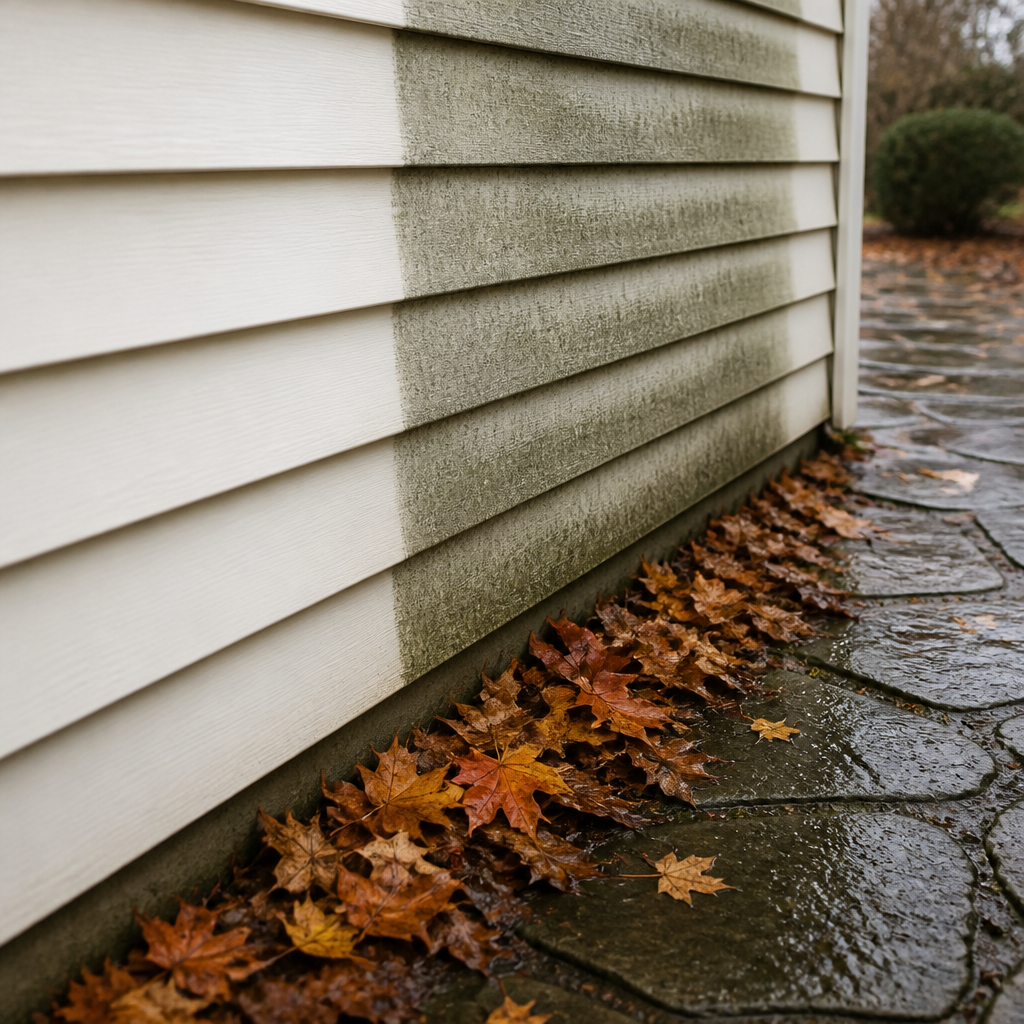
Dark vertical streaks usually form below gutters, roof edges, and seams where water runs. Fuzzy patches tend to show up on flat sections and near the ground, where splashback keeps the lower wall wet. Both point to the same problem: moisture is sitting on the siding longer than it should.
What the growth is feeding on
Growth needs moisture, organic debris, and shade. Pollen, dust, and decomposing leaves supply the food. Once growth anchors itself in the surface texture, rain carries spores down the wall. A wall that looked clean in August can show a visible film by the end of October.
Why North Jersey Siding Stays Damp
Many North Jersey properties are heavily wooded, and that is a big part of the problem. Mature trees along property lines shade side yards and back walls for much of the day. Those surfaces dry slowly after rain, morning dew, and humid nights. A wall that gets two hours of sun is in a very different situation from one that gets none.
Shade from mature trees
A single large maple or oak can keep a side wall damp well into the late season. The shade also holds humidity against the surface. That is why growth often appears first on the side of the house facing the tree line, while the street-facing wall still looks fine.
Siding rarely gets dirty all at once. It gets dirty in the shaded corners first, and the cleaning schedule should start there.
Leaf litter and gutter overflow
Fall leaves do more damage than most homeowners expect. Wet leaves packed into gutters hold water against the fascia, and when the gutter overflows, it runs down the siding in a sheet. Leaves that decompose on the ground beside the house create a spore-heavy splash zone at the base of the wall.
In practice, the walls with the worst growth almost always have a gutter problem as well. Cleaning the siding without addressing the gutters buys a few months, not a season. This is why our fall visits often include gutter cleaning alongside the siding work.
Why Fall Is the Right Window for a Soft Wash
Fall is when a soft wash does the most good. Growth slows as temperatures drop, so a wall that is clean in late fall starts the next growth cycle with a head start. A wall that is left dirty goes into the coldest, wettest months with the growth still bonded to it.
Clear the growth before it settles in
A wall cleaned in late September or October begins the wet season clean. Growth that is allowed to sit through November and December does not simply go dormant. It bonds deeper into the surface, and it becomes harder to remove in spring, when more pollen arrives and heavier rain hits the same wall.
Schedule around the weather window
Soft washing needs a stretch of dry days so the solution can work and the surface can dry fully. Plan the job for a mild day with no rain in the forecast for at least a day afterward. Avoid cleaning when a hard freeze is expected, because water left on the surface can freeze and make rinsing unsafe.
Spring works as a backup, but it is the second-best window. Spring brings pollen and heavy rain, so you are cleaning a wall that is already being recontaminated. If your siding was cleaned in the fall, a light spring check is usually enough.
Soft Washing vs Pressure Washing on Siding
Most siding damage we are called to fix comes from someone using too much pressure. The real question is not which method is stronger. It is which method fits the material you are cleaning.
What soft washing does differently
Soft washing uses low-pressure water mixed with cleaning solutions, typically biodegradable products made for exterior surfaces. A supplier’s overview describes it as using a special nozzle that spreads the solution evenly and slows the water stream, so the cleaner can work into the surface rather than being blasted off. Another overview notes that soft washing pairs cleaning chemicals with a lower PSI than typical pressure washing applications.
Where pressure washing goes wrong on siding
Pressure washing is effective on concrete, driveways, and heavy stains, and it can remove mold and mildew from hard outdoor surfaces. On painted wood, vinyl, and older aluminum siding, the same force can etch the finish, lift paint, and push water behind lap joints. Once water gets behind siding, the damage can go well beyond the surface and is not something a second pass can fix.
Soft washing also requires specialized detergents and careful technique. Improper use can damage surfaces, and the chemicals call for precautions around skin, eyes, and plants. That is why we treat the solution mix and nozzle selection as part of the safety process, not an afterthought.
The table below compares the three approaches homeowners most often consider for siding growth.
| Method | Best Use on Siding | Main Risk |
|---|---|---|
| Soft washing with low pressure and cleaning solution | Mildew, mold, and algae on vinyl, painted wood, and fiber cement | Wrong solution mix or drying on the surface can leave residue, and the work requires trained technique |
| Pressure washing with high-pressure water only | Concrete, driveways, and hard stains on masonry | Can etch, chip paint, and force water behind siding |
| Hand scrubbing with a brush and household cleaner | Small spot treatments on a few feet of siding | Slow, uneven results, ladder risk, and streaking if the cleaner is not rinsed |
Our Soft Wash Process for Siding
A siding soft wash follows the same order every time, because skipping a step is how you end up with streaks, damaged landscaping, or growth that returns within weeks. The steps below are the ones we follow on every residential and commercial exterior.
Protect plants, fixtures, and windows first
Before any solution goes on, we wet down nearby shrubs and grass, cover outdoor electrical fixtures, and check window seals. Plants get rinsed after the job so they are not left coated in cleaner. Landscaping is where most complaints start, and it is the easiest part to get right.
Apply the solution and let it work
The solution goes on low on the wall first and is worked upward. This keeps cleaner from running into dry areas and leaving tracks. We let it dwell long enough to break down the growth, and we keep it from drying on the surface. Dried cleaner is the most common cause of streaking we see on jobs done by others.
Pro tip: Ask any provider how they keep solution from drying on your siding on a warm afternoon. A clear, specific answer is a good sign that they understand the process.
Rinse from the top down
Rinsing top to bottom keeps clean water from being pulled back over the wall and leaving tracks. We use a controlled rinse on siding and move at a steady pace, so the surface ends up evenly clean rather than blasted in spots. The goal is a uniform finish that looks the same from the driveway as it does up close.
Common Mistakes That Bring Mildew Back
Most mildew returns for reasons that have nothing to do with the cleaning itself. The wall was clean, but the conditions that fed the growth were left in place. Fixing those conditions matters as much as the wash.
Washing in the wrong weather
Washing a wall on a hot, sunny afternoon causes the solution to dry before it works. Washing right before a forecast rain means the wall never dries properly. Both lead to a result that looks fine for a week and then shows streaks or regrowth.
Leaving gutters and mulch against the wall
A soft wash cannot fix a gutter that overflows onto the same section of siding every storm. Mulch piled against the foundation keeps the bottom section of the wall wet and shaded, and it is one of the most overlooked causes of growth near grade. We often recommend cleaning the gutters before the siding job, so the first post-wash rain does not undo the work.
Pro tip: Pull mulch back from the siding line before the wash and leave a clear gap at the base of the wall. It costs nothing, and it shortens drying time on the lowest section where growth tends to start.
Mildew Cleaning for Commercial Properties
Property managers face the same growth on a larger scale. Apartment buildings and storefronts often have long exterior walls, shaded courtyards, and dumpster enclosures that stay damp. A dirty facade gives customers the wrong first impression, and visible neglect on the exterior can make tenants wonder who is maintaining the building.
Apartment complexes and storefronts
Storefront washing has to be finished before the business day starts, and it has to avoid spraying customers, doorways, and parked cars. Apartment exteriors are usually easier to schedule in phases, building by building. That keeps residents’ access open and prevents solution from pooling across walkways.
Scheduling a fall service for property managers
Book the fall visit in the same window you would use for a house, from late September through October, when temperatures are mild. Ask for a walkthrough that notes shaded walls, gutters, and dumpster pad areas separately, since each usually needs a different approach. A written scope makes it easier to compare bids and hold the work to a standard.
Protecting Siding After a Fall Soft Wash
The fall soft wash is only half the job. What you do in the following weeks decides whether the walls stay clean through winter. Most of the follow-up work is simple, and it is the part homeowners tend to skip.
Set a gutter cleaning schedule
Gutter cleaning in late fall, after most leaves have dropped, is the single most useful follow-up. Clear gutters keep water off the fascia and off the siding below. If your property has heavy tree cover, a second cleaning in early winter is worth scheduling.
Improve airflow and drying around the house
Trim back branches that touch the siding, and keep shrubs far enough from the walls that air can move between them. Where a wall stays damp for long stretches, the goal is shorter drying times, not perfect cleaning. Better airflow does more to slow regrowth than any single product.
Pro tip: Walk the perimeter after the first heavy rain following your wash. Look for new dark lines below gutters and along the shaded side, since those show exactly where water is still sitting.
Frequently Asked Questions
Soft washing is the method we use on vinyl because low pressure and the right solution remove growth without etching or lifting the surface. The results depend on the mix and the technique, not on the force of the water. Ask any provider how they handle the solution and the rinse before you hire them.
For most homes, once a year in the fall is a sound baseline. Shaded walls or houses near heavy tree cover may need a spring check as well, since pollen and rain bring growth back quickly.
You can, if you are careful. Keep ladders stable, protect plants, avoid high-pressure rental wands, and never let cleaner dry on the surface. Most homeowners find the reach and rinse work harder than expected, which is why partial DIY jobs are so common.
Surface growth alone usually does not destroy siding, but it stains, hides the finish, and holds moisture against the surface. Left long enough, it can make paint look worn and speed up the decline of older finishes. Cleaning it early is far cheaper than repainting.
Results vary with shade, gutter condition, and nearby plant beds. A well-done fall soft wash typically keeps most walls clean through winter, while shaded walls often show growth again the following spring. Treat it as ongoing maintenance, not a one-time fix.
Yes. We serve Sparta, Andover, Lafayette, Newton, Franklin Lakes, Wyckoff, and other communities across our service area. Reach out for a free quote, and we will look at shading and gutter conditions before setting a schedule.
What has your siding looked like after a wet North Jersey autumn, and what finally worked for you?
References
Ready For A Clean Home?
Schedule Quality Sparta Power Washing Today!