
Gutter Cleaning in Sparta NJ: Tackle the Whole Exterior

Most homeowners in Sparta clean their gutters only after water starts pouring over the edge during a storm, which is usually too late. Fall is when gutter cleaning does the most good, because weeks of falling leaves are now packed into the troughs, holding moisture against fascia boards and feeding the moss already growing on the shaded side of the roof. Gutter cleaning in Sparta NJ works best when it happens alongside the rest of your exterior, not as a separate chore. Here is how we sequence the two jobs, what the order should look like, and where homeowners waste money.
Table of Contents
- Quick Takeaways
- Why Fall Is the Right Window for Gutters
- The Top-Down Order That Keeps Your Work Clean
- Downspouts, Splash Blocks and Foundation Water
- Windows, Siding and Walkways Before the Cold Sets In
- DIY, Gutter-Only, or Bundled: Choosing How to Get It Done
- Scheduling Your Fall Exterior Visit
- Common Mistakes That Undo the Work
- Frequently Asked Questions
- References
Quick Takeaways
| Key Insight | Explanation |
|---|---|
| Clear gutters before you wash the house | Washing first sends grit and leaf sludge into downspouts and onto siding you just cleaned. |
| Work from the roof down | Debris and moss runoff move downhill, so the order should be roof and gutters, then walls, then windows, then walkways. |
| Check downspout outlets on the same visit | A blocked downspout dumps roof water at the foundation, which is one of the most common causes of wet basements we see in fall. |
| Book before the first hard freeze | Wet, compacted debris freezes into ice and loosens brackets, so the job gets harder and riskier once temperatures drop. |
| Plan for two gutter cleanings a year | Spring and fall is the usual schedule, with a third visit if you have large oaks or maples overhanging the roof. |
| Bundle the work into one visit | One crew, one setup, and one sequence means fewer missed spots and no re-wetting clean surfaces. |
Why Fall Is the Right Window for Gutters
Leaves that drop in October do not simply pass through the gutter line. Once they start breaking down in the trough, they hold water against the fascia and the roof edge for months, and that wet mat keeps the wood and shingle edges damp long after the rain stops. In practice, a house can look fine from the driveway while the gutter underneath is packed solid with maple seed pods and oak leaves cemented together by sludge.
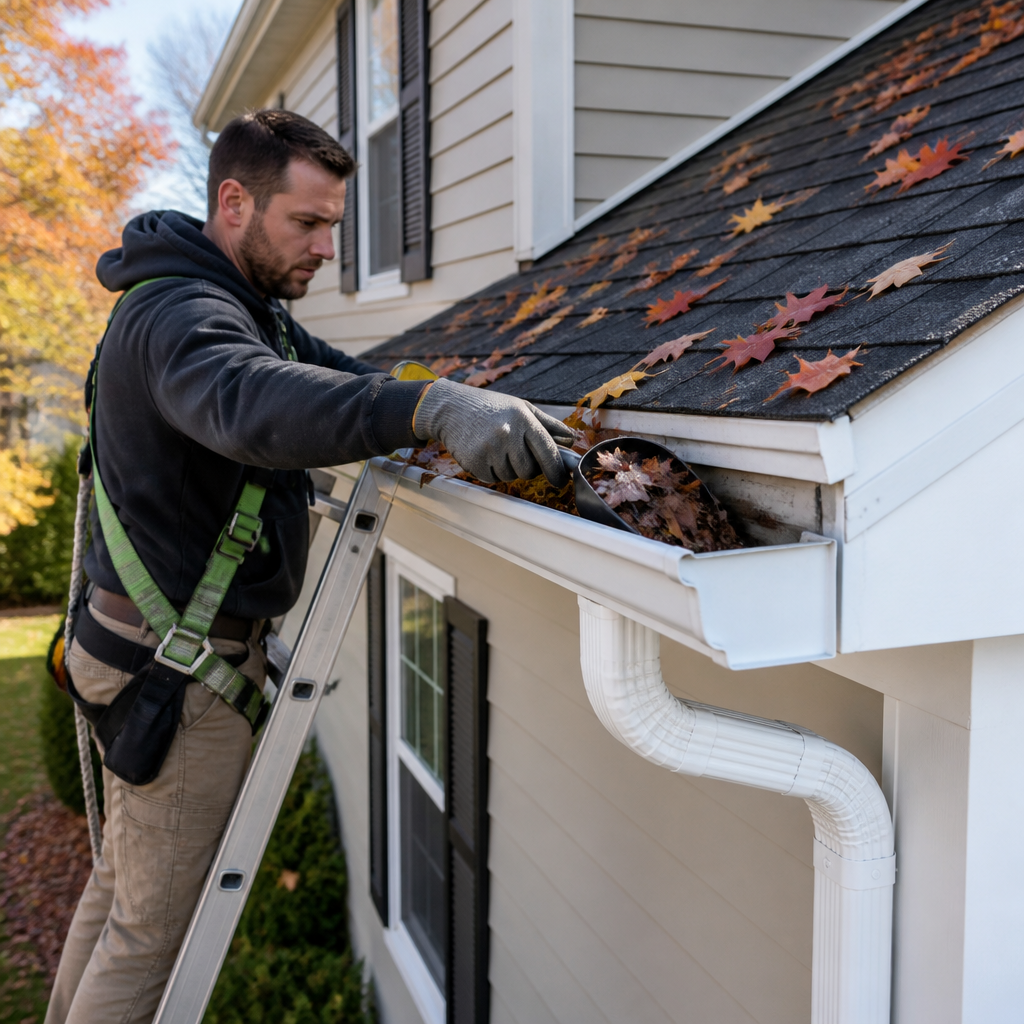
Gutters rarely fail on the day they overflow. They fail over a season of water sitting exactly where it should never sit.
What Happens When Leaves Sit Through Winter
Once a gutter stays full, water has nowhere to go but over the front edge or back under the shingles. That water soaks fascia boards, rots the ends of rafters, and runs behind the gutter hangers, which then pull loose under the weight of ice. A regional maintenance guide from a fall gutter cleaning provider puts it plainly: regular gutter work helps the roof last longer and reduces the likelihood of premature replacement. Cleaning in the fall is the cheapest insurance against that outcome because it removes the material before freezing turns it into a problem.
A common mistake is assuming that a gutter which drains during light rain is working. Heavy storms are when the buildup shows itself, and by then the debris has been sitting for weeks. A quick look at the troughs in October tells you far more than a hose test in July.
Why Timing Matters More Than Frequency
Many homeowners ask how often they should clean gutters, but the better question is when. Industry guides commonly recommend cleaning gutters twice a year, in spring and fall, because those two visits catch the seasonal loads that actually fill them. Fall is the one that protects the house through winter, so it should never be the visit you skip.
The Top-Down Order That Keeps Your Work Clean
Exterior cleaning only works if the sequence is right. The standard order is to clear debris from gutters and roof first, then move down to siding, windows, and pavement. Every step after the first one is designed to rinse off what came before it, so reversing the order creates extra work and leaves streaks.
Clear the Roof and Gutters First
Start with the gutters and any roof debris, including the leaves sitting in valleys and behind chimneys. Pull the loose material out by hand, then flush the troughs and check each downspout outlet. Only after this stage should water go near the walls, because anything left in the gutters will run down the siding and streak it.
Wash Walls and Soffits Before Windows
Walls and soffits come next, working from the top of the house down. Soft washing with a low-pressure, detergent-based solution is the right method for most siding and painted soffits, since it removes algae and dirt without forcing water behind the lap joints. Windows should wait until the walls are rinsed, otherwise runoff dries on the glass and leaves spots.
Pro tip: Mark a cleaning line with a hose or tape at the bottom of the soffit before you start. Keeping the wash line consistent across the house prevents the banding that shows up when a crew works in uneven passes.
Finish With Walkways and the Driveway
Walkways, patios, and driveways go last because they are the lowest surface and collect everything that comes off the house. Concrete and pavers can handle more pressure than siding, but fall moss and leaf stains respond better to a targeted treatment than to brute force. Finishing at ground level means the runoff drains away from the house rather than back up the wall you just cleaned.
Downspouts, Splash Blocks and Foundation Water
The downspout is the part of the gutter system most homeowners never think about until water shows up in the basement. A gutter can look spotless and still fail if the outlet at the bottom is packed with silt or the downspout bends sharply inside the wall. Checking the flow is the step that turns a cosmetic cleaning into real protection.
Test the Flow Before You Pack Up
Run a steady stream of water into the top of each gutter section and watch where it goes. Water should move toward the downspout and exit at the bottom with force. If it pools at a joint, sags, or backs up, the problem is either debris further along the line or a gutter that has pulled away from its hangers and needs to be re-pitched.
Pay attention to the corners and the section above each downspout, since those are the places where leaves stack first. A short sweep with a gutter scoop at those points catches most of the blockage.
Where Downspout Extensions Belong
Water discharged right at the foundation wall saturates the soil and pushes moisture toward the basement. Downspout extensions or splash blocks should carry water several feet away from the house, onto ground that slopes away. Fullblast911 makes the same point in its guide on gutter cleaning as home maintenance, noting that gutter cleaning protects the foundation and roof from water damage.
A practical check is to look at where the water lands during the next rain. If it puddles against the wall, the extension is too short, crushed, or aimed the wrong way.
Windows, Siding and Walkways Before the Cold Sets In
Once the gutters and roof are clear, the rest of the exterior is easier to clean and easier to protect. Fall is also when homeowners look at their windows and notice the film that built up over summer. Windows, siding, and walkways form the second half of a complete exterior service, and they respond best when they are done in the right order.
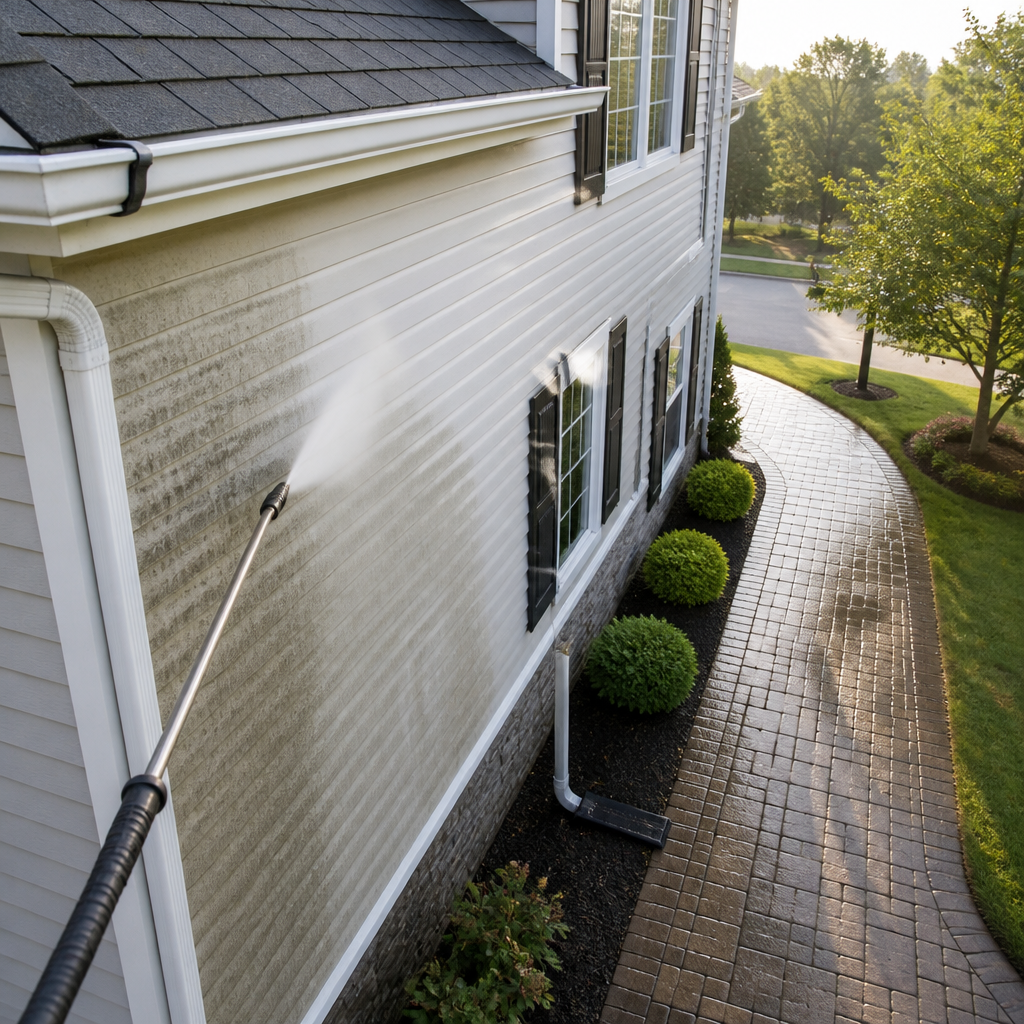
Soft Washing Siding Without Stripping the Paint
Siding is where high pressure does the most damage. Vinyl can crack at seams, wood can raise its grain, and painted surfaces can lose their finish when the nozzle sits too close. Soft washing uses a lower-pressure application with a cleaning solution that works on algae and organic staining, which is the more accurate tool for most fall exterior jobs.
Test a small area first, especially on older paint or wood that has already weathered. If the stain lifts with the solution and a gentle rinse, the method is right for the rest of the wall.
Window Cleaning After the Gutters Are Clear
Window cleaning belongs after the wall wash, not before it. Runoff from the gutters and siding will cloud freshly cleaned glass, so windows cleaned early in the day are often spotted again by afternoon. Windowhero’s guide to exterior maintenance costs suggests most homes benefit from window cleaning twice a year, which lines up well with a spring and fall schedule.
Timing Paver Work and Walkway Sealing
Paver sealing in the fall is worth doing, but only when the surface is completely dry and the forecast gives you a few clear days for curing. Sealing over damp pavers traps moisture and leads to haze that is hard to remove. In practice, we plan paver work for the last dry stretch of the exterior schedule, after washing is finished, so no fresh water hits the sealer.
DIY, Gutter-Only, or Bundled: Choosing How to Get It Done
Homeowners usually have three options for fall exterior work: clean the gutters themselves, book a gutter-only visit, or schedule a bundled exterior service that covers gutters, roof, walls, windows, and walkways in one sequence. Each option has a clear use case, and picking the wrong one usually means either overpaying or leaving the house half done.
Doing It Yourself on a Ladder
A ladder is reasonable for a single-story home with low, accessible gutters and no steep pitch. It becomes a problem quickly on two-story homes, near power lines, or on any roof you cannot reach safely from the ladder. Even when the gutters are reachable, a DIY clean usually skips the downspout test and the roof inspection that a professional visit includes.
Booking Gutters Alone
A gutter-only visit makes sense when the siding, windows, and walkways were cleaned recently and look fine. The drawback is that the exterior still carries fall grime, and a second trip later means a second mobilization charge and another chance to splash water onto clean surfaces. For many North Jersey homes, that split is more expensive than it first appears.
Bundling Gutters With Exterior Washing
A bundled service puts gutters first and then works down the house in one visit. HomeAdvisor’s cost guide places professional gutter cleaning between $119 and $234, or $0.95 to $2.25 per linear foot, depending on the home. Those figures are a starting point, not a quote, and the real cost depends on height, roof pitch, and how much debris is present. Bundling gives you one price, one sequence, and a single point of contact for the whole job.
| Approach | Best For | Main Tradeoff |
|---|---|---|
| DIY ladder cleaning | Single-story homes with low, accessible gutters | Ladder risk, and no downspout flow test or roof check |
| Gutter-only professional visit | Homes where siding, windows, and walkways were recently cleaned | Fall grime remains on the exterior, and a second visit is often needed |
| Bundled exterior cleaning | Most homes heading into winter with mixed surfaces | Higher upfront booking, but one setup and a correct cleaning sequence |
Scheduling Your Fall Exterior Visit
Scheduling is where many fall exterior projects fall apart. Work booked too late runs into the first hard freeze, when wet debris turns to ice and ground conditions make ladder and equipment placement less predictable. Booking early in the fall gives the crew dry days to work and gives you time to fix anything the inspection finds.
Book Before the First Hard Freeze
Once temperatures stay below freezing, gutters and roof surfaces become slippery and the leftover water in the troughs can ice over. A visit scheduled in late October or early November gives the crew clear conditions and leaves room for a second pass if the weather turns. Waiting until the first cold snap means paying more for a harder job that may not finish cleanly.
Ask for the schedule to include a check of downspout extensions and any loose hangers. Those small repairs are much cheaper when the gutters are already empty and accessible.
How Many Cleanings a Home Needs
Most homes need a full exterior wash once a year, window cleaning twice a year, and gutter cleaning twice a year. Homes with large trees overhanging the roof often need a third gutter visit during the heaviest leaf drop. Use that rhythm as your baseline, then adjust based on what you find when the gutters come down.
Common Mistakes That Undo the Work
Most exterior jobs that disappoint come down to a short list of errors. They are predictable, they are easy to avoid, and they show up quickly in the finished result. Knowing what to watch for helps you judge whether a visit was done correctly.
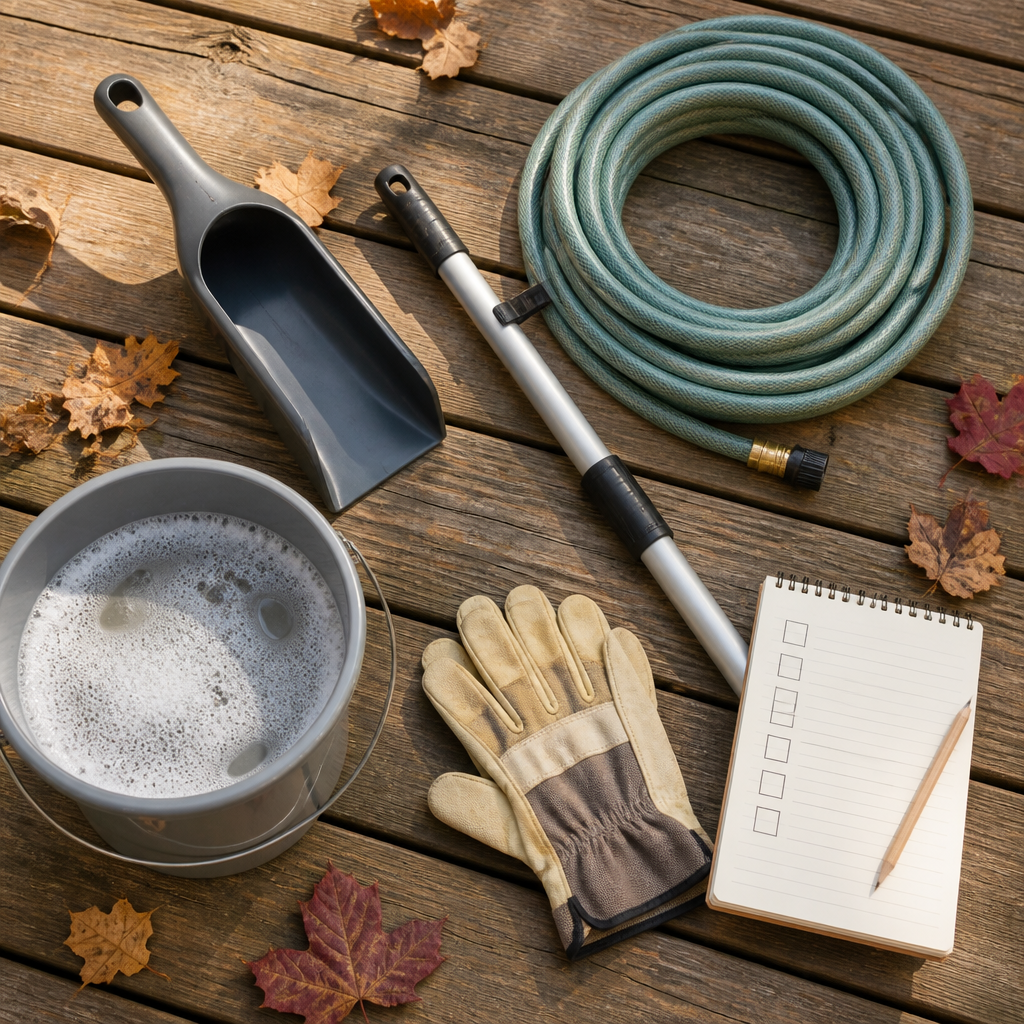
Blasting Gutters at Full Pressure
High-pressure water is the fastest way to crack a gutter seam, dent aluminum, or pull a hanger out of fascia. Gutters do not need to be blasted to be clean. A gentle flush, a manual scoop of the heavy debris, and a visual check of seams and joints is the right approach for nearly every residential system.
Washing Before Clearing Debris
Rinsing the house before the gutters are empty sends organic sludge into the downspouts and across walls you just cleaned. The result is streaking, clogged outlets, and a second visit to fix problems that should not have happened. The fix is simple: clear first, then wash in the top-down order described above.
Pro tip: Ask whether the downspout outlets are flushed and tested before the crew leaves. A downspout that drains freely on the day of the visit is the clearest sign that the gutter work was finished, not just swept.
Frequently Asked Questions
Most homes do well with gutters cleaned in spring and fall. Homes with large oaks or maples overhanging the roof often need a third visit during the heaviest leaf drop, since the debris builds up faster than the standard schedule allows.
Gutters should be cleared first. If you wash the walls and windows before the gutters are empty, debris and sludge run down the siding you just cleaned and can clog the downspouts.
Gutter guards reduce debris, but they do not eliminate it, and fine material like shingle grit and pollen can still build up. Guards also need to be checked for sagging and blockage each year, so the gutters still need inspection even when guards are installed.
Published cost guides place professional gutter cleaning around $119 to $234 for a typical home, or about $0.95 to $2.25 per linear foot. Your final price depends on the home’s height, roof pitch, and debris load, so a free on-site quote gives you the most accurate number.
Yes. A bundled visit covers gutters, roof washing, house washing, and windows in the correct order, which keeps the work clean and avoids a second mobilization. It is usually the most efficient way to prepare a home for winter.
Tell us what your gutters looked like after last fall and whether bundling your exterior work changed how you plan the rest of your home maintenance.
We would love your feedback and any insights you would share with others. What perspective would you add?
References
Ready For A Clean Home?
Schedule Quality Sparta Power Washing Today!