
Fall Roof Cleaning in Sussex County NJ: The Real Costs

Most homeowners in Sparta and across Sussex County think about their roof in spring, usually after a leak appears or a winter storm has already done its damage. By then, the cost of skipping fall roof cleaning has been building for months. Algae, moss, and wet debris sit on shingles through the cold season, holding moisture against the surface just when freeze and thaw cycles are working hardest. This guide breaks down what that neglect actually costs, why fall is the right window for roof cleaning, and how to choose a method that protects the shingles. If you are weighing roof cleaning in Sussex County, NJ, this is what we see on jobs every October and November.
Table of Contents
- Quick Takeaways
- Why Fall Is the Window That Matters
- What Grows on a Sussex County Roof
- How Moss and Algae Shorten Roof Life
- The Real Cost of Waiting
- Soft Washing Versus High Pressure
- Comparing Fall Roof Cleaning Approaches
- A Practical Fall Roof Cleaning Process
- Common Mistakes That Erase the Savings
- Frequently Asked Questions
- References
Quick Takeaways
| Key Insight | Explanation |
|---|---|
| Fall is the cutoff, not a suggestion | Clean before leaf drop and the first hard freeze lock growth and debris onto shingles. Spring should be for repairs, not rescue work. |
| Algae is cosmetic, moss is structural | Dark streaks mostly affect appearance, but moss lifts shingle edges and holds water against the roof. |
| Pressure is the wrong default for asphalt | High-pressure washing can strip granules and force water under tabs. A low-pressure soft wash with a labeled solution is the safer choice. |
| Clean gutters and valleys on the same visit | Wet leaves in valleys and gutters push water back under the roofline, which is where most winter damage starts. |
| Inspect before you clean | Log missing shingles, lifted tabs, and bird nests in vents first so the cleaning never hides a problem. |
| Waiting turns a cleaning into a repair bill | A winter leak can reach decking, insulation, ceilings, and fascia, which costs far more than the cleaning itself. |
| Book before the weather turns | The window between leaf drop and sustained cold is narrow, and schedules fill quickly once the first cold snap arrives. |
Why Fall Is the Window That Matters
Fall gives a roof something it rarely gets otherwise: a dry-out period before the cold sets in. Summer heat burns off surface moisture, but growth on shaded slopes keeps going through September and October as temperatures drop and dew settles overnight. Anything still on the shingles when the weather turns will sit there until spring.
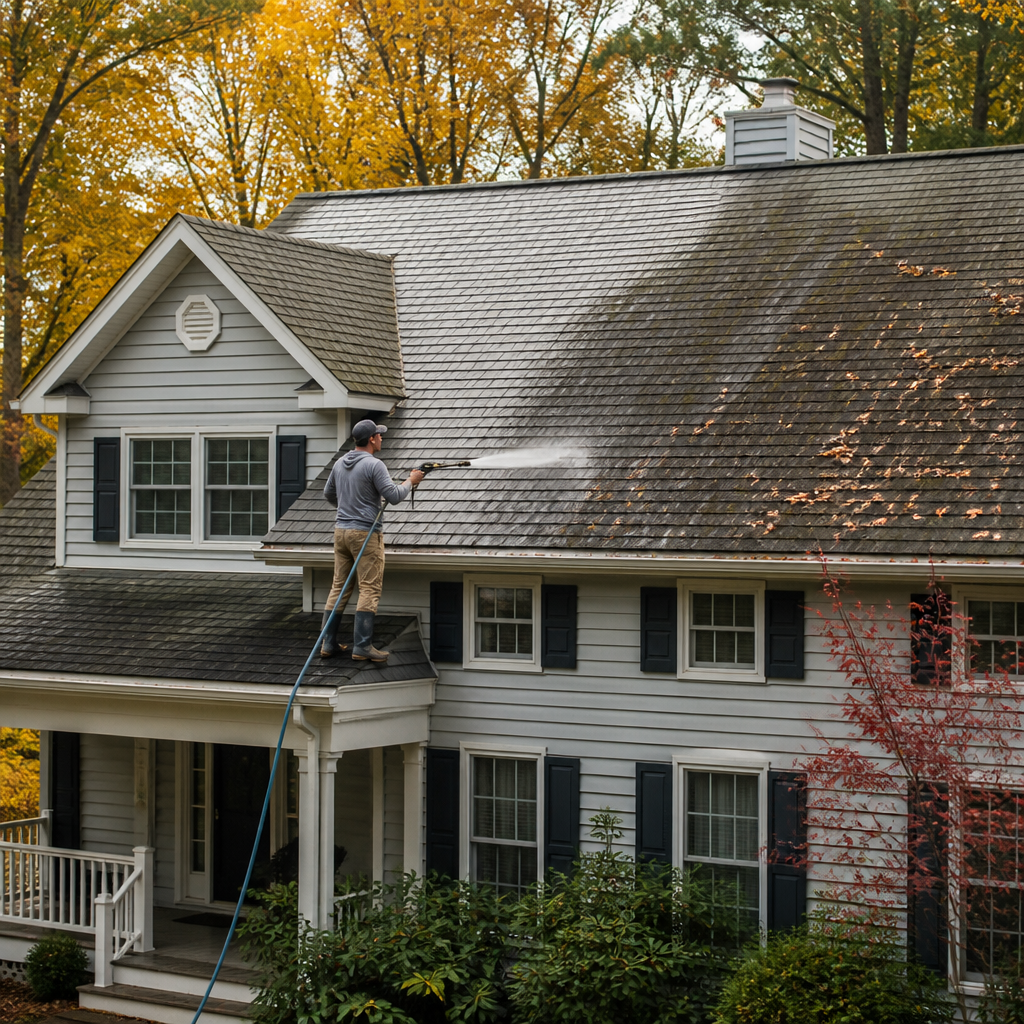
The checklists that New Jersey homeowners rely on point the same way. One New Jersey home inspection checklist tells homeowners to clean gutters once the leaves have fallen and to check roof vents for bird nests that can usually be seen from the ground. A Morris County fall checklist places gutter cleaning on its September list. Roof cleaning is not named in those lists, but every item describes the same goal: the roofline should be clear before winter.
Our practical rule is simple. If you can see green, black, or gray buildup from the driveway, the roof is already carrying a winter’s worth of moisture problems. Fall is the cutoff, and waiting past it means the work gets harder and more expensive.
What Grows on a Sussex County Roof
Algae and Black Streaking
Those dark streaks on asphalt shingles are usually algae, often accompanied by mildew. Homeowners tend to treat them as a cosmetic issue, and in the short term that is accurate. The real concern is that the stain holds moisture on the shingle surface and keeps it damp longer after every rain.
Streaking is most visible on lighter shingles and on roof planes that get the least sun. In practice, the streaks are a warning that the roof is staying wet longer than it should.
Moss in Valleys and Under Overhangs
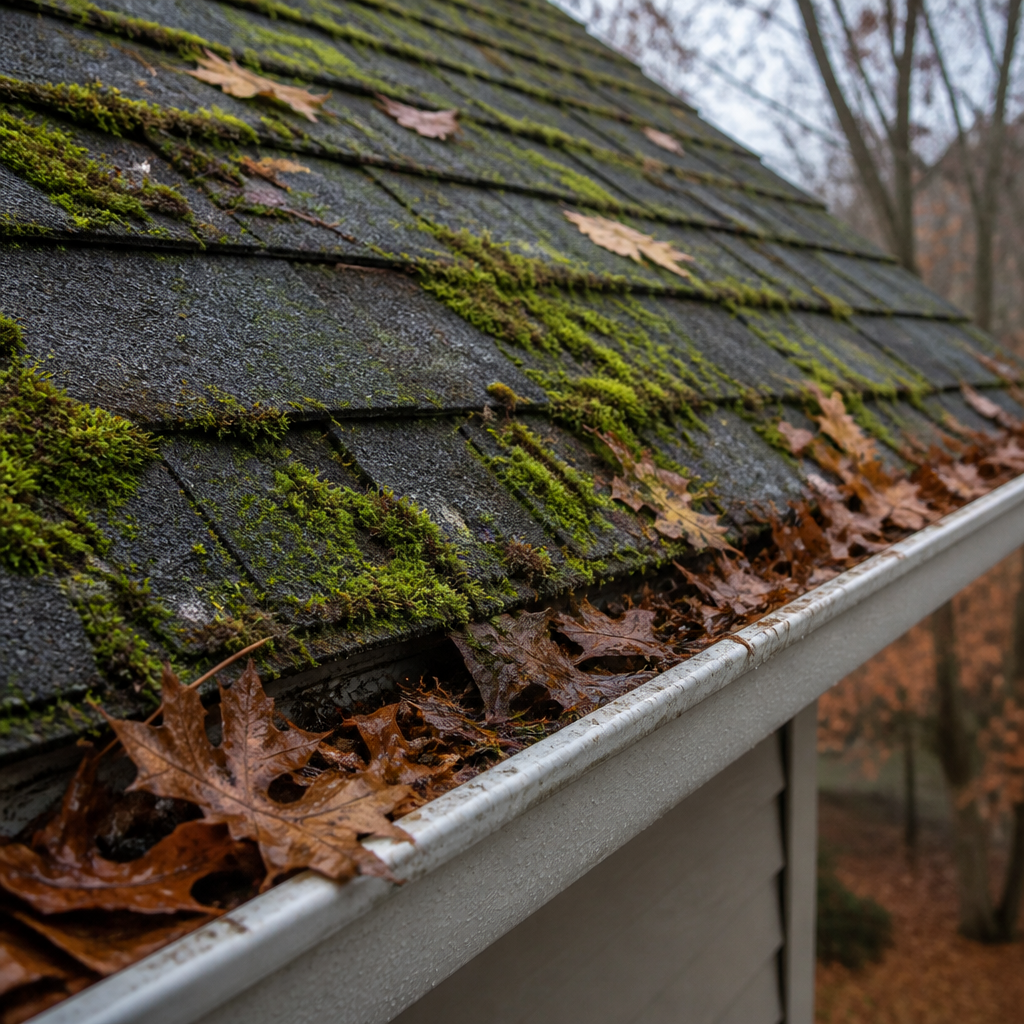
Moss is a different problem. It roots in the granules, collects in valleys and along edges where leaves drift, and spreads wherever debris stays wet. Once it establishes, it does not rinse off with a garden hose. Proper moss removal usually means treating the growth, letting the solution dwell, rinsing gently, and sometimes making a second pass.
Moss in shaded valleys is the source of water problems we see most often. The growth lifts the shingle just enough to create a gap where wind-driven rain can get underneath.
Leaves, Needles, and Wet Debris
Wet leaves are a bigger problem than most people expect. They mat together in valleys and against step flashing, then break down in place into a soggy, dark layer that holds water against the metal and the shingles. Pine needles interlock and act like a sponge, so they stay damp long after the rain stops.
Left alone through November, that mess becomes the first thing the winter melt-off pushes toward the gutters and the eaves. The roof may look fine from the street while the water path underneath is already blocked.
How Moss and Algae Shorten Roof Life
Moisture Held Against the Shingle
Asphalt shingles are designed to shed water quickly. When a surface stays wet for days after each rain, the mat underneath has more time to absorb moisture, and the nail line and edges become more vulnerable. You will not see this from the ground. You will see it later as curling, cupping, or tabs that break loose in a windstorm.
A useful way to think about it: a clean roof sheds water in minutes, while a roof with heavy growth may hold water for hours or days. That difference is the mechanism behind most of the slow damage we see.
Granule Loss and Brittle Edges
Granules are the shingle’s protection against UV rays. Moss roots pull granules loose when they are removed carelessly, and aggressive scrubbing does the same. A roof that loses granules ages faster, and the exposed asphalt becomes brittle along the edges.
This is why the cleaning method matters as much as the decision to clean. A roof that was in good shape before winter can come out of spring with bare patches if it was blasted with the wrong approach. The goal is to remove the growth and keep the protective surface intact.
The Real Cost of Waiting
The Repair Bill Behind a Leak
A roof cleaning in October is a cost you can plan for. A leak that reaches the attic in February is not. Once water gets past the underlayment, the damage spreads into decking, insulation, drywall, paint, and sometimes the electrical work that runs through the same space. Those repairs happen in winter, when contractors are booked and a tarp is the only temporary fix.
Homeowners often compare the price of a fall cleaning to nothing, when the honest comparison is the cleaning against the full repair scope. Seen that way, the cleaning is the cheapest line on the list.
The cheapest roof repair is the one that never has to happen because the roof was kept clean enough to shed water all winter.
Gutters, Fascia, and Soffits
Debris that stays in the gutters all winter adds weight, traps meltwater, and pushes water back toward the fascia. Rotted fascia boards are a common result, and once the fascia softens, the gutters pull away from the house. That creates a second repair on top of the first.
Soffits deserve attention too. The same inspection checklist flags clogged soffit vents as a maintenance item, since restricted airflow in the attic can add moisture problems on top of the water coming from above.
Paying for the Same Job Twice
Some homeowners wait, then book a cleaning in spring anyway. A late cleaning costs roughly the same in labor, but the growth is deeper, the shingles have absorbed more winter water, and the repair list is longer. Doing the work in fall means paying once for the basics instead of paying twice.
Pro tip: Before you accept a quote, ask what the roof will look like one week after the cleaning. A reputable crew should be able to explain how they will handle valleys, gutters, and any damage they find.
Soft Washing Versus High Pressure
Why Pressure Is the Wrong Default on Asphalt
Many homeowners reach for a pressure washer because it feels like the stronger option. On asphalt shingles, it is often the more damaging one. Concentrated water can strip granules, lift shingle edges, and push water under the tabs, especially on older roofs where the sealant strips are already weak.
That is why we treat soft washing as the default for most residential roofs. The method uses low pressure and a cleaning solution that does the work through dwell time, not force.
How a Soft Wash Solution Works
A soft wash solution combines a cleaning agent, a surfactant, and water, applied at low pressure and allowed to sit. The product page for one commercially sold soft wash additive, aimed at organic staining such as mold, mildew, bacteria, and algae, describes dilution starting at 1 ounce per gallon of mixture and rising to 6 ounces per gallon for the heaviest roof staining. The same page says the additive is used alongside bleach and water, not on its own.
Dilution is the part homeowners should never guess at. A stronger mix is not automatically better. It is the right tool for heavy staining on a roof, and the wrong one for siding or light soiling on other surfaces.
Chemistry does the cleaning on a roof. Pressure should only rinse away what the solution has already loosened.
Rinsing and Runoff Control
The rinse is where many jobs go wrong. Solution left on the shingles, in valleys, or on the gutters can keep working after the crew leaves, and it runs down into landscaping and painted surfaces below. A careful crew pre-wets nearby plants, protects what sits under the eaves, and rinses at low pressure until the runoff is clear.
Comparing Fall Roof Cleaning Approaches
Homeowners usually weigh three paths before booking. The table below compares them on the points that matter most for an asphalt roof in Sussex County.
| Approach | What It Does to Shingles | Best Fit |
|---|---|---|
| High-pressure washing | Removes growth quickly, but can strip granules and force water under tabs | Surfaces confirmed to tolerate pressure, rarely asphalt shingles |
| Low-pressure soft wash with a labeled solution | Kills organic growth at low pressure, leaves granules in place, requires a careful rinse | Most asphalt and composite shingle roofs with algae, moss, or debris |
| Waiting until spring | Growth and debris stay through winter, and moisture is repeatedly held against the shingles | Rarely a good choice, only reasonable if the roof is clean and the fall visit was not possible |
Our recommendation is the second option. High pressure looks efficient on a driveway, but it is the wrong tool for most shingle roofs. The third option is a false economy, because the growth you skip in fall becomes the repair you pay for in winter or spring.
A Practical Fall Roof Cleaning Process
Inspect Before Anyone Touches the Roof
Walk the roof edges from a secure ladder, or use binoculars from the ground, and note missing shingles, lifted tabs, exposed nails, and bird nests in vents. Those notes belong on the work order, so the cleaning never gets blamed for a problem that was already there.
If you find active damage, stop and schedule the repair before the cleaning. Solution and pressure should never be used to mask a leak.
Clean the Gutters and Valleys in the Same Visit
Gutters, valleys, and the first run of shingles above the eaves should be cleared together. The checklists say to clean gutters after the leaves have fallen, and to check valleys even when gutter guards are installed. Water that cannot leave the roof will find another route, usually behind the fascia.
Pro tip: Photograph the roof, valleys, and gutters before the crew starts, from the same spots you will use afterward. Matching before and after photos are the simplest record you can keep for your own files.
Timing the Work Around the Weather
Book the cleaning once most leaves are down and before the first sustained cold snap. Work on a dry day with no rain in the forecast, so the crew can inspect the shingles properly once the surface has dried. A roof cleaned right before rain can hide residue and damp spots that you were trying to find.
For homes in Sparta, Newton, and Andover, that usually means scheduling in the stretch between peak leaf drop and the first hard freeze, when the forecast is most predictable.
Common Mistakes That Erase the Savings
Washing Without Protecting Plants and Siding
Chemical runoff goes somewhere. Shrubs, landscape beds, and painted siding below the roofline take the brunt of it, so the crew should pre-wet and cover what sits near the walls, then rinse thoroughly afterward. Skip that step and the cleaning damages the things you were trying to protect.

Letting the Gutter Work Fall Through the Cracks
Cleaning the roof and leaving the gutters full makes the roof work look wasted within a month. Water from the roof has to exit somewhere, and clogged gutters push it behind the fascia and into the soffits.
Treat the gutters as part of the roof job, not an add-on. A single visit covers both, and the marginal cost is small compared with the water damage it prevents.
Hiring on Price Alone
The lowest quote often skips the inspection, skips the rinse, or uses pressure that a roof cannot take. Ask what method will be used, what solution and dilution, and whether the crew will document the roof condition in writing. Clear answers to those three questions separate a maintenance visit from a risky experiment.
Frequently Asked Questions
Not every roof needs cleaning every year, but most asphalt roofs under trees or in shaded lots benefit from an annual fall visit. Check for dark streaks, green growth in valleys, and debris after leaf drop. If you see any of those, schedule the cleaning before winter.
A properly diluted low-pressure soft wash is far gentler than pressure washing, but no cleaning is entirely risk-free. A good crew inspects the roof first, uses the solution at the strength the situation calls for, and rinses thoroughly.
Timing depends on roof size, pitch, and how much growth is present. A typical residential roof with light to moderate growth is usually a single visit. Heavy moss in valleys can add time for treatment and a second pass.
You can, but ladder safety and chemistry are where most do-it-yourself attempts go wrong. The most common mistake is using a household pressure washer on shingles. If you do it yourself, use low pressure, mix the solution carefully, and avoid the steepest sections.
A hose rinses loose dust but does not kill algae or loosen moss roots. Organic growth needs a solution with proper dwell time to be removed. That is why a soft wash roof in Sparta is handled differently from a simple rinse.
Schedule an inspection before any cleaning. A cleaning should never be used to hide a leak, and a crew that finds active damage should document it and recommend a repair before doing anything else.
Tell us what you have seen on your own roof after leaf drop, and whether a fall cleaning changed how your gutters or attic performed.
We would love your feedback and any insights you would share with others. What perspective would you add?
References
- New Jersey fall maintenance checklist covering gutters, roof vents, and soffits
- Morris County homeowners September checklist covering gutter cleaning before fall
- New Jersey year-round home maintenance checklist with a September to November fall section
- Homeowner fall maintenance checklist that includes a roof inspection
- Product page for a soft wash additive with dilution and organic staining guidance
Ready For A Clean Home?
Schedule Quality Sparta Power Washing Today!