
Deck Washing Sparta NJ: Protect Your Wood This Fall

Most wood decks in North Jersey look fine from the street and tired up close. By October, a summer of pollen, humidity, and shade has turned boards gray, streaked, and sometimes green along the joints where water sits. If you own a deck in Sparta or nearby, fall is the right time to act, because a clean, dry surface takes stain and sealer properly and carries the deck through the freeze-thaw cycles ahead. Deck washing Sparta NJ homeowners can trust is less about blasting grime off and more about lifting it without damaging the wood underneath. Here is how we approach it, what we avoid, and how to decide what your deck actually needs.
Table of Contents
- Quick Takeaways
- Why Fall Is the Right Time to Wash Your Deck
- Pressure Washing or Soft Washing for Wood Decks
- Step-by-Step Deck Washing Process
- Green Growth and Mildew on Decks
- Restoring Color Before Staining
- Staining or Painting After Washing
- Cleaning Method Comparison for Decks
- Fall Maintenance Schedule for North Jersey Decks
- Common Mistakes That Damage Wood Decks
- Frequently Asked Questions
- References
Quick Takeaways
| Key Insight | Explanation |
|---|---|
| Wash on a dry-weather stretch | Pick a window with at least a day of forecast dry weather so the boards can dry evenly before any finish goes on. |
| Keep pressure low on softer wood | Pine and many cedars scar quickly under a hard stream. Keep the wand moving and watch for fuzzing. |
| Sweep along the grain, never across it | Cross-grain passes cut into fibers and leave raised, pale lines that show once the wood dries. |
| Soft-wash green growth instead of blasting it | Mildew lifts with a cleaner and dwell time. Pressure alone mostly pushes it deeper into the grain. |
| Test for moisture before staining | Sprinkle water across several boards. If it beads, the wood is not ready. If it soaks in, you can proceed. |
| Protect plants, siding, and fixtures | Overspray and runoff carry dirt and cleaner into beds, onto siding, and into outdoor lighting, so cover or wet down everything nearby. |
| Finish before the first hard freeze | A clean deck entering winter avoids trapped grime and gives you a clear base for spring staining. |
Why Fall Is the Right Time to Wash Your Deck
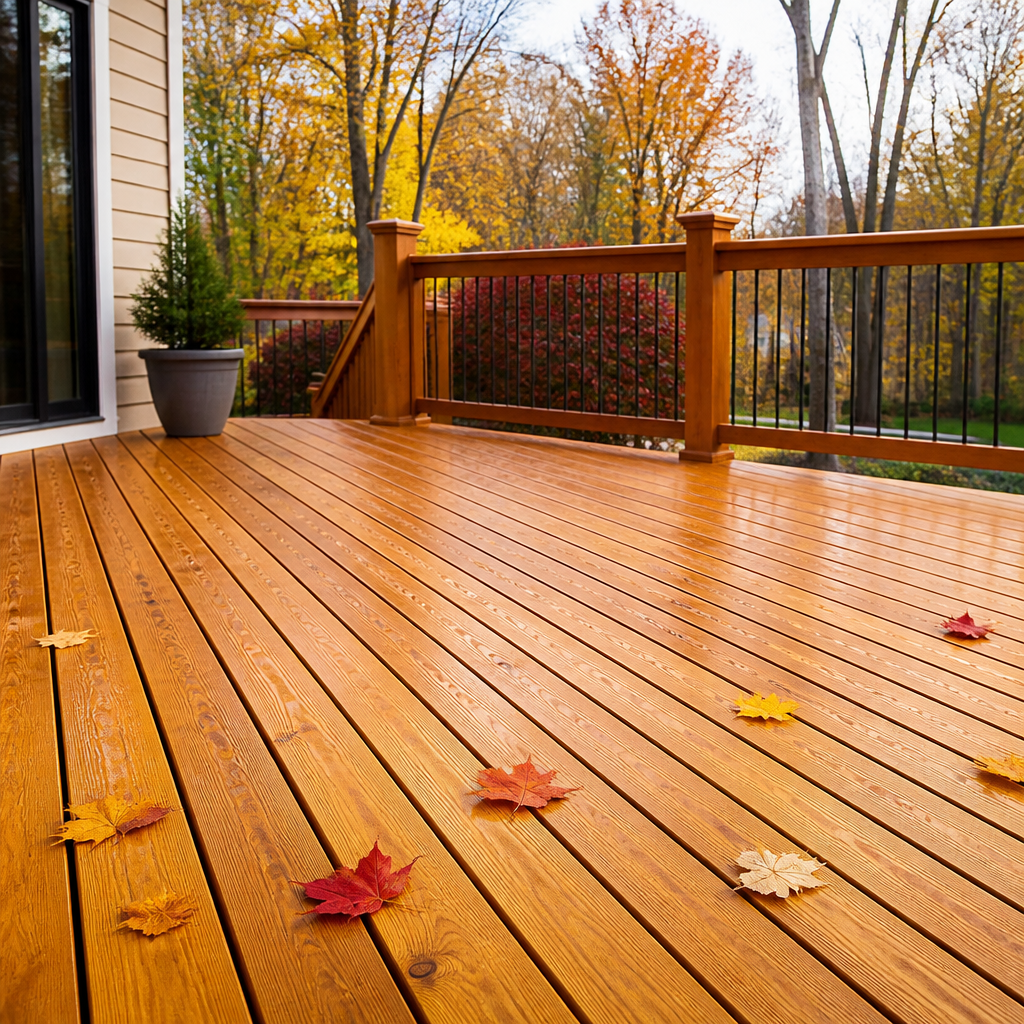
By the end of summer, most decks have collected a layer of pollen, dust from driveways, grill residue, and the gray oxidation that comes from months of sun. In shaded yards around Sparta, Newton, and Andover, the problem goes further. Moisture sits in the boards, and algae or mildew start in low spots and under furniture. Those patches are easy to miss until a stain refuses to bond.
What Summer Leaves Behind on Wood
The gray layer is the one homeowners misread most. Gray wood is weathered wood, and it is not always dirty. A deck can look clean after washing and still look flat because the surface fibers have aged. A wash alone does not always bring color back, which is why we treat finish planning as a separate step.
Why the Fall Window Works Better
Fall brings cooler temperatures, lower sun intensity, and usually less daily foot traffic outdoors. Wood dries more slowly in cool weather, which sounds like a drawback but actually helps when you need an even dry before a stain goes on. Hot summer afternoons can flash-dry the surface, trapping cleaner residue and causing lap marks.
The bigger reason is timing. A clean, dry deck in October carries sealer and stain through winter without a season of debris sitting on it. Waiting until spring means staining over whatever grew all winter, on wood that has had months to take in moisture. The goal is to finish before the first hard freeze so the deck enters winter clean.
Pressure Washing or Soft Washing for Wood Decks
When Low Pressure Is the Only Safe Choice
Wood is far softer than concrete, and that is the first thing to respect. A high-pressure stream drives into the grain, raises fibers into fuzz, and can leave pale tracks that look worse than the dirt you started with. Softer species, such as pine and many cedars, show this damage fastest, and a deck built from them can take a visible hit in one careless pass.
Before any water touches the boards, check for soft spots, loose nails, split planks, and cracked railings. Rot does not come out in a wash, and a spray forced into a soft board can push the damage deeper. If a board gives under a screwdriver, stop work on that section and flag it for repair. Washing a deck in poor condition does not restore it, and it can hide a safety problem until someone steps through it.
Why Soft Washing Handles Most Decks Better
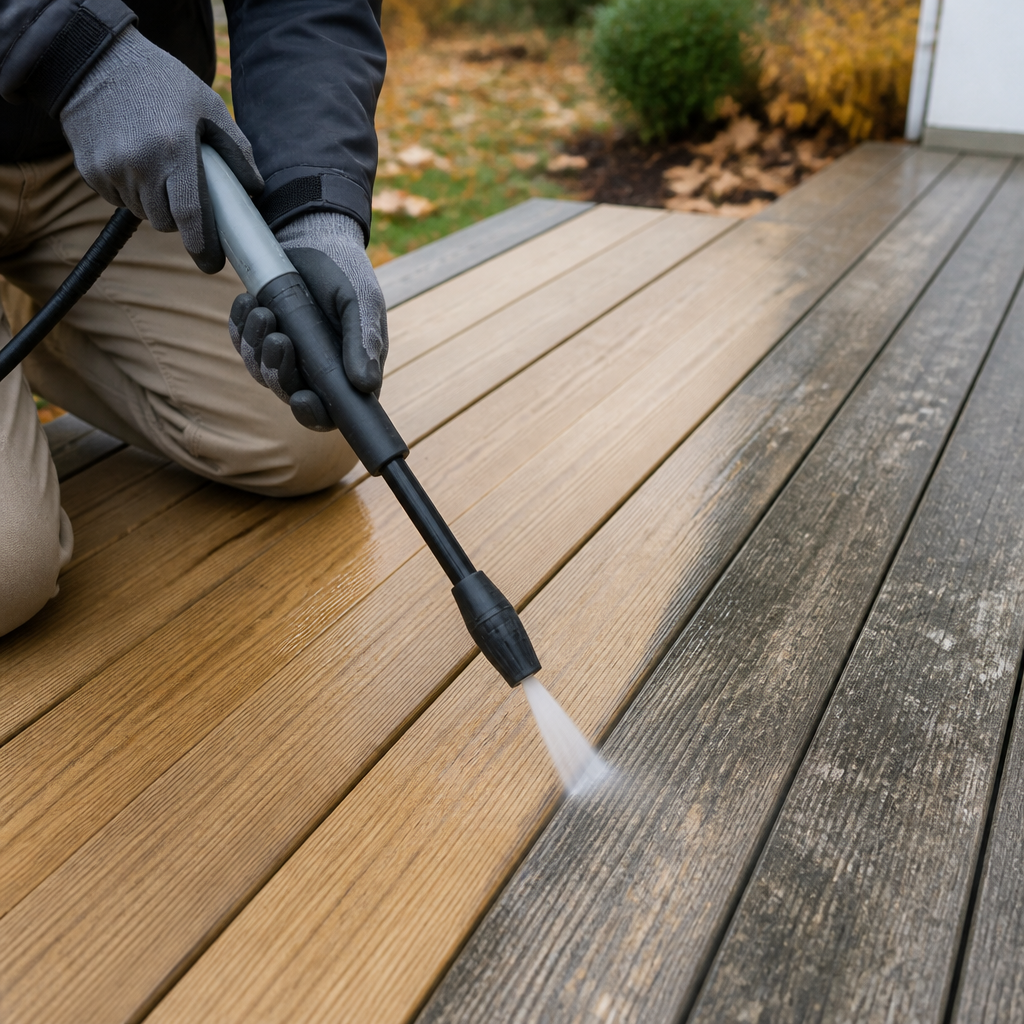
Soft washing relies on a mild cleaning solution applied at low pressure, then given time to work before a gentle rinse. The chemistry does most of the heavy lifting on mildew, pollen film, and organic staining, so you do not need force to break it loose. On most residential decks, that approach cleans more evenly and leaves the grain intact.
The trade-off is patience and protection. Soft washing requires careful plant covering, runoff control, and a dwell time you do not rush. Skip those steps and you can end up with spotted siding or a bed of dead shrubs. Done right, it is the method we reach for first on decks that are more than a few years old.
A deck is clean when the wood looks even and feels dry, not when the runoff runs clear. Damage from too much force is much harder to undo than dirt.
Step-by-Step Deck Washing Process
A good deck wash follows a sequence, and skipping ahead is where most of the damage happens. The steps below are the ones we follow on residential decks in Sparta, Newton, and the surrounding towns, adjusted for how the boards are built and how much growth is present.
Prep and Protection
Clear furniture, planters, grills, and loose items off the surface first. Sweep away leaves, grit, and pine needles, because grit under a spray becomes abrasion. Cover or wet down nearby shrubs, and shield outdoor lights and fixtures from direct spray and runoff.
Next, wet the entire deck with plain water. Pre-wetting keeps cleaner from drying on the boards and helps the solution spread evenly, especially across sun-baked sections that absorb it unevenly. Apply nothing until the whole surface is wet.
The Cleaning Pass
Work with the grain, never across it. Keep the nozzle moving at all times, because a stationary stream leaves dark or light bands that show up once the wood dries. Start each pass before the wand points at the boards, and release the trigger at the end so you never blast the last few inches of a board.
Hold the wand at a consistent, shallow angle and work in overlapping strips about as wide as the spray pattern. Pay attention to railings, stair treads, and board ends, which absorb more water and show damage faster. If you see fuzzing or light tracking, back off and adjust before you continue.
Rinse, Dry, and Inspect
Rinse from one end of the deck to the other so cleaner and loosened debris never sit on the wood. Once the deck is rinsed, let it dry completely before you judge the result. A damp deck looks darker and hides both stains and missed spots.
Pro tip: Pull the trigger before the wand reaches the deck and release it after the pass ends. The first and last inches of each board take the most stress, and that is where fuzzing and tracking usually start.
Green Growth and Mildew on Decks
Telling Green Growth From Gray Weathering
Green, black, or slick patches on a deck are biological growth, usually algae, mildew, or moss in the seams. Gray weathering is different. It is oxidized surface wood, and it does not stain the way growth does. Rubbing a suspect spot with a damp rag helps: growth smears or shows color, while weathering just looks dull.
Shaded corners, planters that drip onto the boards, and areas near downspouts are where growth starts. A common mistake is treating the whole deck as one problem. In practice, the worst areas need more dwell time, not more pressure.
Cleaning Agents and Dwell Time
For biological growth, we use a cleaner formulated for organic staining and let it sit long enough to work before rinsing thoroughly. Dwell time is the step homeowners rush most. A cleaner that dries on the boards leaves residue and can lighten the wood unevenly, so keep the solution wet on the surface until it has done its job.
Measure cleaner carefully and follow label directions. Wear eye and skin protection, and keep product away from plants and metal fixtures. Rinse covered plants with clean water after the job so residue does not stay on the leaves.
Rust is a separate problem. Orange streaks that run from iron fasteners will not come out with general washing, and a dedicated rust removal treatment works far better. Replacing a rusted fastener is usually the only lasting fix.
Restoring Color Before Staining
What Brightening Can and Cannot Do
A proper wash removes dirt, pollen film, and loose gray residue, and that often reveals more color than homeowners expect. Washing does not reverse years of UV exposure, though. A deck weathered at the fiber level can look clean and still look tired, and that is the signal to plan a finish instead of expecting a wash to do all the work.
Brightening products help in some cases. They work best on wood that is structurally sound and has surface-level oxidation. On a deck with failing boards or heavy fiber damage, no chemical will hide the problem, and a bright finish over a weak surface wears off quickly.
Choosing a Finish Based on Wood Condition
Match the finish to what the wood tells you. Boards that are still tight and show mostly surface gray often take a semi-transparent stain well. Boards with heavy wear, or a deck you want to fully recolor, may suit a solid stain or a paint system. Each option hides the grain differently, so decide how much of the wood pattern you want to keep visible.
Test a few boards in an inconspicuous corner first. Let the test board dry fully, then compare its color after a day. One test board tells you more than any sample chart.
Staining or Painting After Washing
Waiting Long Enough Before You Stain
The most common reason a stain fails is moisture trapped in the boards. Before applying any finish, run the water test across several boards and at least one shaded section. If the water beads, the wood is not ready. If it soaks in within a few minutes, you can proceed.
Plan around the weather forecast, not the calendar. Stain applied before a rain can streak, and a damp deck can keep the finish from bonding. Give the deck a clear dry window of a day or two after the last rinse at minimum, and check the product label for application conditions and recoat timing.
Stain Versus Paint on Deck Boards
Stain penetrates and keeps the grain visible, which suits decks you want to look natural. It wears faster on high-traffic walkways, so plan to recoat those areas sooner. Paint forms a film on top of the wood. It hides imperfections and allows a bolder color, but it needs more preparation, and it can peel once moisture gets underneath.
Deck painting is a sound choice for a structurally sound deck where the goal is a uniform color. Deck staining suits decks where the grain is worth showing. Either way, the wash and dry steps above decide how long the finish lasts.
Pro tip: Run the water test on the shadiest section of the deck, not the sunniest. Shaded boards stay damp far longer, and they will tell you whether the whole surface is ready.
Cleaning Method Comparison for Decks
Homeowners usually choose between renting equipment, hiring a professional, or scrubbing by hand. Each has a place. The table below compares the three approaches on the factors that matter most for wood, not just speed.
A deck with light dust and no growth can be handled with a gentle scrub. A deck with heavy algae and mildew calls for a controlled soft wash. The goal is to match the method to the wood and the growth, not to pick the most powerful tool available.
| Method | Best For | Main Risk |
|---|---|---|
| Rented pressure washer with a wide fan tip | Sturdy, flat boards with light surface dirt | Fuzzing and pale tracks if the nozzle stays still or the wand is held too close |
| Professional soft wash with a mildew-targeted cleaner | Decks with green growth, older boards, or mixed surfaces | Cleaner overspray on plants and siding if the area is not protected |
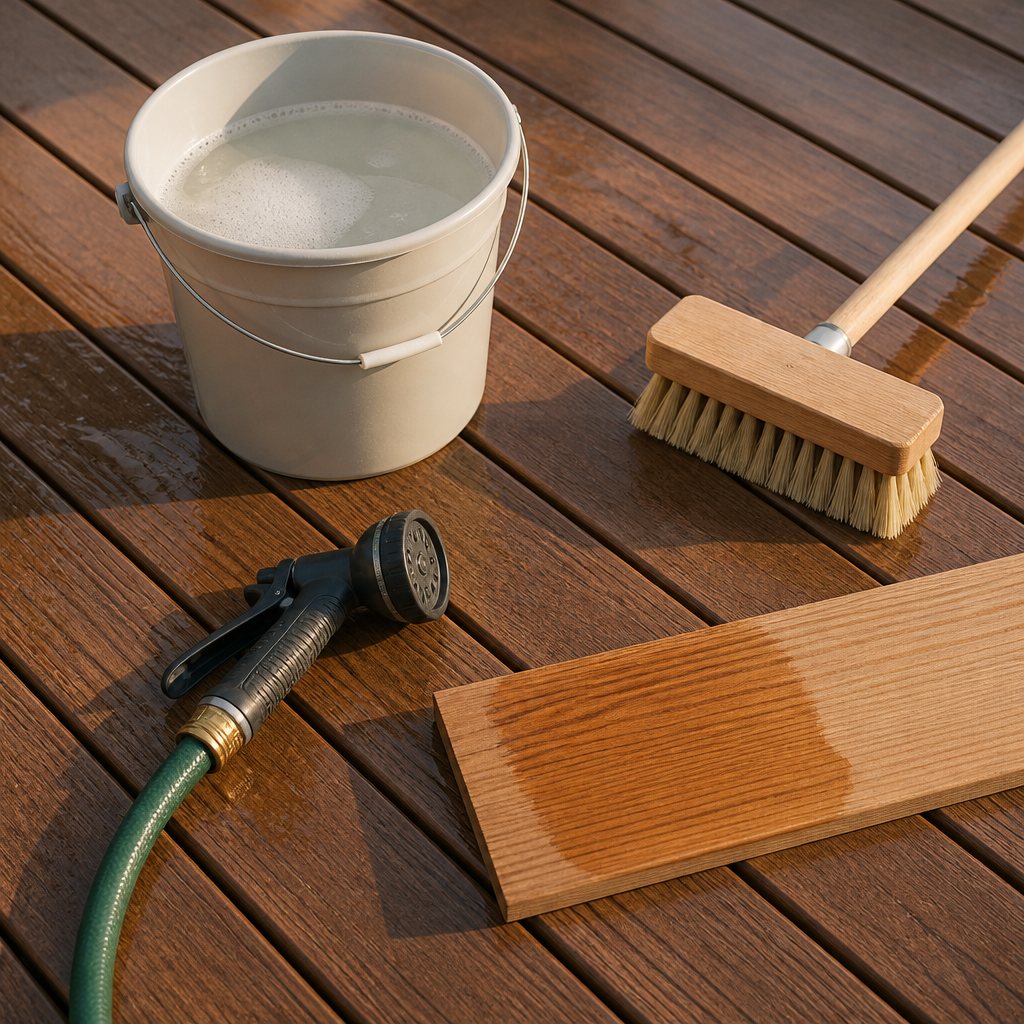
| Hand scrubbing with a stiff brush and mild soap | Small decks, spot cleaning, and boards near railings | Slow results and uneven cleaning on large areas |
Many rental machines ship with a 0-degree tip, the narrowest pattern available, and it is the most common cause of gouged boards we see. Swap it for a wider fan tip before you start, and test on a hidden board. A surface cleaner attachment is another option on wide, flat decks, but it is still a pressure method and carries the same risks on older boards.
Fall Maintenance Schedule for North Jersey Decks
Setting a Fall Calendar
Work backward from the first hard freeze. Clean in early to mid fall, let the deck dry through a stretch of stable weather, then decide whether it needs stain, paint, or nothing before winter. Decks in shadier yards in places like Franklin Lakes, Wyckoff, and Saddle River stay damp longer, so their calendars should leave extra drying time.
Schedule a deck inspection along with the wash. Check fasteners, railing posts, and stair treads, and note any board that moves. Fixing those items before the cold arrives keeps small problems from becoming structural repairs in spring.
Winter Protection Basics
Snow, ice, and freeze-thaw cycles stress wood that is already wet or cracked. Keep the deck clear of heavy leaf piles and standing snow where you can. Sweep off debris before it holds moisture against the boards. Avoid metal shovels on wood surfaces, since they gouge the grain.
Gutters that dump onto the deck deserve attention too. Clogged gutters can soak one spot repeatedly, and that repeated wetting is how boards cup and rot. Gutter cleaning is worth doing before the deck season ends so water flows away from the framing.
Common Mistakes That Damage Wood Decks
Using Too Much Pressure
The most frequent damage we see comes from a tip that is too narrow or a wand held too close. Narrow patterns cut into soft wood. Hold the tip farther back and move it steadily, rather than asking the wood to take more force. If the surface looks fuzzy after a pass, stop and reset.
Ignoring Loose Boards and Fasteners
Washing a deck with loose boards can make them worse, because water and movement wear out fastener holes. Tighten or replace fasteners before you wash, and check for popped nails. Rusted fasteners also bleed streaks onto the boards, which is a separate problem from dirt.
Skipping the Rinse and Dry Time
Cleaner left on the wood keeps working after you want it to stop. A thorough rinse is not optional. Staining a deck that is still damp traps water under the finish and causes peeling or cloudy patches later, which means paying for the job twice.
Frequently Asked Questions
Most decks benefit from one thorough cleaning a year, usually in early fall, with a lighter sweep and spot check in spring. Shaded decks, decks under trees, and decks near downspouts may need a second cleaning if growth returns faster.
Yes, if you use a wide tip, keep the wand moving, sweep along the grain, and check for loose boards first. Most homeowner mistakes come from using a narrow tip or holding the wand in one spot. If the deck is old, soft, or heavily grown over, a professional soft wash is usually the safer choice.
Wait until the wood is fully dry, which you can confirm with the water test. Depending on shade, humidity, and recent rain, that can take a few days or longer. Always follow the finish manufacturer’s directions for application conditions.
A proper wash removes dirt and surface residue, which can brighten the wood. It does not reverse deep weathering. Heavily gray boards usually need a finish designed for weathered wood, and a test board will help you choose.
Ask for proof of insurance, and ask how the crew protects plants, siding, and the deck surface itself. A good answer will mention wood-safe pressure settings, dwell time for cleaners, and a rinse plan. If a company cannot explain its method in plain terms, keep looking.
Tell us what worked or what surprised you when you washed your own deck this season, because local wood and weather experiences are worth sharing.
References
Ready For A Clean Home?
Schedule Quality Sparta Power Washing Today!