
Concrete Driveway Winter Damage in NJ: A Fall Guide

Concrete driveway winter damage in NJ rarely shows up all at once. Most homeowners only notice it when the first thaw reveals a crack that wasn’t there in November, but the damage has usually been building for months. Dirt, moss, and road salt sit on the surface and feed the same freeze-thaw cycles that break slabs apart. If you want to know what a North Jersey winter does to a concrete driveway, and what you can do about it before the first hard freeze, this guide walks through the process from the surface down to the base.
Table of Contents
- Quick Takeaways
- How Freeze-Thaw Cycles Break Down Concrete
- Why Dirt and Grime Make Winter Damage Worse
- Deicing Salt and the Dirty Driveway Problem
- Cracks, Spalling and Edge Crumbling
- Fall Prep Options Compared
- Pressure Washing Your Driveway in Fall
- When to Clean and Repair Before the First Freeze
- Spring Cleanup After a Rough North Jersey Winter
- Frequently Asked Questions
- References
Quick Takeaways
| Key Insight | Explanation |
|---|---|
| Clean before the freeze | Dirt, moss, and oil hold moisture against the surface. Remove them in September or October while temperatures are still moderate. |
| Repair cracks before sealing | Sealing over an open crack traps water inside the slab, which can make freeze damage worse, not better. |
| Watch the quarter-inch line | Cracks wider than about a quarter inch often signal base or structural trouble, not just surface wear. |
| Keep deicers measured | Salt lowers the freezing point of water and draws moisture into concrete, which speeds up surface scaling. Use less and rinse residue off when temperatures allow. |
| Check overnight lows | Night temperatures below 50°F can compromise curing for sealants and similar materials, so schedule work around stable, mild nights. |
| Inspect in March | Spring thaws reveal damage that developed over winter, and fresh spalling is far easier to address while the patch is still small. |
How Freeze-Thaw Cycles Break Down Concrete
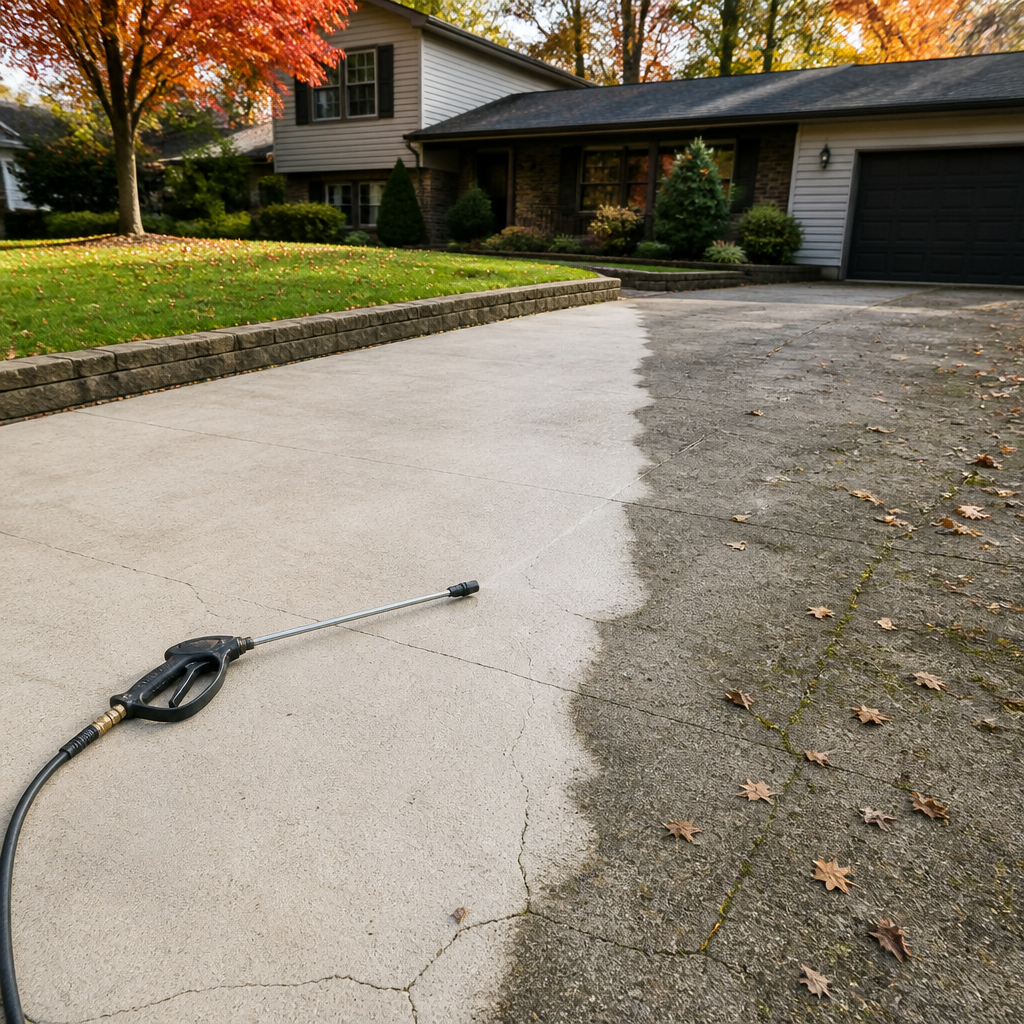
Concrete is not solid the way glass is. It is a mix of cement paste and aggregate with tiny pores and capillaries, and water finds its way into them. When the temperature drops below freezing, that water expands, and the pressure pushes outward against the surrounding paste. A single freeze does little. Over a North Jersey winter, a driveway can cycle through freezing and thawing dozens of times, and each cycle adds a little more stress.
Why Porous Concrete Lets Water In
The surface is where the first damage starts. Concrete finished without a sealer, or slabs that have worn thin from years of traffic, take on water faster than dense, well-cured slabs. Edges and joints are especially exposed because water collects there and runs toward them after every storm.
Hairline cracks are the next weak point. Each freeze pushes water deeper into a crack, and each thaw leaves the crack a little wider. What starts as a faint line in October can be a visible seam by February.
What Spalling Looks Like Before It Gets Bad
Spalling starts as small flakes or a sandy texture, then grows into shallow pits and chunks. Many homeowners mistake the early stage for ordinary dirt. Scrape a suspect patch with a stiff brush, and if you see fresh gray aggregate underneath, the surface has already lost material.
That is the point where a simple wash will not restore the driveway. The surface can look cleaner after washing, but the lost material stays lost, and the exposed area will keep taking on water until it is repaired.
Why Dirt and Grime Make Winter Damage Worse
Clean concrete and dirty concrete do not age the same way over winter. Grime, organic debris, and oil act like sponges on the surface, holding moisture against the slab long after each rain or melt. A driveway that sits under leaves and mud from October through March stays wet on top far longer than one that was swept and rinsed before the cold arrived.
Winter rarely creates driveway damage on its own. It finds the weak spots that dirt, neglect, and unsealed pores have already opened up.
Moss, Algae, and Leaf Staining
Green growth thrives on shaded slabs where the sun does not dry the surface for hours after a storm. Moss roots and algae films hold water in place and can loosen fine material from the surface. Leaf tannins leave brown stains that look like damage, although many of them come out with the right cleaning method.
Soft washing is usually the right first step for organic growth because it treats the growth without blasting the surface. High pressure on a mossy slab can drive debris deeper into the pores instead of lifting it out.
Oil Drips and Tire Marks
Oil and grease are the sneakiest contaminants. They soak into concrete, and in cold weather they can make the surface slick while trapping moisture underneath. Tire marks on a driveway that sees daily use collect dirt and salt in the same grooves, so the same strip stays dirty all winter.
Treat oil spots as soon as they appear with a proper degreaser. A stain that has been baked into the surface through a full winter is much harder to lift in spring.
Pro tip: After the first heavy rain in late October, look at your driveway while it is still wet. Where water pools and stays dark for hours, the surface is holding moisture and likely needs cleaning before the freeze.
Deicing Salt and the Dirty Driveway Problem
Road salt and common deicers work by lowering the freezing point of water. That helps on ice, but the same chemistry draws moisture into concrete and accelerates surface scaling. Salt residue on a dirty driveway is a double problem, because the grime holds salt against the surface where it can soak in with every melt cycle.
Why Salt Draws Moisture Into Concrete
Salt does not just sit on top of the slab. It dissolves in meltwater, the solution seeps into the pores, and then the water refreezes overnight. Some deicers are harsher on concrete than others, so the product label matters as much as the amount you spread.
In practice, the homeowners who see the least scaling are the ones who apply deicer sparingly, sweep up the excess once the ice is gone, and avoid piling snowbanks with salt on the slab itself.
Rinsing Salt Off Before It Sets
The best time to rinse salt residue is after the last significant storm of the season, once temperatures stay above freezing for a stretch. Rinsing in midwinter, right before a hard overnight freeze, can leave water sitting in the pores and create a fresh problem.
A thorough rinse in late winter gives you a clean baseline. It removes the salt that built up over the season and makes spring inspection far more accurate, because you are looking at the concrete rather than the film on top of it.
Cracks, Spalling and Edge Crumbling
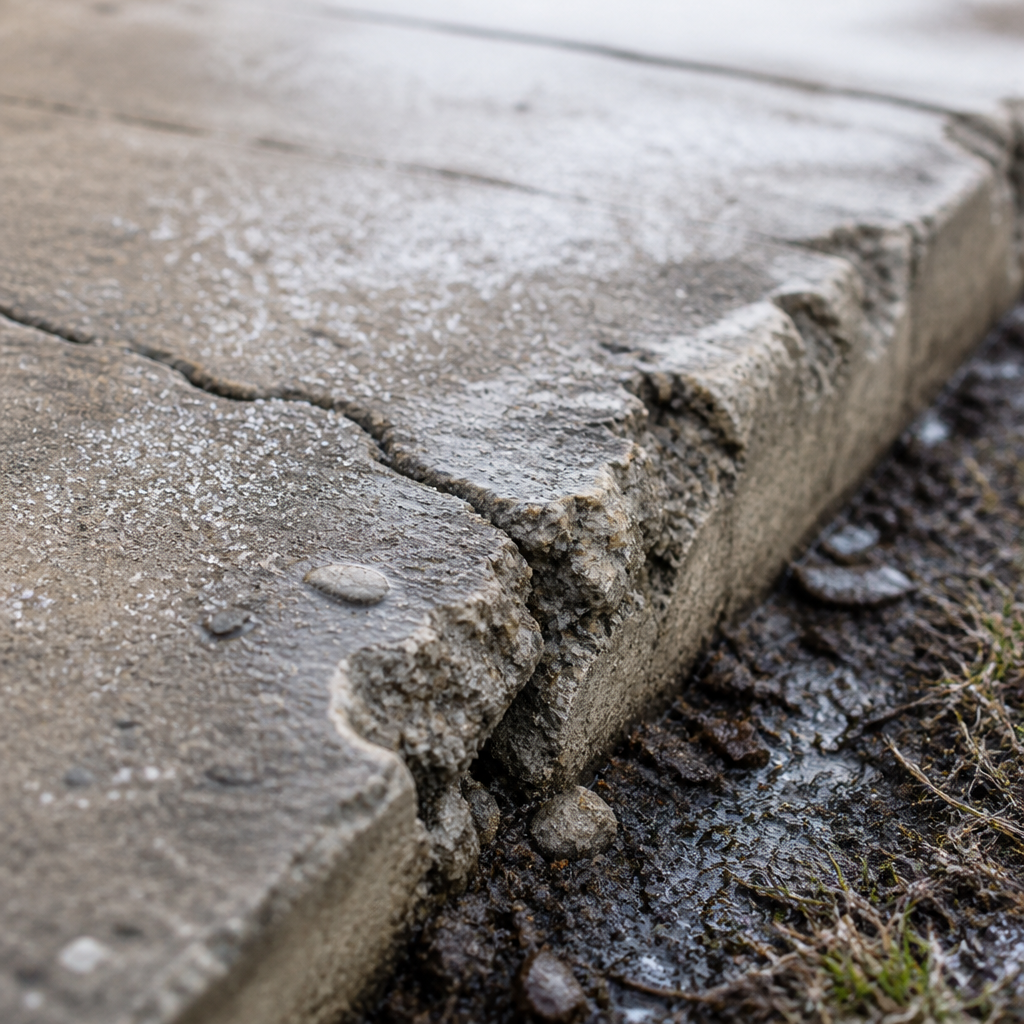
Not all cracks are equal. A hairline crack in the surface is mostly cosmetic. A crack that runs through the slab, lets water in, and shows vertical movement or a lip between sections points to something deeper. Your job in fall is to sort the two, because they need different fixes.
The Quarter-Inch Rule for Driveway Cracks
A useful threshold is a quarter inch. Cracks wider than about that often signal structural compromise rather than surface wear, and freeze-thaw cycles widen them quickly. Once a crack is that wide, water can reach the base, and the base is where a repair stops being cosmetic.
A patch alone may not hold in that situation. If a wide crack has height difference across it, or if the area around it sounds hollow when you walk on it, an assessment is worth the time before winter.
Why Sealing Over Cracks Backfires
Sealing over an open crack is one of the most common fall mistakes. The sealer bridges the top of the crack, traps moisture inside, and gives you a false sense of protection. The crack then freezes with water sealed in, which is the worst combination for the slab.
Clean the crack, fill it with a material suited to the job, and let the repair cure before any sealer goes down. Repair work generally needs air temperatures above freezing, which is why fall is the last reliable window of the year for it.
Edge Crumbling and Spalled Joints
Edges take the worst of the damage because they have the least support and collect the most runoff. Crumbling along the apron or where the driveway meets the street is a common pattern. Mark the affected area and plan a repair before the first hard freeze.
Edges left through winter tend to grow, because chunks break loose under plowing and foot traffic and leave the next layer exposed. A small repair in October is far cheaper than rebuilding a corner in April.
Fall Prep Options Compared
Homeowners usually choose between three levels of fall prep. Each has a place, but they are not interchangeable. Picking the wrong one is how a driveway looks clean in October and still fails by March.
| Approach | What It Handles | Where It Falls Short |
|---|---|---|
| Cleaning only (soft wash or low-pressure wash) | Removes dirt, moss, leaf stains, and oil residue so the surface can be inspected accurately | Does nothing for cracks or porosity, so water still gets into the slab during winter |
| Clean and seal | Removes grime, then fills surface pores to slow water and salt penetration | Sealing over open cracks or a dirty surface traps moisture and wastes the product |
| Clean, repair, then seal | Addresses cracks and spalling first, then protects the whole slab with a clean, dry surface | Takes more time to schedule and depends on dry, mild weather across several days |
In practice, the third option is the one that holds up. It takes longer to coordinate, but it is the only approach that treats the cause rather than the symptoms. The first two can still make sense for a driveway in good shape, but they should not be used to cover up known cracks.
Pressure Washing Your Driveway in Fall
Fall is the right season to pressure wash a driveway in North Jersey. The surface can dry between jobs, temperatures are moderate, and any sealing you add has time to cure before the freeze. The mistake is treating a pressure washer as a blunt tool. Concrete can be etched or scoured by the wrong tip or a wand held too close.
Nozzle Choice and Stroke Technique
Wide fan tips are safer on concrete than narrow streams. A narrow stream held close leaves pits and lines that look worse than the dirt you started with. Keep the wand moving in even, overlapping passes, and avoid stopping in one spot while the water runs.
Work in sections, and plan the runoff path before you start. Clean from the far end of the driveway toward the street or drain, so the dirty water does not carry grime back across areas you have already finished.
Why Cleaning Before Sealing Matters
Sealer only works on a surface that can absorb it. Oil, mineral film, and mold on concrete block bonding and can leave blotchy patches that show up in daylight. Clean first, let the slab dry completely, and then decide whether sealing is worth doing this season.
Check the forecast before you commit. A sealer applied ahead of a cold, damp stretch may not cure properly, and a rushed job is a wasted job. For homeowners in Sparta, booking the cleaning in September rather than the first week of November keeps the schedule flexible when the weather turns.
Pro tip: Test a small corner first. Clean an area about the size of a parking space, let it dry fully, and inspect it in daylight. If the color is even and the texture is intact, the rest of the driveway can follow the same method.
When to Clean and Repair Before the First Freeze
The window for fall concrete work in North Jersey is shorter than most people expect. Once nights turn cold and damp, repairs and sealing become unreliable. The most dependable stretch is usually September into early October, when the weather still cooperates.
The September and October Window
Industry guidance commonly points to September and early October as the most reliable period for this kind of work in the Northeast. Humidity tends to drop while temperatures stay warm enough for materials to cure properly. Late October is still possible in a mild year, but it is a gamble.
Build your schedule backward from the first forecast freeze. Repairs go first, cleaning second, and sealing last, with enough time between each step for the surface to dry and the materials to set.
The 50-Degree Night Check
Night temperatures matter more than daytime highs. Installation guidance for sealants and polymeric sand often notes that nights below 50°F can compromise curing. A sunny 65°F afternoon can still be a poor day to seal if the temperature drops hard after dark.
Check the overnight lows for several days in a row before you book a sealing day. If the forecast shows a string of mild nights, you have a good window. If it shows a single warm day between cold ones, wait.
Pro tip: Write down the date your last reliable warm, dry week usually ends in your area, then start the repair and cleaning list two weeks before that. Waiting until the first cold snap is how homeowners end up with a half-finished driveway and no way to fix it until spring.
Spring Cleanup After a Rough North Jersey Winter
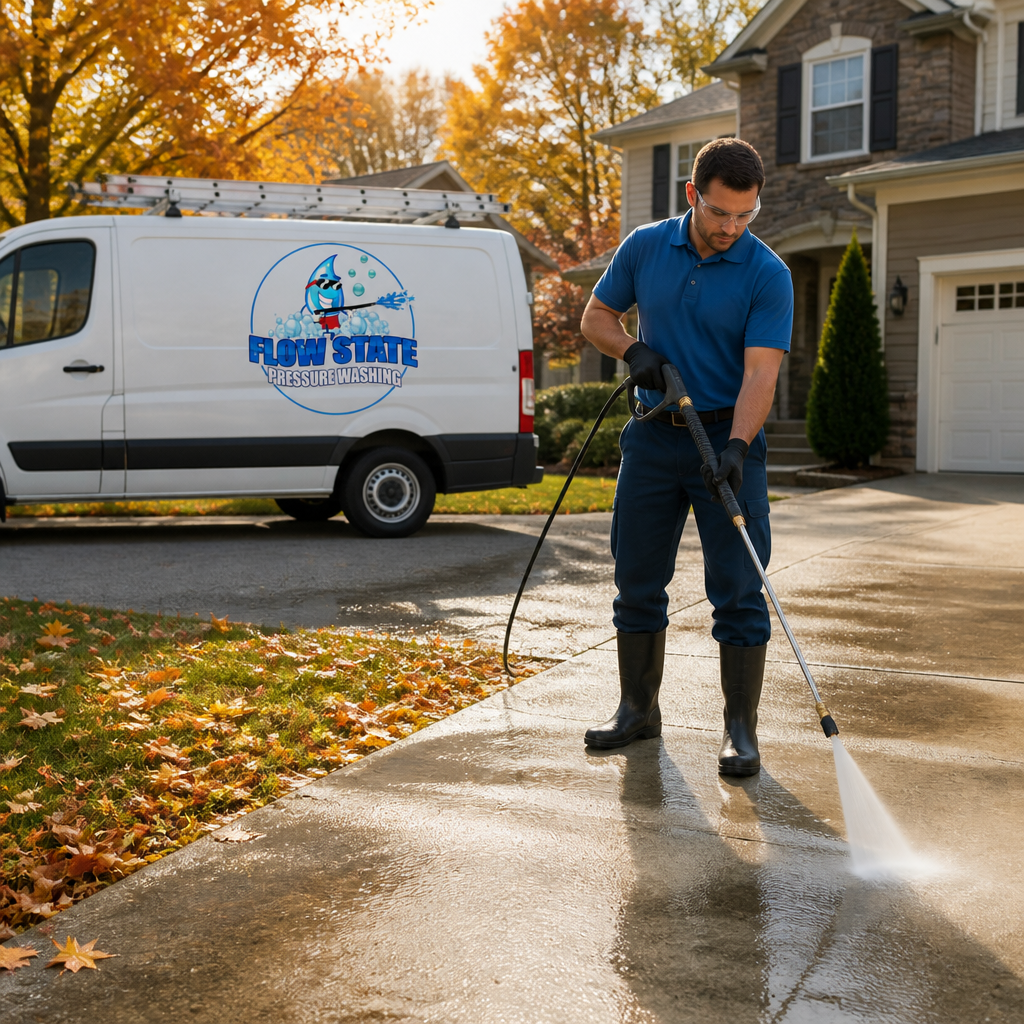
Spring is when winter damage becomes visible. The snow melts, the salt film is finally gone, and you can see what the season left behind. Resist the urge to go straight to a pressure washer. Walk the driveway first, mark anything new, and compare it with your fall notes if you kept any.
Checking for New Spalling and Cracks
Look for cracks that were hairline in November but now hold dirt or water staining. Also check for flaking that has moved from the edges toward the center of the slab. Drag a finger or a stiff brush along suspect areas. Anything that breaks loose and leaves a rough, sandy base has moved past surface wear and needs repair.
Compare what you find with the list you made in fall. Repairs that were never done are the most likely source of new damage, and they are easier to fix now than after another summer of traffic.
Removing Salt Staining and Winter Film
Once the inspection is done, a full clean removes the salt film and any algae that grew during the mild spells. Use the gentlest method that does the job, and rinse residue thoroughly so the next freeze has less to work with. Early spring is also a good time to decide whether the surface needs another sealing season.
A clean driveway in April gives you a useful reference point. If the surface looks worse after a proper wash, the damage is structural and not just dirt, and that is a sign to bring in someone for a closer look.
Frequently Asked Questions
Yes, fall is one of the better windows for it. Use a wide fan tip, keep the wand moving, and make sure the surface dries completely before any sealer goes down.
September and early October are generally the most reliable months. Look for a stretch of mild, dry days with overnight lows that stay above 50°F, and make sure no hard freeze is in the forecast during the cure window.
No. Sealer slows water and salt penetration, but it does not repair existing cracks or spalling, and it wears down over time. Repairs have to come first.
A common threshold is about a quarter inch. Get an assessment sooner if the crack is growing, has a height difference across it, or lets water pool in the slab.
It is widely used, but some deicers are harsher on concrete than others. Use it sparingly, sweep up the excess, and rinse residue off in late winter when temperatures allow.
Spring is useful for inspection and a full cleaning, but waiting means dirt, oil, and moss spend the whole winter bonded to the surface. A cleaning before the first freeze is the better move, followed by a lighter wash in spring.
Have you noticed winter damage on your own driveway, or found a fall routine that actually held up through the season? Share your experience in the comments, because your results from a North Jersey winter are useful to your neighbors.
References
- Guide to winterizing concrete driveways for New Jersey homeowners
- Guide to the best seasons for driveway work in New Jersey
- Community discussion on the best time to pressure wash a driveway
Ready For A Clean Home?
Schedule Quality Sparta Power Washing Today!