
Commercial Exterior Cleaning NJ: Winter Prep Checklist

Most of the winter damage we see on North Jersey commercial properties starts in October and November, long before the first plow goes out. Algae on a walkway turns into a slick patch by January. A downspout that dumps across a sidewalk refreezes every night. A crack in the parking lot fills with water, freezes, and becomes a pothole by February. Commercial exterior cleaning NJ work done in the fall is one of the cheapest ways to keep those problems off your front door. Here is what we tell property managers in Sparta, Newton, Andover and across Sussex County and Morris County to do before the season starts.
Table of Contents
- Quick Takeaways
- Why October and November Decide Your Winter
- Pressure Washing Walkways Before the First Freeze
- Soft Washing the Building Exterior
- Gutters, Downspouts and Roof Drains
- Pavement, Pavers and Concrete Cracks
- Roof Moss and Roof Edges
- Lighting for the Early Dark
- Service Areas That Get Missed
- Scheduling and the Comparison That Matters
- Frequently Asked Questions
- References
Quick Takeaways
| Key Insight | Explanation |
|---|---|
| Pressure wash walkways before the first hard freeze | Algae and moss left on concrete turn into slick patches, and the film is harder to remove once it has frozen in place. |
| Clear gutters and extend downspouts before late November | A downspout discharging across a walk refreezes overnight and creates the ice patches that generate slip claims. |
| Seal and patch cracks only in mild, dry weather | Water left in an open crack freezes, expands, and turns into a spring pothole. |
| Treat roof moss and check roof drains before snow arrives | Moss holds moisture against roofing material, and clogged drains leave meltwater with nowhere to go. |
| Test every exterior light in the first week of November | Dark arrives early, and a dead fixture over a walkway is a liability you find at 5pm in December. |
| Rinse dumpster pads and drive-thru lanes | Grease and debris clog drains and freeze into thick, slick layers where staff and customers walk at night. |
| Stop exterior washing when overnight lows approach freezing | Water that cannot dry before dark freezes on the surface you just cleaned, leaving ice where you least want it. |
Why October and November Decide Your Winter
Winter problems on commercial sites rarely start with the storm. They start with a drain full of leaves in October, a crack nobody sealed, or a walkway where algae was allowed to set for a whole summer. By the time the first forecast shows snow, the cheap fixes are already off the table.
A winter maintenance checklist written for New Jersey commercial sites makes the same point: most winter damage is decided in the fall. The drains that freeze, the pothole that opens in February and the slip claim at the front door usually trace back to something that was inexpensive to fix before the first storm. We treat late October and early November as the working window for exterior prep.
In practice, that window closes faster than people expect. Once nighttime temperatures start dropping toward freezing, pressure washing becomes a risk, and any water left on a surface needs time to evaporate before dark. Schedule the heavy exterior work first, then handle the small items like drain clearing and light checks while the weather is still workable.
Work backward from your snow contract date. Ask your plow or de-icing contractor when they plan to mobilize, then book your wash and repair crews well ahead of that date. The same weeks that property managers start calling for snow pricing are the weeks exterior crews fill up fastest.
Pressure Washing Walkways Before the First Freeze
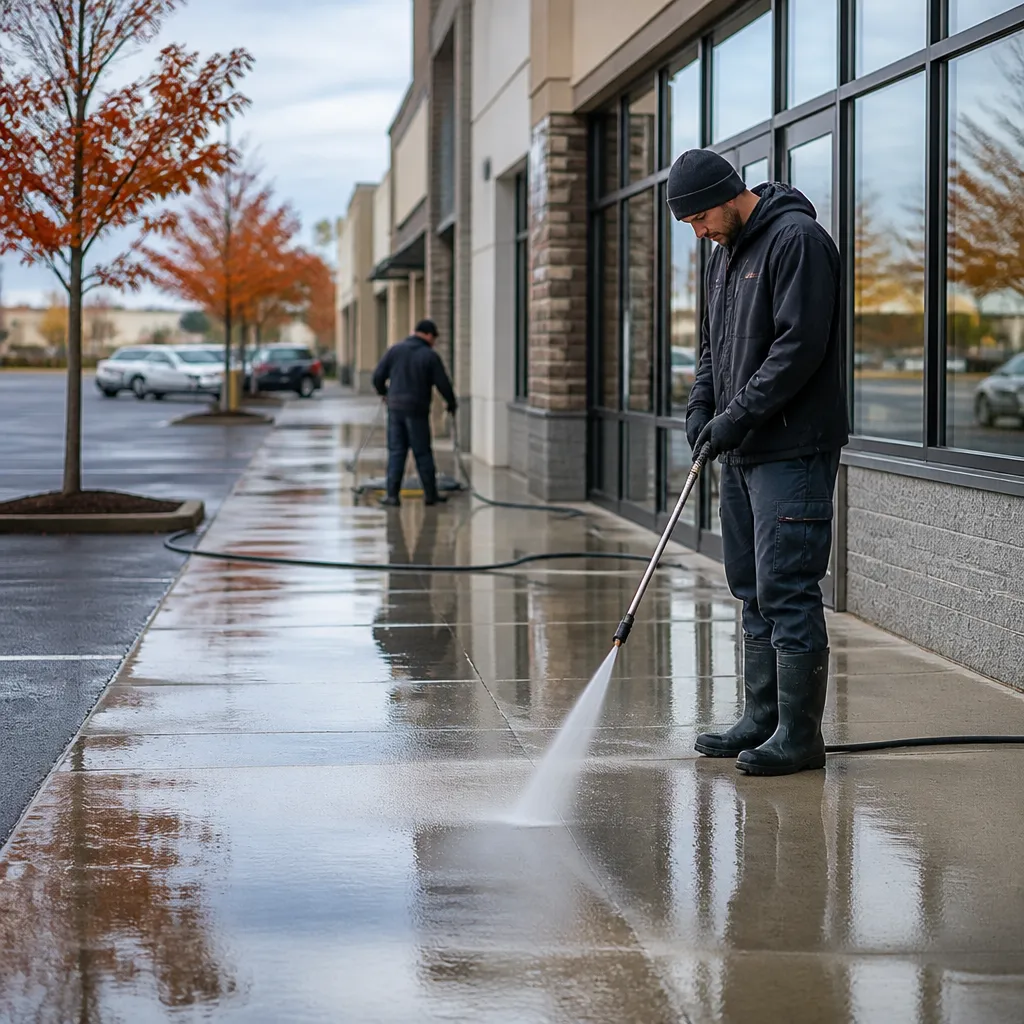
Walkways at offices, medical buildings and retail storefronts collect a film of algae, pollen and tire residue all summer. That film is what makes a clean-looking concrete walk slick the first time it freezes. Pressure washing in the fall strips it while the surface is still dry enough to dry fast.
Algae and Moss on Walkways
Match the pressure to the surface. Concrete can take more force than pavers or older brick, and a wand held too close will etch the surface and leave lines you will see every morning. We start with a wide fan tip on walkways and step down for brick, stamped concrete and aged joints.
Pay attention to the edges. Algae tends to collect along the base of building walls, under downspouts and in shaded strips near planters, which are exactly the spots where ice forms first in the morning.
Salt and De-Icer Residue Before It Sets
Many property managers assume salt residue is only a spring problem. Residue left over from last winter sits on the surface, holds moisture and makes the next application less predictable. A rinse before the season gives your de-icing contractor a clean starting surface.
Rinse, do not flood. Direct the water away from entrances, electrical boxes and planting beds that you do not want saturated before freeze-up.
Pro tip: Photograph each walkway and entrance before and after the wash. Those images give you a baseline for your spring damage walk and a clear record of the work if a slip claim ever comes up.
Soft Washing the Building Exterior
Soft washing is the right method for most commercial facades, including siding, stucco and painted block. It applies a cleaning solution at low pressure to kill and lift algae, mildew and staining without blasting the surface. For a building that sits beside a parking lot all winter, the difference matters because the walls take road spray and constant dampness.
Storefront Glass and Frames
Storefront glass collects road film and plow spray that dries into a haze. Clean the glass and frames before winter, then check door seals and weatherstripping while you are working at that height. A clean pane makes a cracked seal or a damaged frame much easier to spot before cold weather makes it worse.
Timing a Soft Wash Around Temperature
Soft washing needs a dry stretch of above-freezing days. We schedule these jobs for afternoons when the forecast high is comfortably above freezing and the overnight low will not drop below freezing before the surface has dried. Solution left on a building overnight can dry unevenly and leave streaks, so the day-of forecast matters more than the calendar date.
If the forecast shows a hard freeze within 24 hours, postpone. A half-washed facade that freezes is worse than one that waits until spring.
The best winter exterior job is the one scheduled around the weather, not around the calendar.
Gutters, Downspouts and Roof Drains
Gutters are the part of an exterior nobody thinks about until a sheet of ice hangs from the eave. A full gutter overflows at its low point, water runs down the wall, and overnight it freezes on whatever sits below. On a commercial building, that ice often lands on a walk, a loading area or a row of parked cars.
Gutter Cleaning Before the Freeze
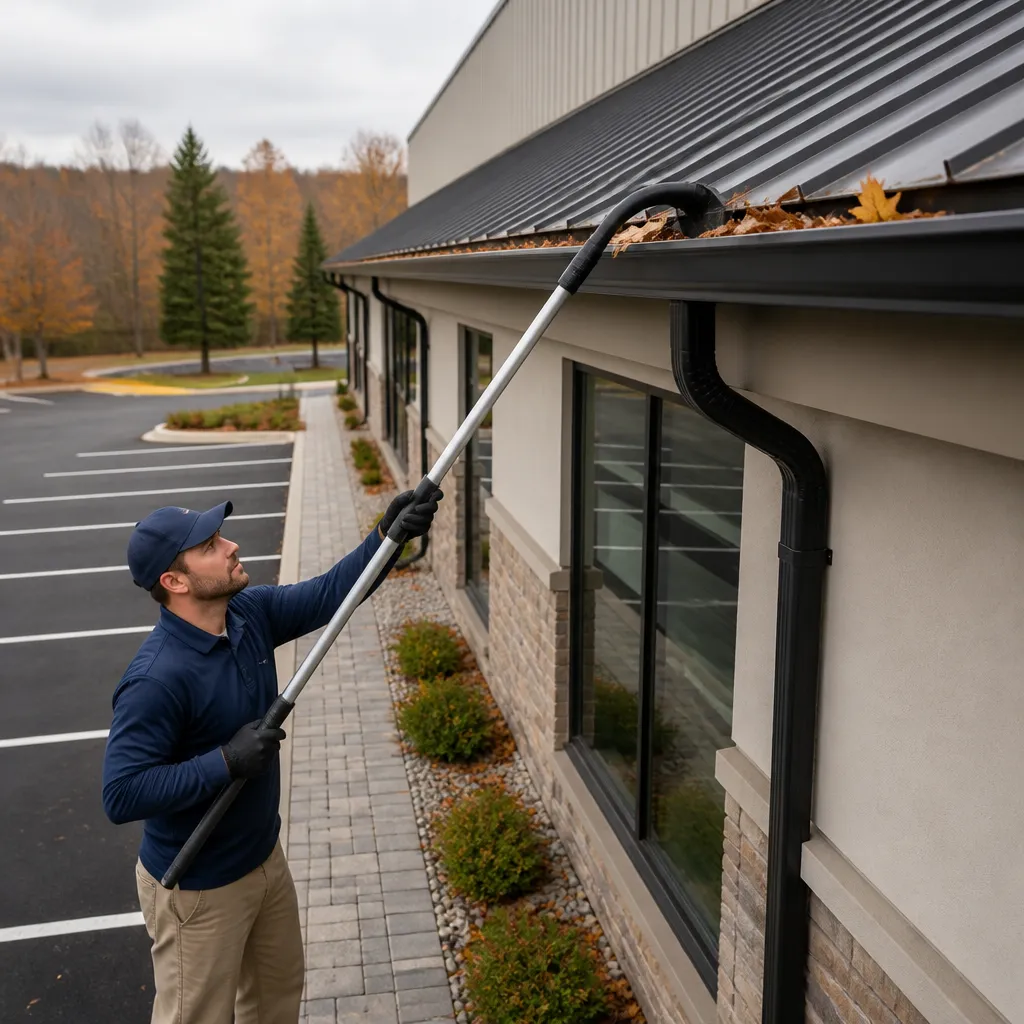
Clear the gutters once the bulk of the leaves are down, and check the outlets at the same visit. Pull the debris, flush each run with water, and watch where it drains. A gutter that still holds water an hour after a rain has a slope or joint problem that cleaning alone will not fix.
If a building drops heavy debris every fall, gutter guard installation is worth discussing with the owner. It is a bigger decision than a seasonal cleaning, but it can cut the number of visits needed each autumn.
Downspouts That Dump Onto Walks
A downspout that discharges across a walkway refreezes every night. In the morning it looks like a dry patch until someone steps in it. Extend or redirect every downspout that ends within a few feet of a walk, entrance or parking space, and carry the water to a splash block or a drainage point rather than onto the pavement.
Pro tip: Keep a short written list of every downspout you extended and where it now discharges. Your crew can check those spots first during the first thaw, and you will not waste time wondering whether a new extension got knocked loose.
Check the roof drains too. On flat or low-slope commercial roofs, internal drains and scuppers clog with debris. Backed-up water finds the seams, and that is often the leak that shows up as a ceiling stain in January.
Pavement, Pavers and Concrete Cracks
Pavement damage in winter is almost always a water problem. Water gets into a crack or under a joint, freezes, expands and pushes the surface up. The fix is cheap in October and expensive in February, which is why cracks, pavers and joints sit near the top of our fall list.
Crack Work Needs Dry, Mild Weather
Crack sealing and patching only hold when the crack is clean, dry and warm enough for the material to cure. Pressure wash first, then give the surface time to dry before filling. A crack filled over damp material often fails to bond, and you will find it loose at the first thaw.
Check the product label for the minimum application temperature and cure time. Plan the work so the material has dry, above-freezing conditions for the whole cure period, not just the hour it goes down.
Paver Sealing and the Cold Window
Paver sealing is a good fall job for commercial plazas, patios and entrance pads, but the order matters. Clean, let dry, then seal, and keep de-icer off newly sealed pavers until the product has cured as directed. Salting fresh sealer is one of the most avoidable mistakes we see.
Repeated freezing and salt exposure wear down joints over time, so it pays to look at sand joints and edge restraints during the same visit. A loose paver found in October is a five-minute fix. The same paver found in January is a trip hazard under snow.
Roof Moss and Roof Edges
Roofs get less attention than walkways, but they cause some of the most expensive winter problems. Moss and algae hold moisture against shingles or membrane, and that moisture is still there when temperatures drop. On a commercial building, the first sign of trouble is often a stain on a ceiling tile inside.
Roof Moss Cleaning Before Snow Load
Roof moss cleaning needs a method that fits the roofing material. Soft washing with a low-pressure solution is usually the right call for asphalt shingles and most low-slope membranes. High-pressure blasting can strip granules, lift seams and damage the roofing surface, which is a costly mistake to discover in spring.
Ask the crew what they plan to use before work begins. A reputable crew will explain the solution, the dwell time and how they protect landscaping and building openings.
Roof Stain Removal and Drain Points
Dark streaks on a roof look like damage, but many are only surface growth. Removing them shows you what is actually there. Cracked flashing, lifted edges and clogged drain points are much easier to see on a clean roof, so walk the roof edge and drain points right after cleaning and log anything that needs repair before snow.
Lighting for the Early Dark
By December, parking lots and entrances go dark early, and most staff and customers arrive and leave in the dark. Lighting is part of exterior prep, not an afterthought. A dead fixture above a walkway is a slip claim and a security gap in the same spot.
Walkway and Lot Visibility Checks
Walk the property at dusk during the first week of November and mark every fixture that is out, flickering or aimed at a wall. Check for dark spots at entrances, dumpster enclosures and stairs. Replace bulbs and re-aim fixtures before the holiday season, when hours and traffic both change.
Write down the fixture locations as you go. A simple map with fixture numbers lets your maintenance contact or lighting vendor fix the problems in one visit instead of three.
Permanent Roofline Lighting for Commercial Buildings
Permanent roofline lighting gives commercial buildings a consistent look through the winter and holiday season without repeated ladder work each year. Mounted lighting also removes the loose light strings that snag, trip people or get pulled down by plow contact. If a building is already on your exterior cleaning schedule, check the mounts and wiring during the same visit.
Service Areas That Get Missed
The main building gets the attention, but several smaller surfaces cause a disproportionate share of winter trouble. These areas often sit outside the main maintenance contract, which is why they get skipped until the first freeze.

Dumpster Pads and Enclosures
Dumpster pads collect grease, food debris and leaked liquids, and that residue freezes into a slick layer right where staff walk to the bins at night. Clean the pad, clear the drain if the enclosure has one, and confirm the gate and lid still close fully. A pad that drains toward the building is a problem to fix in the fall, not in February.
Drive-Thru Lanes and Storefront Approaches
Drive-thru lanes and the approaches to storefronts take constant traffic, idling and spills. Oil and grease in those lanes form dark patches that look dry until they are wet. Clean the lanes and the walk to the service window before the season, and mark any heaved curbs or cracks so they stay visible after snow covers them.
Scheduling and the Comparison That Matters
Scheduling is where most winter prep plans fall apart. Crews book up in the same weeks, and a cold snap can wipe out a day you planned for exterior work. Build the schedule around two rules: exterior washing and sealing come first, and the forecast decides the day.
Coordinating With Your Snow Contractor
Your exterior crew and your snow contractor should work from the same site map. Mark the areas you have cleaned, sealed or repaired, and ask the snow team to keep blade edges off fresh sealer and repaired pavement. Curbs, islands, hydrants, drains and accessible spaces should be marked and staked before the first storm, so plows do not find them by hitting them.
Comparing Your Fall Options
Not every property needs the same plan. The table below compares three common approaches we see on North Jersey commercial sites, along with the winter risk each one carries when the timing is wrong.
| Approach | Best For | Winter Risk If Timed Poorly |
|---|---|---|
| Fall pressure washing of walks, lots and drive-thrus | Parking lots, drive-thrus and loading areas with heavy grime | Water left in cracks or on the surface freezes overnight, creating ice in the spot you just cleaned |
| Soft washing of building exteriors and roofs | Storefront facades, siding, stucco and roofs with moss or algae | Solution that cannot dry before a hard freeze can streak, and a half-treated surface looks worse in spring |
| Spring-only cleaning with a late winter salt rinse | Properties with a tight fall budget and no pending repairs | Algae and salt residue sit on the surface for months, and freeze-thaw cracks get worse before anyone repairs them |
Our recommendation: do the first two in October or early November, then keep a spring rinse on the calendar as a follow-up, not as a substitute.
Frequently Asked Questions
Start booking in early October and aim to finish the heavy exterior work by mid-November. The exact window depends on the forecast, but waiting until the snow contract starts is too late for crack repair, sealing and gutter work.
It is safe when the crew stops in time. Avoid exterior washing when the overnight low will reach freezing before surfaces dry, use a pressure level suited to each surface, and direct runoff away from walks and entrances.
Repeated salt and de-icer exposure can wear down concrete and pavers over time, especially when residue sits on the surface and water gets into cracks. A fall rinse, clean crack repairs and keeping de-icer off newly sealed pavers until they cure all reduce that damage.
Most commercial buildings near mature trees need at least one cleaning in late fall and a check after the first heavy storm. Buildings that shed heavy debris may need more frequent visits.
Include pressure washed walkways and entrances, cleared and extended downspouts, repaired cracks, treated roof moss, rinsed dumpster pads, tested exterior lights and a marked site map shared with the snow team. Each item is cheap in the fall and far more expensive after the first freeze.
Have you dealt with a winter exterior problem on your commercial property that could have been prevented in the fall? We would like to hear what happened and how you handled it.
References
Ready For A Clean Home?
Schedule Quality Sparta Power Washing Today!