
Christmas Lights Near Me: Trusted Installers in Sparta, NJ

Typing “christmas lights near me” into a search bar in October usually returns a wall of ads, marketplace listings and crews that vanish the moment the first hard frost arrives. For homeowners in Sparta, Newton and the Lake Mohawk area, the real question is not who is closest. It is who will show up on schedule, hang lights without damaging siding or gutters, and take everything down in January without leaving a mess. This guide explains how to separate a dependable installer from a fly-by-night crew, what a fair quote looks like, and which questions save you a December headache.
Table of Contents
- Quick Takeaways
- Why Local Holiday Light Searches Go Wrong
- Permanent Versus Seasonal Lighting
- Credentials and Insurance to Verify
- Reading Reviews and Portfolios Honestly
- What Holiday Light Installation Costs
- Comparing Your Options
- Installing Lights in Sparta, Newton and Lake Mohawk
- Holiday Lighting for Commercial Properties
- Questions to Ask Before You Book
- Frequently Asked Questions
- References
Quick Takeaways
|
Key Insight |
Explanation |
|---|---|
|
Start with a site visit, not a phone quote |
A reputable installer walks your roofline, notes outlet locations and checks gutter and fascia condition before putting a number on paper. |
|
Ask who is actually on the ladder |
Confirm whether the company’s own crew installs or whether work is subcontracted, and ask who you call if a clip pulls loose. |
|
Get a certificate of insurance in writing |
Check that general liability and workers’ compensation are both current and cover your install window. |
|
Concealed mounting protects your home |
Clip-based systems avoid staples and tacks in shingles, vinyl and trim, and they go up and come down on a repeatable schedule. |
|
Demand an itemized quote |
Install labor, takedown, storage, controller setup and any surcharge for steep or hard-to-reach areas should each appear as separate lines. |
|
Put the takedown date in the contract |
Many homeowners are happy with the setup and frustrated when lights stay up into March. A written removal window prevents that. |
Why Local Holiday Light Searches Go Wrong
When someone searches for christmas lights near me, the results mix national franchises, marketplace listings, local handymen and seasonal crews that only work for a few weeks. Ranking near the top tells you about advertising budgets, not craftsmanship. Homeowners in Sparta and Newton need a shortlist built on evidence they can verify before a single clip goes on the fascia.
The most common complaint from people who hired the cheapest option first is simple: the crew came, hung lights in a hurry, and left wires and staples visible along the gutters. Others discovered that half the run went dark by mid-December because nobody tested the connections or the outlet. A low quote often hides a labor shortcut that you pay for later.
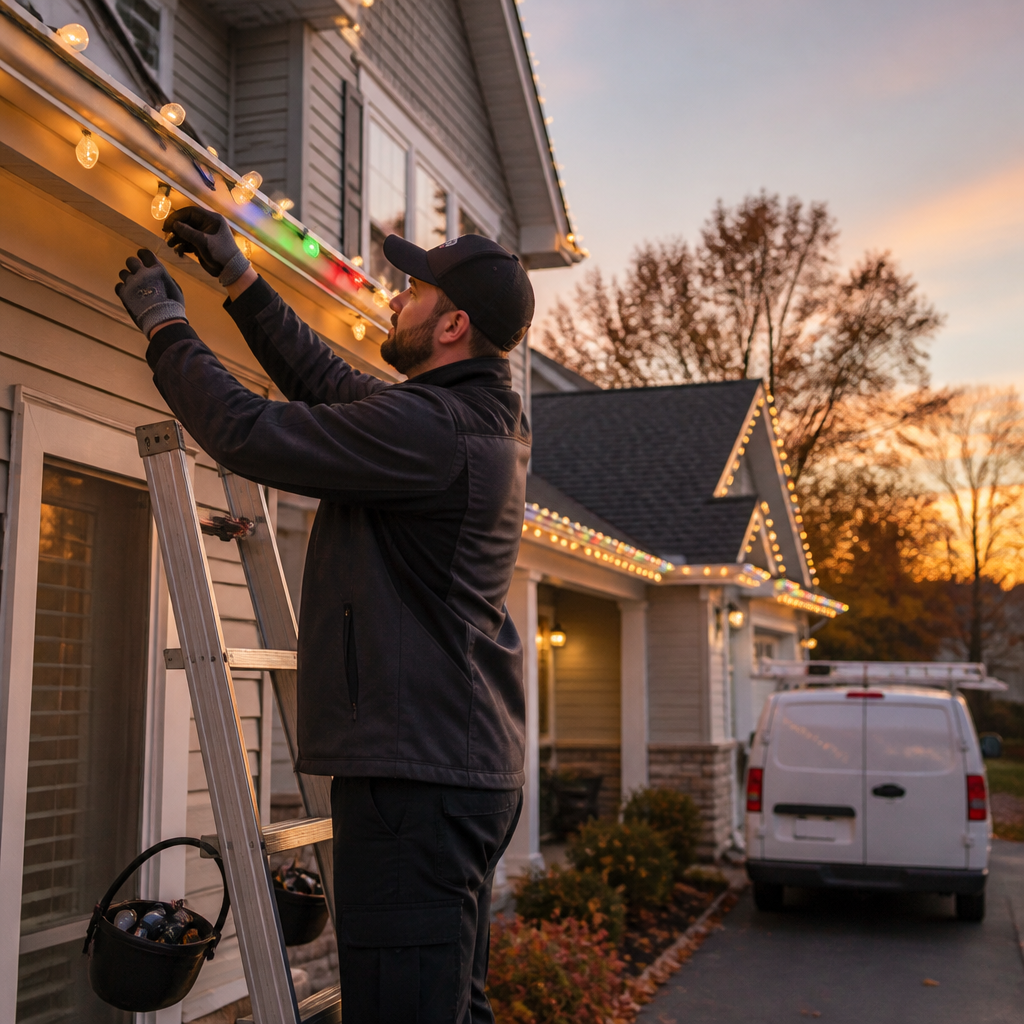
A practical rule helps here. If a company’s listing does not show a physical address, a local phone number, a named crew lead or proof of insurance, keep scrolling. Serious installers are easy to verify, and they expect you to check them.
Permanent Versus Seasonal Lighting
Traditional seasonal installs mean ladders, staple guns and a full weekend of untangling strands every November and December. Permanent systems use built-in mounting channels along rooflines, eaves and columns, paired with color-changing LED fixtures controlled by an app or remote. The upfront cost is higher, but the yearly work shrinks to a visit for changing colors and seasonal themes.
A holiday lighting job is judged in January, not on installation night. The quote that looks cheapest in October often costs the most by spring.
Mounting Methods That Protect Your Siding and Trim
Clip systems fastened to the fascia or roof edge hold lights without penetrating shingles. Ask the installer exactly what they will attach to and whether the hardware is rated for your material. Vinyl siding, aluminum trim and cedar each need different fasteners, and a crew that uses one kit for every house is cutting corners.
Pro tip: Photograph your roofline, outlets, gutters and siding before the crew arrives. If something gets damaged, those dated photos settle the question in minutes instead of weeks.
Power Requirements and Outlet Planning
Plenty of older homes have only one exterior outlet, often on the garage or near the back door, and it cannot carry a full roofline run. A competent installer will map circuit load and recommend dedicated outlets or a controller location before the first fixture goes up. Do not accept a plan that chains everything through a single extension cord.
A common question in local New Jersey discussion threads is what to do when a house has no exterior outlet at all. The answer is an electrician’s assessment, not a workaround. Installers who skip that step are gambling with your wiring, and you are the one who pays if a breaker trips on a freezing night.
Credentials and Insurance to Verify
Holiday lighting puts people on ladders at the edge of a roof, so insurance is not optional. Ask for a certificate of insurance and read the coverage dates, not just the logo. Confirm general liability coverage and workers’ compensation, because a crew without workers’ comp can leave you exposed if someone is hurt on your property.
What a Certificate of Insurance Should Show
A current certificate lists a company name that matches your invoice, coverage dates that include your install and takedown window, and your property as certificate holder when you request it. If a certificate looks altered or the dates are expired, call the agent listed on it. Legitimate firms expect that request and answer it without fuss.
Ask whether the insured name is the same entity that will sign your contract. Sole proprietors sometimes carry insurance under a personal name while billing under a trade name, which creates a gap when something goes wrong.
Business Identity and Local Presence
Look for a physical address, a local phone number and a business name that matches the invoice and insurance paperwork. A seasonal operation that exists only as a contact form and a rotating set of names is a red flag. A company that already works in nearby communities such as Andover or Lafayette can usually point you to past jobs close enough to drive by.
Reading Reviews and Portfolios Honestly
Reviews are useful when you read them for specifics. “Great job” tells you very little. “They came back the next Saturday to re-secure a clip that had loosened in a windstorm” tells you the crew stands behind its work. Sort reviews by most recent and look for complaints about takedown, since that is where many seasonal companies fall short.
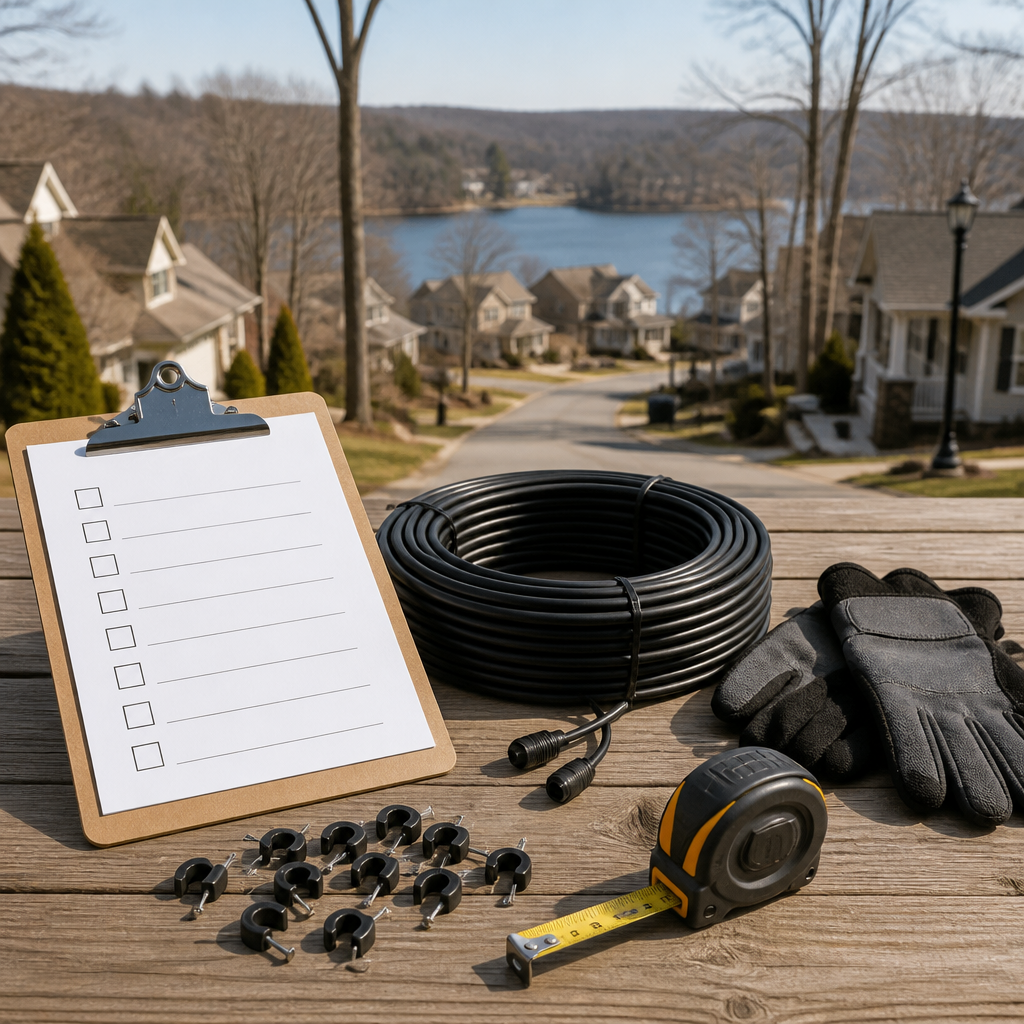
Portfolio photos can be misleading. Professional shots are often taken at dusk with a wide-angle lens, which hides uneven spacing, visible wiring and sagging runs. Ask for photos of installs in daylight, and if possible, request a look at a current job in your area.
Spotting Fake or Recycled Reviews
Watch for identical wording across several reviews, a cluster of posts in a single week and profiles with no history beyond the company page. A short review with no detail carries less weight than a longer one that names a crew member or describes the house. If every review praises the owner but none mention the crew, ask who will physically be on your roof.
Using Community Discussions and Directories
Neighborhood groups and online directories are good for finding out who is still operating two seasons later. Yelp’s listings for seasonal decorating services near Sparta are a reasonable starting point, but treat them as a list of candidates, not a verdict. Call each company with the same three questions and compare how they answer.
Pro tip: Ask every finalist for the name of a homeowner they installed for last season, and whether you can ask that homeowner about takedown. Hesitation tells you more than any star rating.
What Holiday Light Installation Costs
Price varies with roofline length, number of outlets, fixture count and whether you want removal and storage included. Third-party cost data puts professional installation and takedown for a typical home roughly between $220 and $684, with a typical project near $444. Treat those numbers as a rough benchmark, because your home’s layout will move the figure in either direction.
Permanent systems cost more upfront because the hardware stays on the home. The math works best when you compare several seasons of seasonal installs, the ladder time, the storage space and the risk of damage against a single permanent investment.
What Should Be Itemized
A fair quote lists install labor, takedown labor, fixture or light strand costs, controller and power setup, storage and any surcharge for steep or hard-to-reach areas. A single lump sum hides where corners get cut. Ask whether takedown is included or billed separately, and whether there is a cutoff date for it.
Why the Lowest Quote Often Costs More
The cheapest quote usually assumes a short install window, a single ladder setup and no test run. The problems show up in December: a dead section, a flickering controller, or a connection that was never sealed and failed in the first cold snap. Paying a little more for a crew that tests every circuit before leaving is almost always the better deal.
Comparing Your Options
Most homeowners in the area end up choosing among three paths. Each carries a different cost profile and a different set of risks, and the table below lays out what to expect from each one.
|
Option |
Best For |
Main Risk |
|---|---|---|
|
DIY store-bought light strands |
Simple single-story layouts and homeowners with time to spare |
Ladder falls, undersized extension cords and strands that fail mid-season |
|
General handyman or day-rate crew |
Small projects, such as a few fixtures around the front door |
Inconsistent results, unclear insurance and no firm commitment to takedown dates |
|
Dedicated holiday lighting installer |
Full rooflines, multi-story homes and commercial properties on a fixed schedule |
Higher upfront cost, which only pays off if you vet the company properly |
In practice, a dedicated installer wins on complicated homes, because they bring the access equipment, mounting kits and testing routine that a one-day handyman job usually lacks. A handyman can be fine for a short run near the entry if you verify insurance first and agree on a takedown date in writing.
Installing Lights in Sparta, Newton and Lake Mohawk
Local homes bring local conditions. Properties across Sparta, Newton and Lake Mohawk mix pitched rooflines, stone or vinyl facades and long driveways, and each one changes how lights are run and where outlets go. A crew that already works in these communities knows which details to check before the first ladder goes up.
Lake Mohawk Homes and Community Rules
If your home sits in a community with an HOA or a set of property rules, check the exterior lighting guidelines before you book. Some communities limit fixture colors, mounting methods or how long seasonal displays can stay up. Share those rules with your installer at the start so the design fits from day one instead of being redone in November.
Sparta and Newton Rooflines
Two-story colonials and pitched ranch-style roofs need different reach and ladder positioning. Ask how the crew will reach gable peaks and inside corners without leaning out past safe limits. A good installer will explain the access plan before the install day, including whether they need to work from a lift or a second ladder.
Andover and Lafayette Properties with Long Driveways
Larger lots often need separate runs for driveway entries, mailbox lines or tree-lined walkways. Ask whether the quote includes power for those features, because an extra outlet or a run from a detached garage can change the price significantly. Have those runs mapped on paper before the crew starts.
Holiday Lighting for Commercial Properties
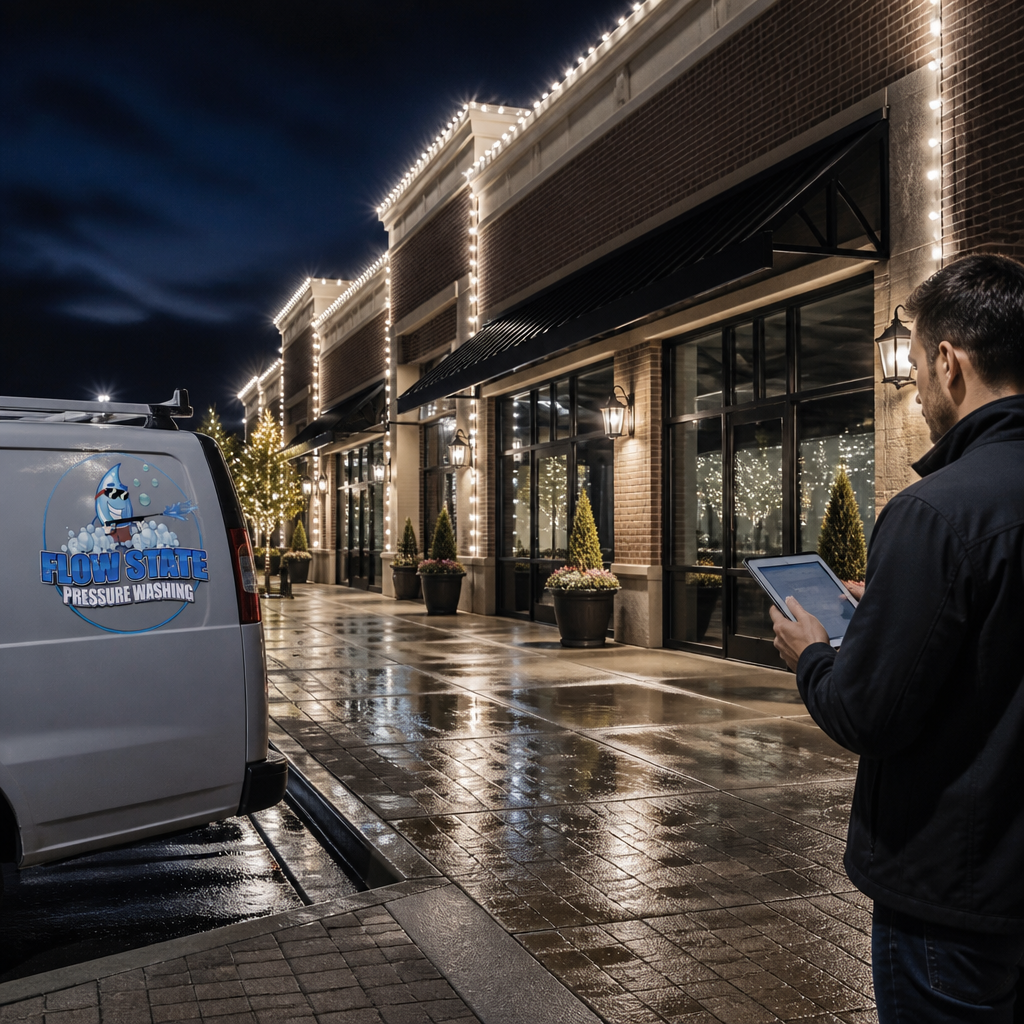
Commercial sites raise the stakes. A storefront, apartment complex or drive-thru with dark signage or a broken light string looks neglected to every customer who drives past. Property managers need a crew that works on a schedule, communicates with tenants and coordinates around business hours.
Scope matters on commercial jobs. A plaza may need roofline and entry lighting, while a dumpster pad area may need none at all. A drive-thru may require guidance on sightlines and safe mounting near signage. Put the scope in writing, with photos of each area, before anyone signs.
Scheduling Around Tenants and Business Hours
Ask for a crew schedule that avoids peak customer times. Installs often happen early in the morning, and the best crews stage ladders and barriers so walkways stay clear for tenants. Confirm who on your side approves changes, and get one point of contact for the job.
Commercial Insurance and Access
Commercial jobs often require higher coverage limits and written proof for your management company or lender. Ask whether the installer can send the certificate directly to your insurer. Also confirm how the crew will access power and controllers after hours, since a locked utility room can turn a one-day job into a week of delays.
Questions to Ask Before You Book
A five-minute phone call filters out most bad options, and the answers matter more than the price. Write them down and compare the responses side by side. Vague answers are information too.
-
Who will be physically on my roof, and are they employees or subcontractors?
-
Can I see a certificate of insurance with coverage dates that include my install window?
-
How do you mount to my specific siding, trim and roofing material?
-
Who handles takedown, and by what date will it be finished?
-
What happens if a section fails in December, and how fast can someone come back?
The fifth question matters most. Installers who plan for service calls usually have a process, while those who don’t tend to have excuses ready.
The company worth hiring can tell you exactly who will be on your roof, what they will attach to, and when the lights will come down.
Frequently Asked Questions
Booking in early fall gives you the most say over install dates and gives the installer time to survey your home properly. Waiting until the first cold week usually means fewer options and tighter takedown windows.
For many homeowners it is, especially if they plan to keep the system for several seasons. The savings come from less ladder time, fewer damaged gutters and a faster yearly setup, while the higher cost only makes sense if the installer uses proper concealed mounting.
Not every project requires a full electrical job, but an electrician’s assessment is worth paying for. Running power safely to the roofline is a load and code question, and a qualified installer should be able to tell you what the options are before any work begins.
Contact the installer first and check the service terms in your contract. Take photos or short videos of the problem, note the date and keep a record of every message, so the warranty or repair request is easy to act on.
Yes, in most cases. Commercial clients often need higher liability limits and a certificate issued directly to the property owner or management company, so ask for those documents before the install is scheduled.
Tell us about your experience hiring a holiday lighting crew in Sparta, Newton, or Lake Mohawk, including what you would check first if you were doing it again.
References
Ready For A Clean Home?
Schedule Quality Sparta Power Washing Today!