
Choosing a Reliable Pressure Washing Company in Sparta, NJ

Searching for the best pressure washing company Sparta NJ residents can trust usually turns up a long list of low prices and glossy photos that all look alike. The trouble is that the wrong crew can strip the finish off a deck, etch concrete, blast siding until the caulk fails, or leave a driveway streaked with rust that was never there before. A bad job often costs more to fix than the original cleaning would have cost to do right. This guide shows homeowners and property managers in Sparta, Andover, Newton, and nearby communities how to check insurance, read an estimate, ask the right questions, and spot a company that will still answer the phone if something goes wrong.
Table of Contents
- Quick Takeaways
- Why the Cheapest Quote Usually Costs the Most
- Insurance, Licensing, and Paperwork to Request
- What Proper Equipment and Method Look Like
- Reading a Written Estimate Line by Line
- Comparing Three Common Ways to Hire
- Residential and Commercial Checklists
A Homeowner Checklist for Sparta Properties
Homeowners should confirm that the company walks the property before quoting, notes landscaping that needs protection, and explains its damage policy. Ask who to call if you notice streaking or discoloration within a week of the job, and get that contact in writing.
Check whether the company also handles related work you may need later, such as gutter cleaning, deck staining, or paver sealing. Working with one reliable crew across seasons is easier than starting over with a new contractor each time.What Property Managers Should Require
Property managers overseeing apartment complexes, storefronts, and dumpster pads need a written schedule, after-hours access rules, and a clear process for reporting damage. Ask for a sample service log before signing, since a company that cannot show one is unlikely to keep one.
Commercial work also raises the liability stakes. When your contract allows it, require the insurance certificate to name your property as an additional insured, and keep a current copy on file for every site.
Drive-Thru, Storefront, and Dumpster Pad Cleaning
Drive-thru lanes, storefront sidewalks, and dumpster pads carry grease, oil, and food residue. These areas need stronger cleaning solutions, which makes the containment and wastewater plan a legitimate question. Ask where the runoff goes and how the crew protects nearby storm drains before the first visit.Roof, Window, and Lighting Questions to Ask
- Frequently Asked Questions
- References
Quick Takeaways
| Key Insight | Explanation |
|---|---|
| Proof of insurance comes first | Ask for a current certificate of insurance listing general liability coverage, then confirm the policy is active on the day of your job. |
| The estimate should describe the work | A written quote should name each surface, the cleaning method, and the cleaning solution. A single lump sum with no detail is a warning sign. |
| Surfaces decide the method | Roofs, painted siding, and vehicles usually call for soft washing or lower pressure. Ask how the crew will protect plants and landscaping. |
| Local accountability matters | A company with a real address, a named owner, and local references is easier to hold to its work than a lead broker who subcontracts everything. |
| Deposits should be modest | Avoid large upfront payments. The balance should be due after you inspect the finished work and confirm it meets the written scope. |
| Commercial contracts need process | Property managers should confirm scheduling, after-hours access, damage reporting, and service logs before signing anything. |
Why the Cheapest Quote Usually Costs the Most
What a Low Bid Usually Leaves Out
The lowest number on a pressure washing estimate often reflects a missing step. A crew that skips pre-rinsing, does not mask electrical boxes, or runs a surface cleaner at the wrong pressure can finish quickly and leave you with damage that takes weeks to repair.
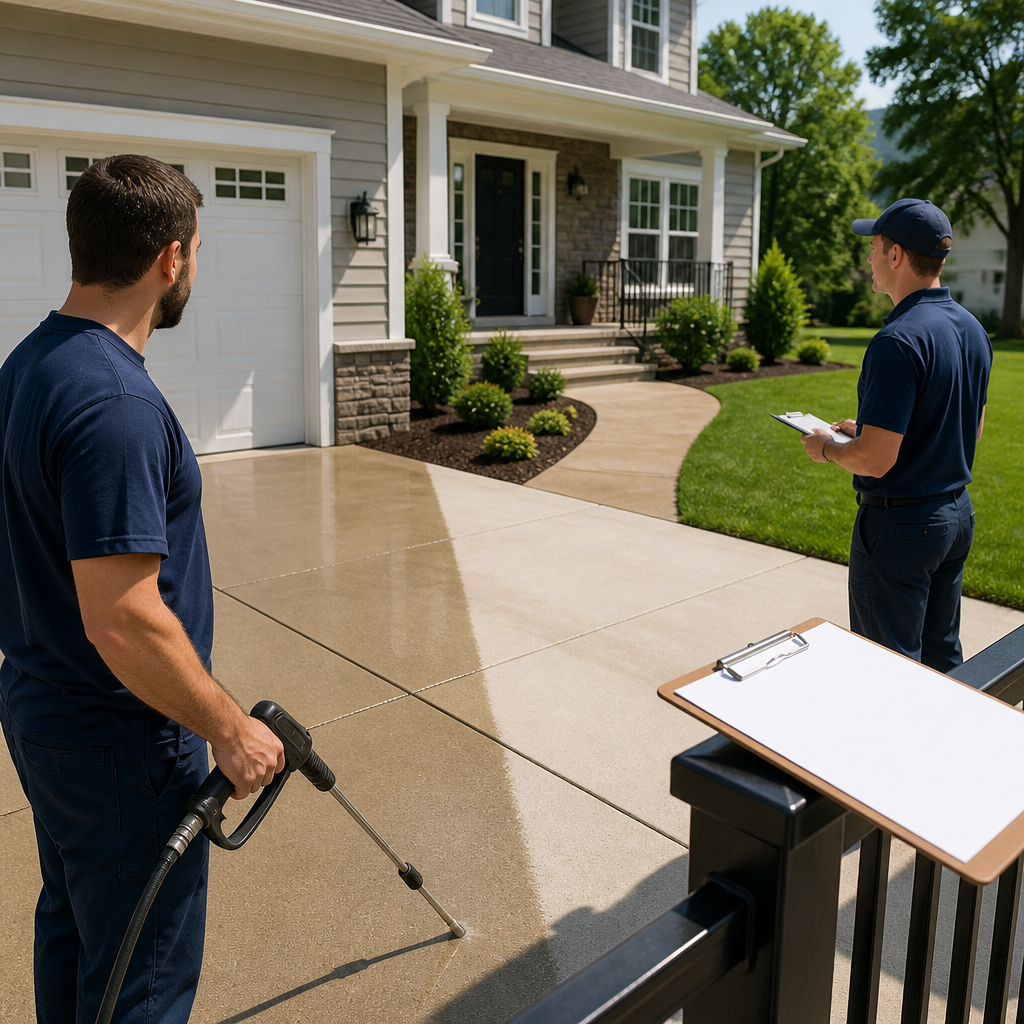
Pressure washing has a low barrier to entry, so many operators show up with a truck and a machine but little training. The equipment is rarely the problem. Consumer Reports notes that nozzles shoot water at 30 to 80 times the pressure of a garden hose and have surprisingly strong cutting power, so an inexperienced operator can gouge wood or strip paint in seconds.
Why Price Alone Is a Weak Filter
Price tells you what a company charges, not what it will do to your siding. Compare quotes only after confirming that each one covers the same surfaces, the same method, and the same follow-up. If one bid is half the others, assume the scope is smaller or the crew is less experienced until proven otherwise.
The cheapest quote is often a written description of the work the company plans to skip.
When Paying More Makes Sense
A higher price is justified when the company explains its method, shows photos of past jobs on similar surfaces, and puts cleaning solution and pressure settings in writing. A higher number backed by a detailed scope is usually better value than a lower number that leaves you guessing. Pay for clarity first, then for speed.
Insurance, Licensing, and Paperwork to Request
Ask for a Certificate of Insurance, Not a Verbal Promise
Any company working on your property should be fully insured, and you should be able to see proof. Ask for a certificate of insurance that lists general liability coverage, and check that the policy dates cover the day of your job. If the document looks altered or the dates do not match, call the insurer directly.
A company that stalls on this request is telling you something. Established operators keep certificates on file and can email one within minutes.
Business Registration and Local Paperwork
Starting a pressure washing business generally requires registering with local authorities. The McHenry PCS guide on starting a pressure washing business lists a business license among the basic legal requirements. Ask for the legal business name, confirm it matches the name on the invoice, and check that the company is registered where it operates.
Be wary of a company that uses one name on its truck, a different one on its website, and a third on the contract. That habit makes it hard to file a claim later, and it often signals a business that changes names when complaints pile up.
Workers’ Compensation and Who Is on Site
If a crew member falls from a ladder while cleaning gutters, an injury claim can end up on your own homeowner’s policy if the company’s coverage is missing. Ask whether the people on your property are employees or subcontractors, and whether those workers are covered under the company’s policies.
Pro tip: Save the certificate of insurance and your scheduled work date in the same email thread. If damage happens, you will need both within days, not weeks.
What Proper Equipment and Method Look Like
Matching Pressure to the Surface
A good operator talks about surfaces before talking about machines. Concrete and most driveways handle more pressure than wood decking, while vinyl siding, painted surfaces, and asphalt shingles need lower pressure or a different method altogether. Consumer Reports makes the same distinction, noting that driveways and walkways can be cleaned safely with a pressure washer, but roofing, siding, and cars are not necessarily safe candidates for one.
Soft Washing Versus High Pressure
Soft washing uses low pressure and a cleaning solution to kill mold, mildew, and algae without forcing water into the surface. For roofs, painted siding, and many stucco exteriors, it is usually the right approach. Ask which method the company uses for each surface and why it chose that method.
Any company that offers roof washing should explain its approach in writing. A crew that sprays shingles at high pressure can dislodge granules and shorten the roof’s useful life, and that damage is rarely visible until the next storm.
Hoses, Power Sources, and Safety Gear
Ask what the crew brings to the property. Consumer Reports suggests that hoses and power cords should ideally measure at least 30 feet so the operator can move without constant repositioning. Hearing protection, eye protection, and gloves are standard for a professional crew, and a company that skips them is cutting corners on its own people.
Pro tip: Ask which nozzle the crew will use on your siding and why. An answer with a specific nozzle and a clear reason means someone has planned the job. An answer like “whatever works” means nobody has.
Reading a Written Estimate Line by Line
Line Items That Should Appear
A written estimate should list each surface, its approximate size, the cleaning method, and any add-ons such as moss treatment, gutter cleaning, or window washing. If the estimate says “house wash” with no detail, request a breakdown before you agree to anything.
Pricing by surface makes sense because a deck, a driveway, and a roof are different jobs with different risks. A company that bundles everything into one flat rate may be hiding where it cut time or materials.

Red Flags in Pricing
Be cautious of a quote that requires a large cash deposit before scheduling, uses vague phrases like “as needed,” or changes after the crew arrives. Price increases on site usually mean the scope was never agreed to in writing.
A fair deposit is modest, and the balance should be due after you inspect the finished work. Payment terms belong in the same document as the scope, so both sides can point to one reference if a dispute starts.
Confirming Extras Before Work Starts
Moss removal, rust removal, and graffiti removal often need separate treatments and sometimes different chemicals. Ask the company to name each add-on and state whether it is included or billed separately. Shaded yards and older driveways often bring moss and staining, so price those extras upfront rather than discovering them on the day of service.
Comparing Three Common Ways to Hire
Most homeowners in Sparta and nearby towns end up choosing among three types of providers. Each carries different trade-offs, and the table below lays them out so you can decide which matters most for your property.
How the Three Options Compare
| Hiring Option | Typical Strength | Main Risk to Check |
|---|---|---|
| Local owner-operated crew | Direct contact with the person doing the work and faster fixes if something goes wrong | Small crews can book up in peak season, so confirm the schedule in writing |
| Larger company with dispatch and office staff | Documented processes, scheduling systems, and more staff for large jobs | Crews rotate, so ask whether the people on your job are trained for your specific surfaces |
| Part-time or one-off operator | Often the lowest price and flexible timing | Insurance and workmanship guarantees are the most likely to be missing |
Choosing Based on Your Property
A homeowner with one driveway and a wood deck is often well served by a local owner-operator who can show clear insurance paperwork. A property manager with several buildings usually needs a company that can commit to a recurring schedule and produce documentation for every visit.
Whichever option you pick, the earlier checks still apply. Insurance proof, a written scope, and a defined method matter more than the category the business falls into.
Residential and Commercial Checklists
A Homeowner Checklist for Sparta Properties
Homeowners should confirm that the company walks the property before quoting, notes landscaping that needs protection, and explains its damage policy. Ask who to call if you notice streaking or discoloration within a week of the job, and get that contact in writing.
Check whether the company also handles related work you may need later, such as gutter cleaning, deck staining, or paver sealing. Working with one reliable crew across seasons is easier than starting over with a new contractor each time.
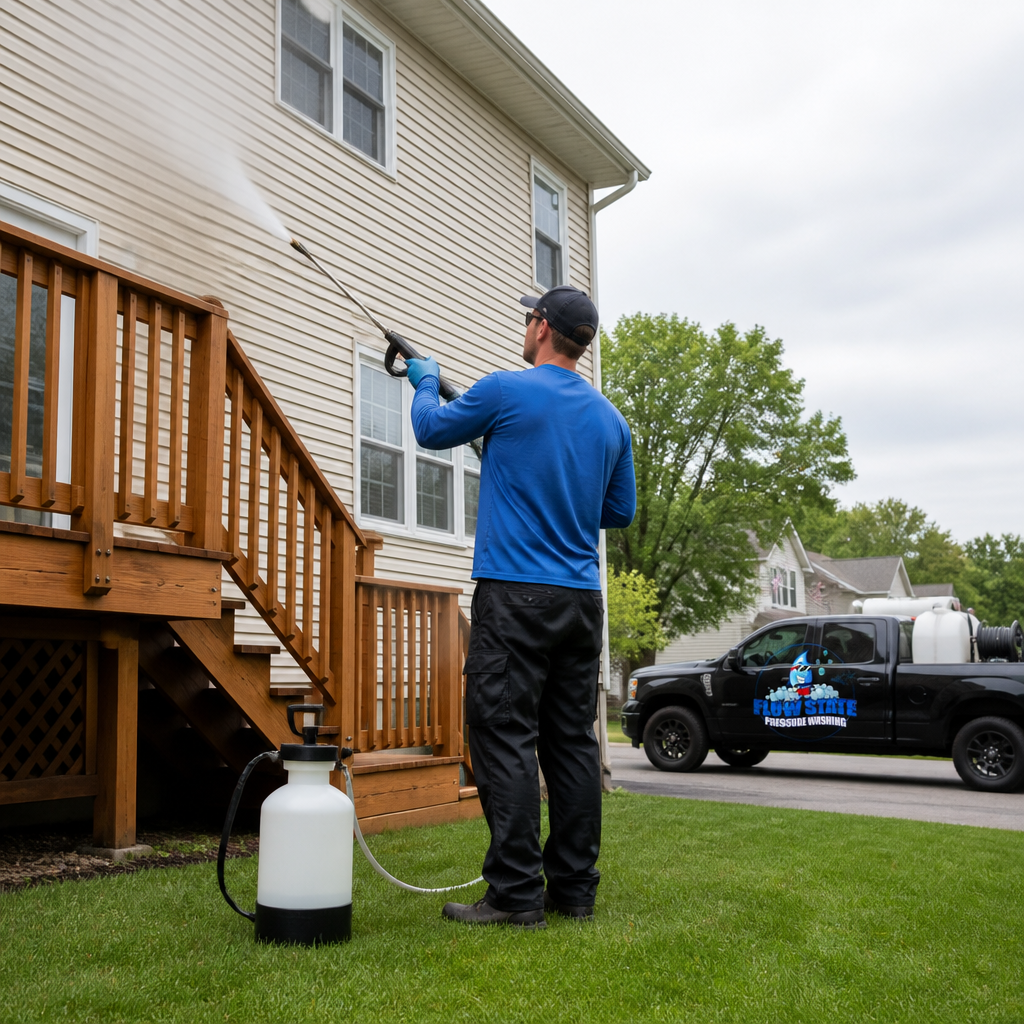
What Property Managers Should Require
Property managers overseeing apartment complexes, storefronts, and dumpster pads need a written schedule, after-hours access rules, and a clear process for reporting damage. Ask for a sample service log before signing, since a company that cannot show one is unlikely to keep one.
Commercial work also raises the liability stakes. When your contract allows it, require the insurance certificate to name your property as an additional insured, and keep a current copy on file for every site.
Drive-Thru, Storefront, and Dumpster Pad Cleaning
Drive-thru lanes, storefront sidewalks, and dumpster pads carry grease, oil, and food residue. These areas need stronger cleaning solutions, which makes the containment and wastewater plan a legitimate question. Ask where the runoff goes and how the crew protects nearby storm drains before the first visit.
Roof, Window, and Lighting Questions to Ask
Roof Washing and Moss Removal
Roof work should never be treated as a side service. Ask whether the company uses soft washing for roof cleaning, how it treats moss and staining, and how it protects the landscaping and gutters around the house. A roof moss cleaning method that does not scour the shingles is the one to choose.
Window and Gutter Cleaning
Window cleaning and gutter cleaning are where many customers get surprised by ladder access and water damage. Ask whether the crew uses a water-fed pole or ladders for upper windows, and whether gutter cleaning includes checking downspouts for clogs. Gutter brightening and gutter guard installation are separate line items and should appear on the estimate as such.
Solar Panels and Permanent Lighting
Solar panel cleaning calls for low-pressure water and approved methods, and a company should explain how it protects panel seals and wiring. If you are considering permanent outdoor color-changing lights or holiday lighting, ask who installs, maintains, and removes them, and whether the same team handles them year after year.
Pro tip: Schedule roof and solar work on a dry day, and ask for photos of each surface before and after the job. Those photos are your best record if a dispute comes up later.
Frequently Asked Questions
Ask for a current certificate of insurance, then contact the insurer to verify that the policy is active and covers the dates of your job. Do not rely on a logo on a truck or a verbal promise.
Not always, but a much lower price usually means a smaller scope, a less experienced crew, or missing add-ons. Compare written scopes side by side rather than comparing totals alone.
A modest deposit is common, but avoid large upfront payments. Hold the balance until you have inspected the finished work against the written estimate.
No. Roofs, painted siding, and many older surfaces usually need soft washing or lower pressure. Ask what method the crew plans to use for each surface before the work begins.
Request a written schedule, a current insurance certificate, after-hours access rules, a damage reporting process, and a service log for every visit. These documents protect the property and make disputes easier to resolve.
Have you hired a pressure washing company in Sparta or a nearby town, and which question told you whether they were worth the money? Share your experience with us in the comments below.
References
- Consumer Reports guide on pressure washer safety, surfaces, and equipment features
- Step-by-step guide to pressure washing equipment, planning, and legal requirements
- Community discussion on what to look for before hiring a pressure washing company
Ready For A Clean Home?
Schedule Quality Sparta Power Washing Today!