
Best Pressure Washer Near Me: Lake Mohawk Winter Guide

If you searched for the best pressure washer near me, you probably have a specific problem in front of you: green film on the shady side of the siding, gutters packed with wet leaves, or a walkway that never looks clean no matter how hard you scrub. The honest answer is that the best machine is the one that matches the job and that you will maintain properly. For most Lake Mohawk homeowners, the pre-winter list is longer than a single weekend can handle, so this guide covers what to look for in a unit, where to stop and call a professional, and how gutter cleaning and house washing fit into one plan.
Table of Contents
- Quick Takeaways
- What to Look for in a Pressure Washer
- Gas, Electric and Battery Compared
- Gutter Cleaning in Sparta Before the First Freeze
- House Washing for Lake Mohawk Homes
- Roof Moss and Stains Before Winter
- Deck, Patio and Walkway Prep
- Frequently Asked Questions
- References
Quick Takeaways
| Key Insight | Explanation |
|---|---|
| Compare flow (GPM) before peak pressure (PSI) | More water per minute rinses soap and grime off siding and decks faster, which prevents streaks. A big PSI number alone does not clean better. |
| Run gas units outdoors only | Exhaust builds up quickly, so never run a gas pressure washer in an attached garage, even with the door open. |
| Match power type to your property | Corded electric suits most single-family homes, gas suits large outdoor jobs, and battery units work best as a spot tool where no outlet is nearby. |
| Clear gutters before the first hard freeze | Wet leaves pack into downspouts, and trapped water can back up under shingles and freeze at the eave. |
| Use low pressure and a wide tip on siding | Vinyl, painted wood and stucco can be damaged by a narrow, high-force jet, so test a hidden spot first. |
| Hire out roofs and multi-story work | Ladders and steep pitches cause more injuries than the spray itself, so leave those jobs to trained crews. |
What to Look for in a Pressure Washer
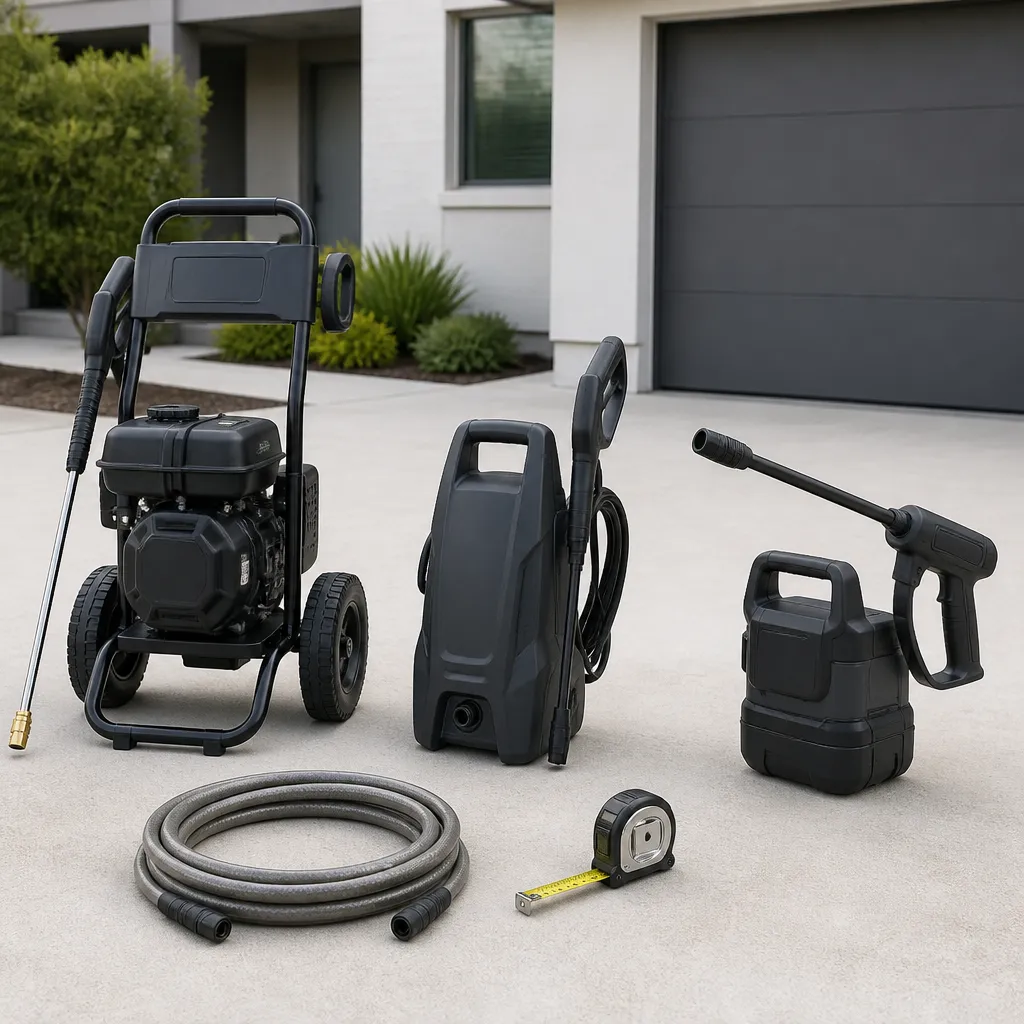
Most shoppers start with the biggest number on the box, and that is the first mistake. PSI measures how hard the water hits a surface, while GPM measures how much water moves. For washing a house, a deck or a walkway, flow does more of the real work because it lifts dirt and carries it away instead of just pushing it around.
Flow Rate Beats the Headline PSI
When you compare models, check GPM first and PSI second. A unit that moves more water per minute keeps soap wet on siding long enough to rinse cleanly, which is where most streaking comes from. If the listing shows only PSI, treat that as a warning sign that the flow number is weak or hidden.
Pressure still matters for stubborn spots, such as oil stains on a concrete driveway. For general washing, though, a moderate pressure with strong flow outperforms a high-pressure unit with a thin stream.
The best pressure washer is the one you will use correctly, which means matching flow, nozzle and distance to the surface in front of you.
Hose Length and Nozzle Setup
Many Lake Mohawk properties have long runs from the spigot to the back of the house, so hose length and a dependable pressure regulator matter more than buyers expect. A short hose forces you to drag the unit around, and that tempts people to skip sections or lean in too close.
Confirm the unit includes the tips you actually need, usually a wide fan tip for general washing and a low-pressure option for delicate surfaces. A narrow tip is the fastest way to etch concrete or strip paint off trim.
Pro tip: Before you buy, time how long your outdoor spigot takes to fill a five-gallon bucket. If the water supply is slow, even a strong machine will starve for flow and waste your afternoon.
Gas, Electric and Battery Compared
Each power type has a clear best use, and choosing the wrong one is the main reason homeowners end up returning a machine or leaving it unused in the garage. The right choice depends on where you will plug in, how much ground you need to cover, and how often you will run it.
Gas units are the workhorses for large outdoor jobs. They keep running as long as you have fuel, and they often deliver more flow for the money, but they need open, ventilated space and regular engine care. Electric units are the easiest to live with, since they start with a button and need no engine oil, though they are limited by the cord and by a lower flow ceiling.
Battery units fill the gap when there is no outlet near the back of the property. They are light and quick to start, but a battery runs out mid-job, and cold weather drains it faster, so plan those jobs for the milder part of the day. The Forbes 2026 roundup names an electric model as its overall best pick, which fits how most homeowners actually use these machines.
| Approach | Best For | Main Drawback |
|---|---|---|
| Gas | Large driveways, multi-hour jobs and properties far from an outlet | Engine maintenance, fuel storage and outdoor-only operation |
| Corded electric | Siding, decks and regular weekend washing close to a GFCI outlet | Cord management and a lower flow ceiling for heavy work |
| Battery | Small jobs in spots with no power, such as a side yard or fence line | Limited run time, and cold weather shortens battery life |
Where Each Type Fails in Late Fall
Late-season use exposes weaknesses. Gas engines start hard in the cold, and fuel left in the tank over winter goes stale. Electric cords stiffen in a cold garage, and battery packs lose capacity quickly, so a unit that worked fine in September can feel very different by November.
In practice, we tell most homeowners to buy corded electric unless the property is large or the outlet situation is poor. A battery unit makes a good second tool for detached areas, not the only machine for a whole house.
Storing Your Unit Before the First Freeze
Drain all water from the pump, hoses and wand before the temperature drops below freezing. Any water left inside a pump can crack the housing, and that repair often costs more than the cleaning you planned to do in spring.
Gas units should go into storage with stabilized fuel or an empty tank, and the storage spot should be dry and outside the living space. Keep the unit off the garage floor where possible, and never store fuel next to a water heater.
Gutter Cleaning in Sparta Before the First Freeze
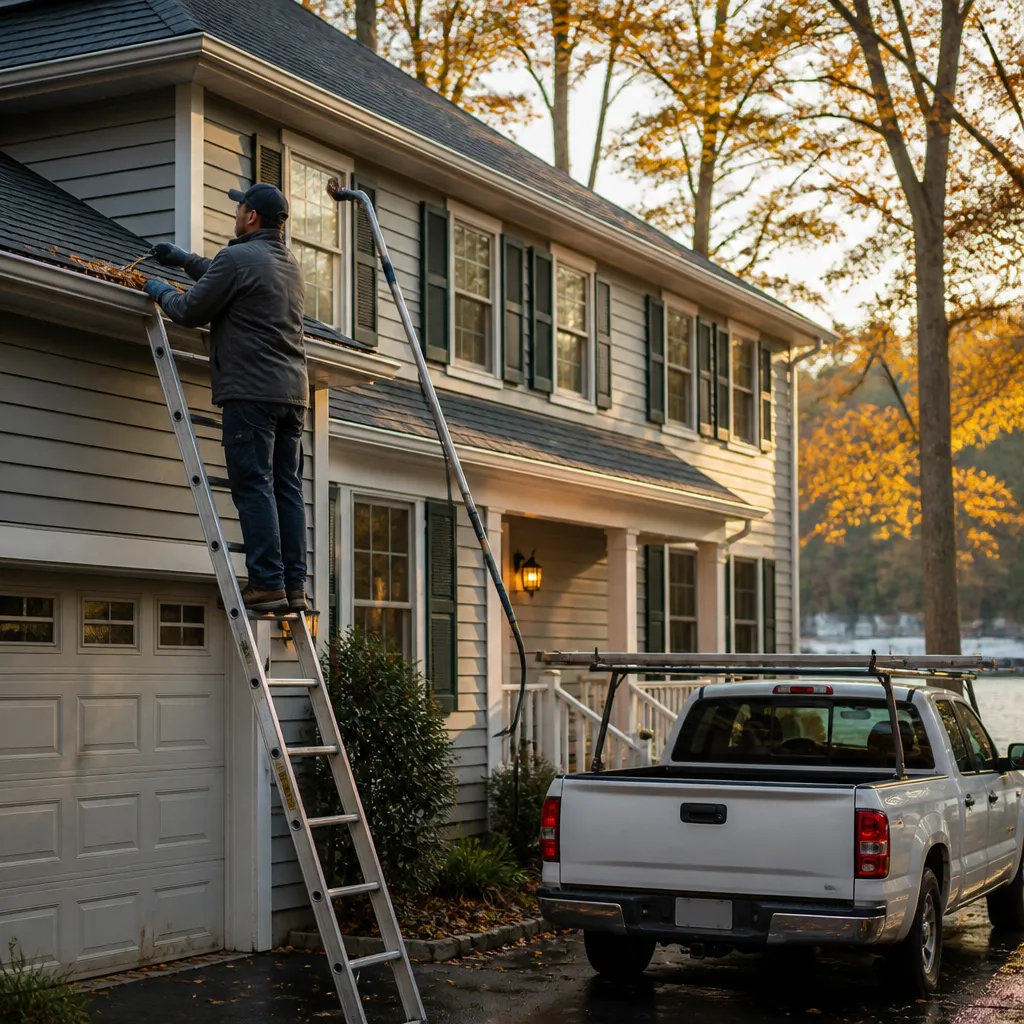
Gutters are where pre-winter problems begin. Wet leaves pack into the downspout, water backs up under the shingles, and then it freezes at the eave. Once leaves are down and soaked, they stay stuck, so waiting for a clear weekend often means cleaning after the first freeze, when the job is harder and more dangerous.
Clear Debris Before Wet Leaves Pack In
Scoop out the bulk of the debris by hand, working from one end of the run to the other. Wear gloves, because wet leaves hide sharp fasteners, and never lean a ladder against a gutter that is pulling away from the fascia.
Once the trough is clear, flush each downspout with a garden hose or a pressure wand on a low setting. Water running freely out of the bottom tells you the line is open, and if it pools at the top, the clog is still there and needs more attention.
Pro tip: After a rain, check each downspout outlet from the ground. If one outlet stays dry while the others run, the blockage is inside that section of pipe, not at the gutter itself.
Gutter Brightening and Guard Installation
Gutter brightening removes the black streaks and oxidized film that build up under the lip. It makes the gutters look newer and keeps flow clean, which is especially noticeable on homes with dark trim or a darker roof.
Gutter guards help on homes with heavy tree cover, but they are not a set-and-forget fix. Guards cut down on scooping, yet fine debris can still settle on top of the mesh, so plan on a visual check each fall.
House Washing for Lake Mohawk Homes
House washing before winter removes the green and black growth that holds moisture against siding all season. Clearing it before cold weather keeps the surface from staying damp in shaded corners, where algae and mildew settle in and spread.
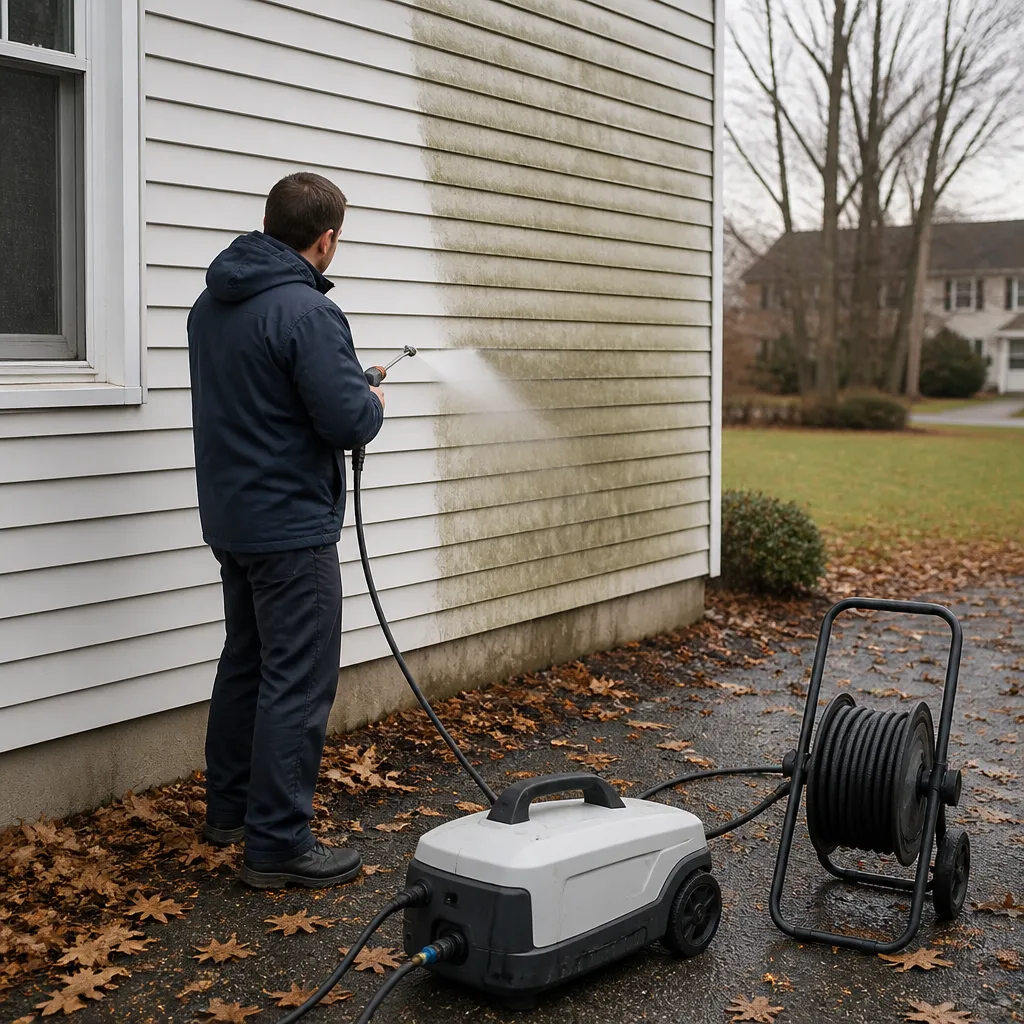
The most common mistake is renting a high-pressure unit, aiming it straight at the siding and leaving a visible line through the paint. Siding does not tolerate the same force as concrete, and damage from a single pass can take years to hide.
Clean siding is not the goal. Clean siding with no damage is the goal.
Siding Materials That Need Low Pressure
Vinyl, painted wood, fiber cement and stucco all respond better to a wide tip, moderate pressure and an exterior cleaning solution than they do to a narrow jet. Older painted trim and cedar are especially prone to raised grain when hit too hard, and that damage is hard to undo.
Test a hidden spot first, starting at the widest tip and the greatest distance. Step closer only if the dirt lifts without any change to the surface.
Timing the Wash Before Cold Weather
Pick a dry day with temperatures well above freezing, and schedule the wash for the morning or early afternoon. Water left on siding overnight during a cold snap can freeze in the joints and trap moisture behind the trim.
Work from the bottom of the wall upward so cleaning solution does not run down over dirty surfaces. Rinse each section fully before moving on, and ask any provider how they handle drying between passes before you agree to a schedule.
Roof Moss and Stains Before Winter
Roof moss and stains are where enthusiasm for a pressure washer turns dangerous. Shingles are not built to take direct high-force spray, and granules wash away faster than most people expect, leaving bare spots that look like damage even when the roof is still sound.
A ladder on a pitched roof is one of the most common ways people get hurt during exterior cleaning. If the job needs a roof walk, a steep pitch or a ladder that reaches past the gutter line, it belongs with a trained crew.
Why Pressure Is the Wrong Tool on Shingles
Pressure strips granules, which shortens the life of the shingle and leaves dark spots that trap more debris. Moss and dark streaks respond better to a soft wash, a low-pressure application of cleaning solution that sits on the surface, lifts growth over time and then gets rinsed gently.
Soft washing takes more patience than pressure washing, but it protects the roof. The payoff is a cleaner look without granule loss you can see from the street.
Preventing Moss From Returning
Moss comes back in the same shaded spots year after year, usually where branches overhang the roof and keep it damp. Trimming those limbs does more for the next season than any single cleaning, because sunlight and airflow dry the surface.
Pro tip: If you see dark streaks, identify them before choosing a product. Algae responds to a cleaning solution, while plain dirt mostly needs a gentle rinse, and using the wrong treatment wastes time.
Deck, Patio and Walkway Prep
Decks, patios and walkways take the most punishment in winter because water sits on them and freezes. A clean, sealed surface drains better, and that matters when temperatures stay below freezing for days at a time.
A common pattern is a deck power washed in spring and then left under leaves until the next thaw. The boards turn grey, hold water all winter, and need a full restoration before they can take a new finish.
Deck Cleaning Before Sealing or Staining
A deck must dry completely before you stain or seal it. Too much pressure raises the wood fibers and leaves fuzzy boards that absorb stain unevenly, so use a wide tip, keep the wand moving and allow several sunny days of drying before coating.
Deck painting and deck staining both depend on a clean, dry surface. Skipping the drying period is the most common reason a fresh finish peels within a season.
Pavers and Concrete Walks
Paver sealing and paver restoration work best after a thorough clean and a full drying period. Aggressive pressure can wash out joint sand, which lets weeds and standing water into the base, so keep the tip wide and the distance consistent.
Concrete walks can handle more force than pavers, but a narrow tip still leaves marks, and the same rule applies: test first, then work methodically from one end to the other.
Pro tip: After cleaning pavers, sweep fresh sand back into the joints and wait until the surface is completely dry before sealing. Sealing damp pavers traps moisture that can cloud the finish.
Frequently Asked Questions
For most single-family homes, a corded electric unit with a strong flow rating covers siding, decks and walkways well. A gas unit makes sense for a large property with an open outdoor area to run it, and a battery unit works best as a spot tool for detached areas.
Renting is a reasonable choice for a single job. Ask the rental desk which tip is installed, and switch to a wider tip before you start on siding, because the stock nozzle is often too narrow for house washing.
Clean the gutters first. Debris and runoff from the roof would otherwise land on siding you have just washed, and you would have to rinse it again.
Test a hidden spot at the lowest setting and the widest tip. If the dirt lifts without changing the surface, the setup is safe, but raised grain, etched lines or lifting paint mean you are too close or the force is too high.
For roofs, multi-story walls and gutters on steep homes, a professional is usually the safer and more efficient choice. A provider can also sequence gutter cleaning, house washing and deck work in one visit, which avoids the risk of washing a surface that gets dirty again the next day.
What has your experience been with pressure washers or gutter cleaning in Sparta, and which part of your pre-winter checklist gave you the most trouble?
References
Ready For A Clean Home?
Schedule Quality Sparta Power Washing Today!